

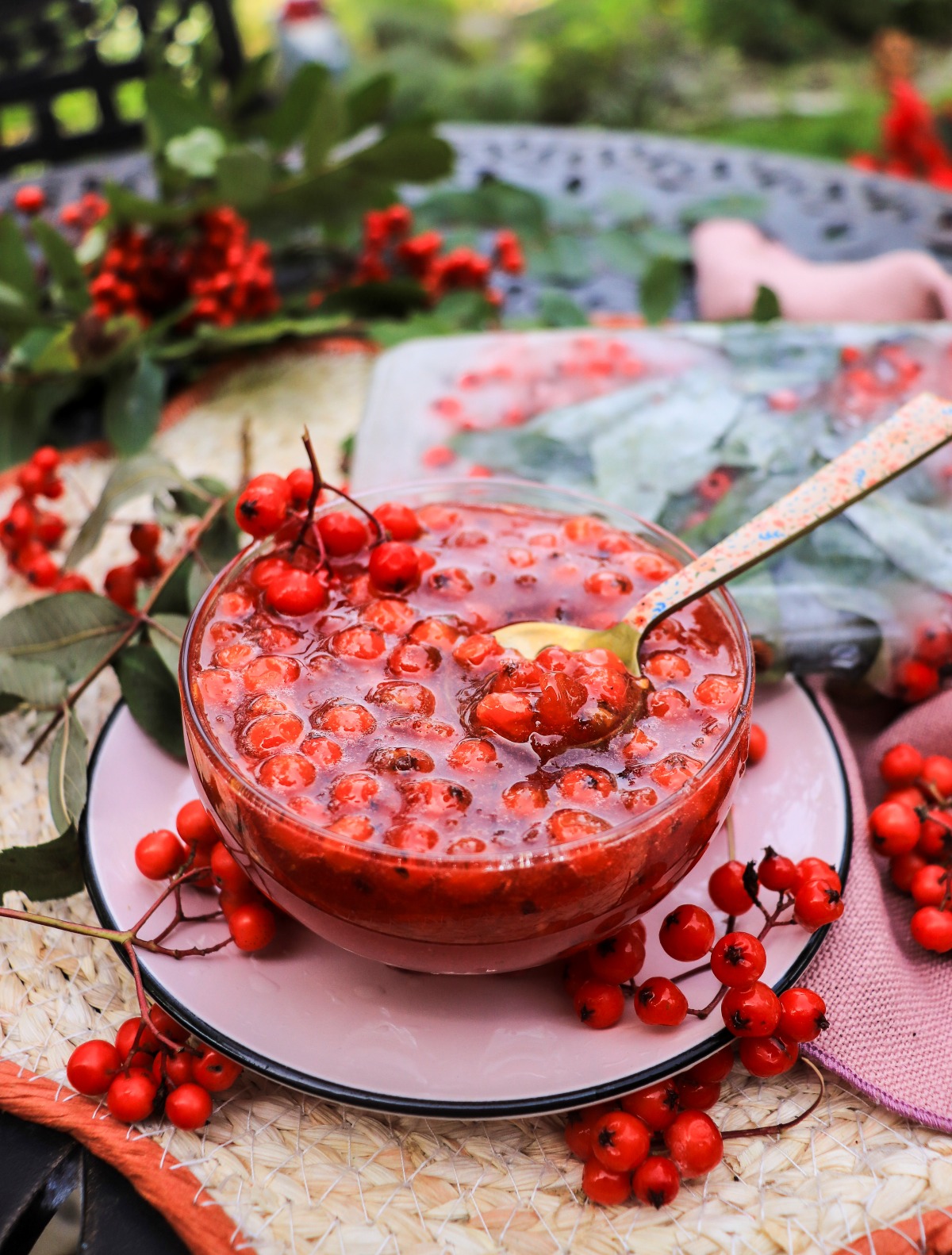
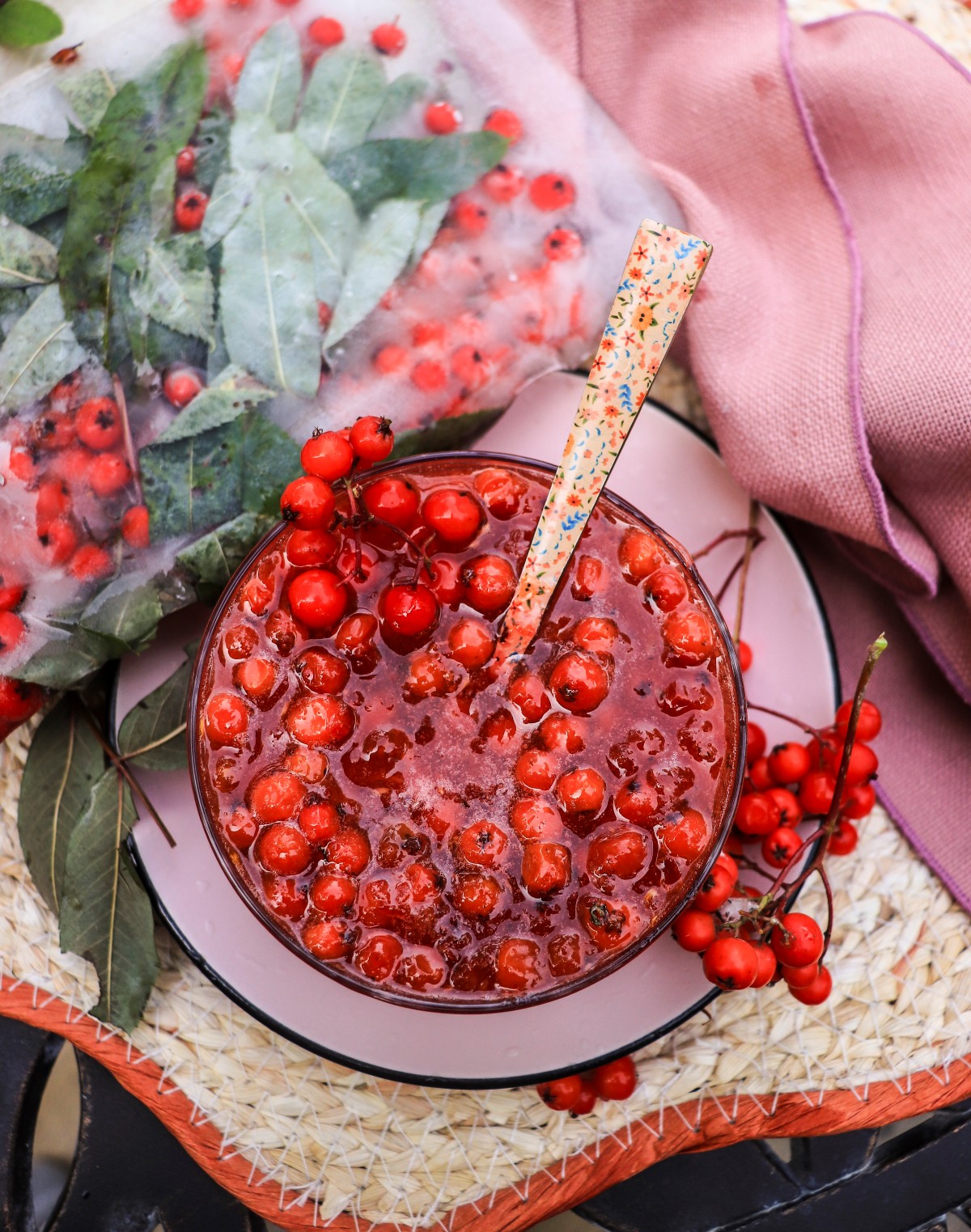
Rowan berry no-cook preserves combine tart, pleasantly bitter berries with sugar for a vibrant, syrupy preserve. Unlike traditional jam or jelly, this method keeps much of the fruit whole and uses only minimal cooking. In this post, you will learn more about rowanberries, their potential health effects and precautions, how to collect and prepare them, and how to turn them into these simple preserves.
Hey folks – I hope you all are doing well!
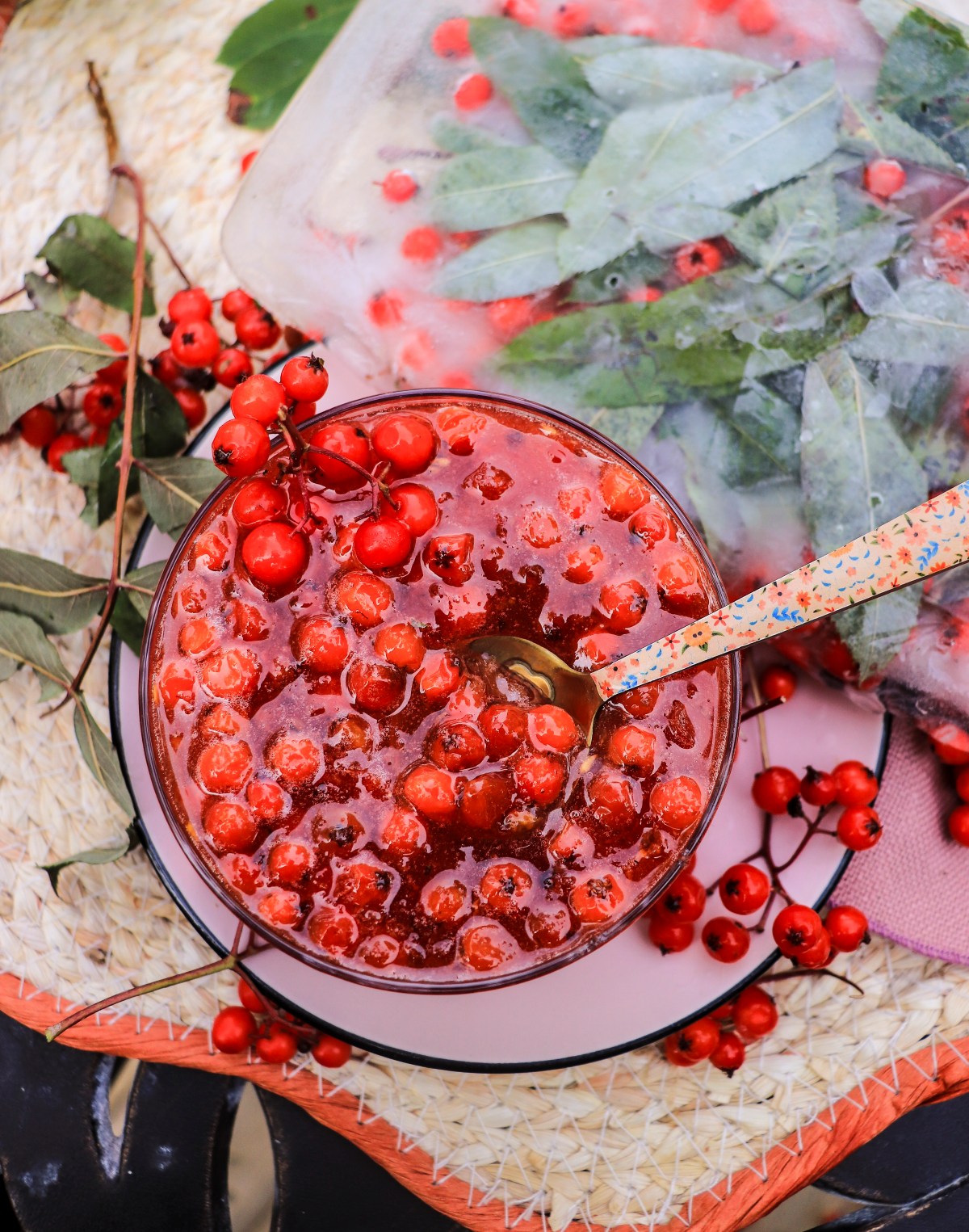
Did you know that those beautiful clusters of rowan berries you see in late summer and fall are actually edible? Yes, they are – but they require some preparation first. And if you want to harvest some, you may want to hurry up before the birds beat you to them! So, let’s dive into this recipe for rowan berry no-cook preserves (rowanberries with sugar) – and please don’t skip the sections on possible side effects and preparation.
What Are Rowan Berries?
Rowan berries are the orange to red fruits of rowan trees, including European rowan, Sorbus aucuparia. Depending on where you live, however, you may know them by a different name.
- Rowan or rowanberry are common names, particularly in Europe.
- Mountain ash is another widespread name for the tree, although rowan isn’t actually a true ash.
- Dogberry or dogberries are familiar names here in Atlantic Canada.
- Botanically, the fruits aren’t true berries. They’re small pomes and belong to the same broader plant family as apples and pears.
So, rowan berry preserves, mountain ash berry preserves, and dogberry preserves can refer to preparations using the same fruit.
Fresh rowan berries have an unusual flavour. They’re intensely tart and astringent with noticeable bitterness. Proper preparation mellows that harshness, although some pleasant bitterness remains part of their character.
Are Rowan Berries Edible?
Yes, but rowan berries require proper preparation. They’re not something I recommend picking straight from the tree and eating by the handful. (Well, honestly I doubt you would do due to their bitterness.)
There are two particularly important things to know:
- Parasorbic acid. Fresh rowan fruit contains parasorbic acid, which can cause digestive irritation when enough untreated fruit is consumed. Frost, freezing, and particularly heating help reduce this concern.
- Cyanogenic glycosides. Rowan seeds contain cyanogenic glycosides, including prunasin. The seeds remain inside the whole berries in this preserve, so avoid deliberately grinding or pulverizing them when mashing the fruit.
This sounds somewhat intimidating, but rowan has a long history of culinary use. The important distinction is between untreated raw fruit and properly prepared rowan berries.
For these rowan berry no-nook preserves, I recommend freezing the berries if they haven’t experienced a natural frost and then briefly heating the finished mixture.
Nutrition, Side Effects, And Who Should Be Cautious
Rowan berries contain vitamin C, carotenoids, organic acids, and various polyphenols. Their nutritional composition is interesting, but I prefer to think of rowan as an unusual seasonal ingredient rather than make specific health claims about it.
A few sensible precautions are more useful:
- Avoid large amounts of untreated fruit. Raw rowan berries may cause nausea, stomach irritation, and other digestive discomfort.
- Avoid crushing the seeds. When using an immersion blender, pulse only enough to break the fruit.
- Start modestly. If you’ve never tried rowan before, begin with a small serving.
- Consider individual circumstances. Anyone who is pregnant or breastfeeding, takes medications, has allergies or an existing health condition, or has concerns about eating rowan should seek professional advice.
I am a food blogger, not a medical professional. If you have questions about whether rowan berries are suitable for you, please consult your physician or another qualified healthcare professional.
When And How To Collect Rowan Berries
Traditionally, rowan berries are often collected after the first frost. Unfortunately, the birds may not agree with your schedule!
If you find a tree covered with fully ripe berries, you can harvest them and use your freezer rather than risking losing the entire crop while waiting for colder weather.
When collecting rowan berries:
- Identify the fruit confidently. Never eat foraged fruit unless you’re certain what it is.
- Pick ripe berries. Choose mature, richly coloured fruit.
- Avoid questionable locations. Don’t harvest immediately beside busy roads or from areas that may have been sprayed.
- Take only what you need. Leave plenty of berries for birds and other wildlife.
- Inspect your harvest. Discard damaged, mouldy, shrivelled, or otherwise questionable berries.
- Clean thoroughly. Remove stems, leaves, and debris, then rinse the berries well.
Whole clusters are usually convenient to harvest. You can strip the individual berries from their stems once you’re home.
Why Freeze Rowan Berries?
If your berries have already experienced a good natural frost, that’s excellent. Otherwise, I recommend freezing them yourself.
Freezing helps in several ways:
- It mimics natural frost. This helps mellow some of rowan’s pronounced bitterness and astringency.
- It contributes to preparation. Frost and freezing help reduce the parasorbic acid present in fresh fruit.
- It softens the berries. Frozen and thawed fruit breaks down more readily.
- It helps release juice. This is especially useful because rowan berries are considerably less juicy than sea buckthorn.
Thaw frozen rowan berries before making the preserves, and keep any juices they release.
What Makes These Rowan Berry No-Cook Preserves Special?
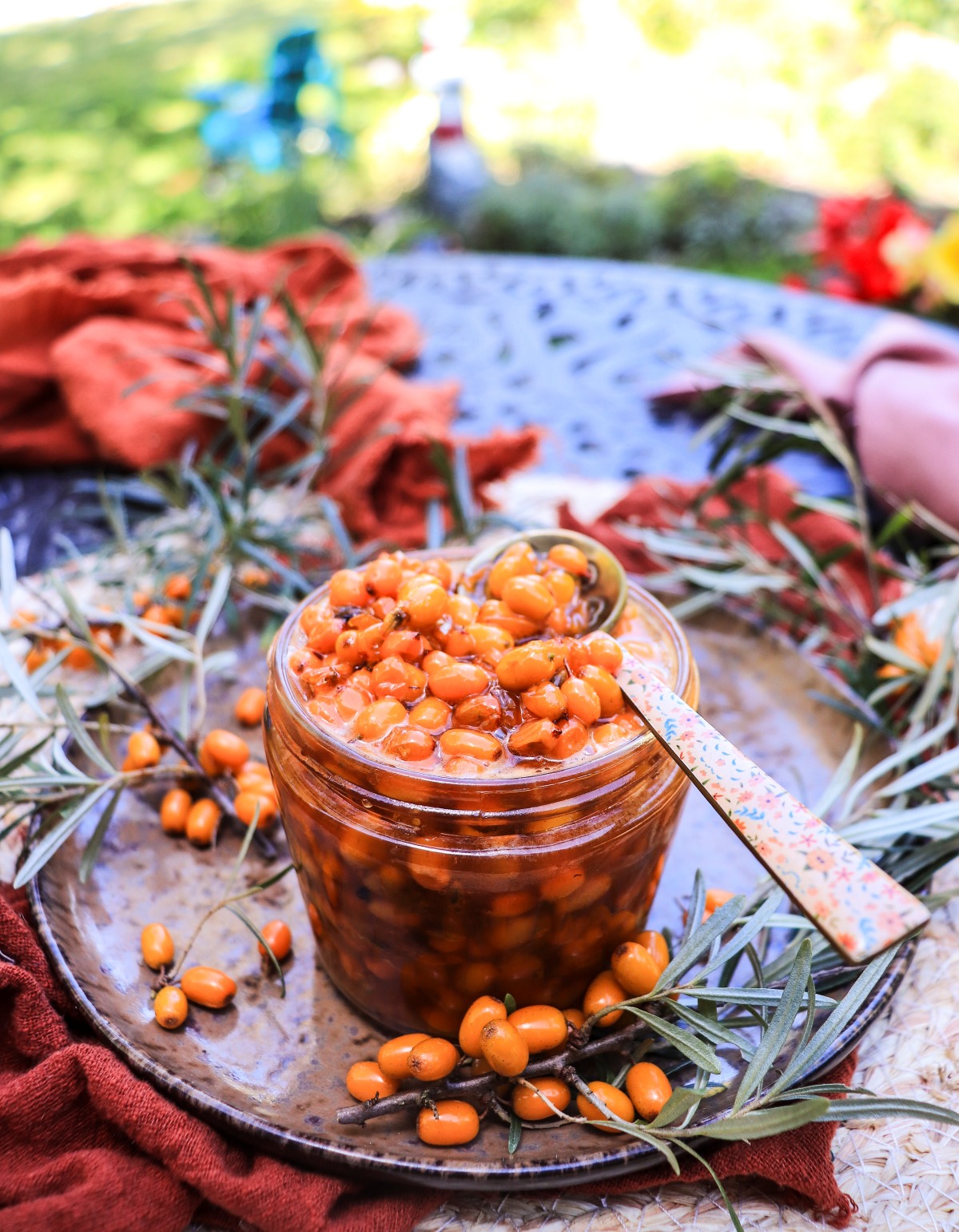
These rowan berry no-cook preserves follow the same basic berries-with-sugar concept as my Sea Buckthorn No-Cook Preserves. However, my testing showed that rowan needs a somewhat different approach.
Rowan Berries Need More Help
Sea buckthorn releases plenty of juice once you break some of the berries. Rowan berries are considerably less juicy.
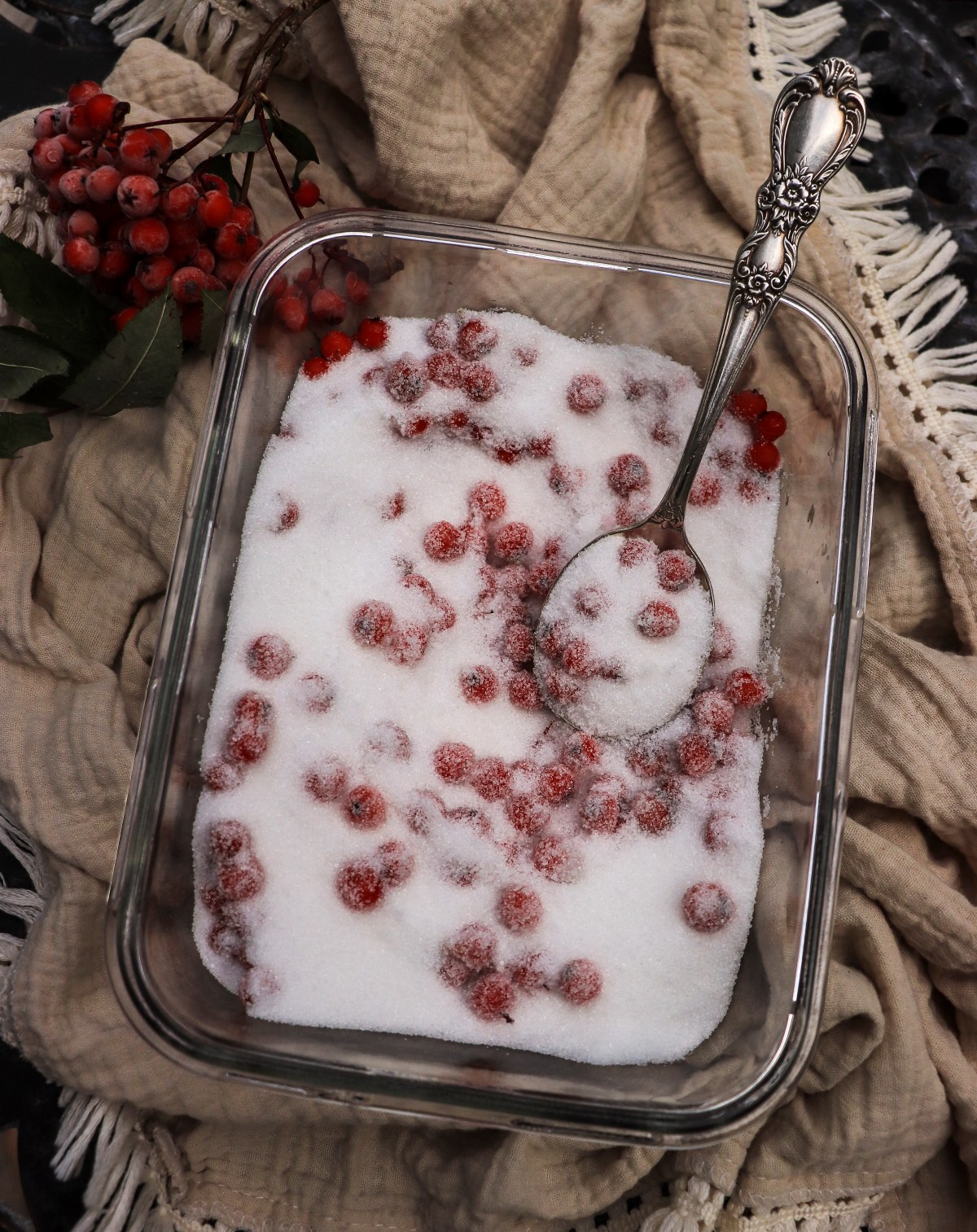
Simply combining rowan berries with sugar may therefore leave you with plenty of undissolved sugar instead of a proper syrup. A few adjustments solved that problem:
- Partial mashing is essential. Breaking some of the fruit helps release the limited juices.
- A little water helps. About 2–3 tablespoons, or as needed, provides enough additional moisture to get the syrup started.
- More sugar works better. Rowan is considerably more bitter and astringent than many familiar berries, so I recommend at least a 1:1 ratio of berries to sugar by weight. You can use somewhat more.
- Brief heating finishes the syrup. A short simmer helps the remaining sugar dissolve while also providing additional heat treatment.
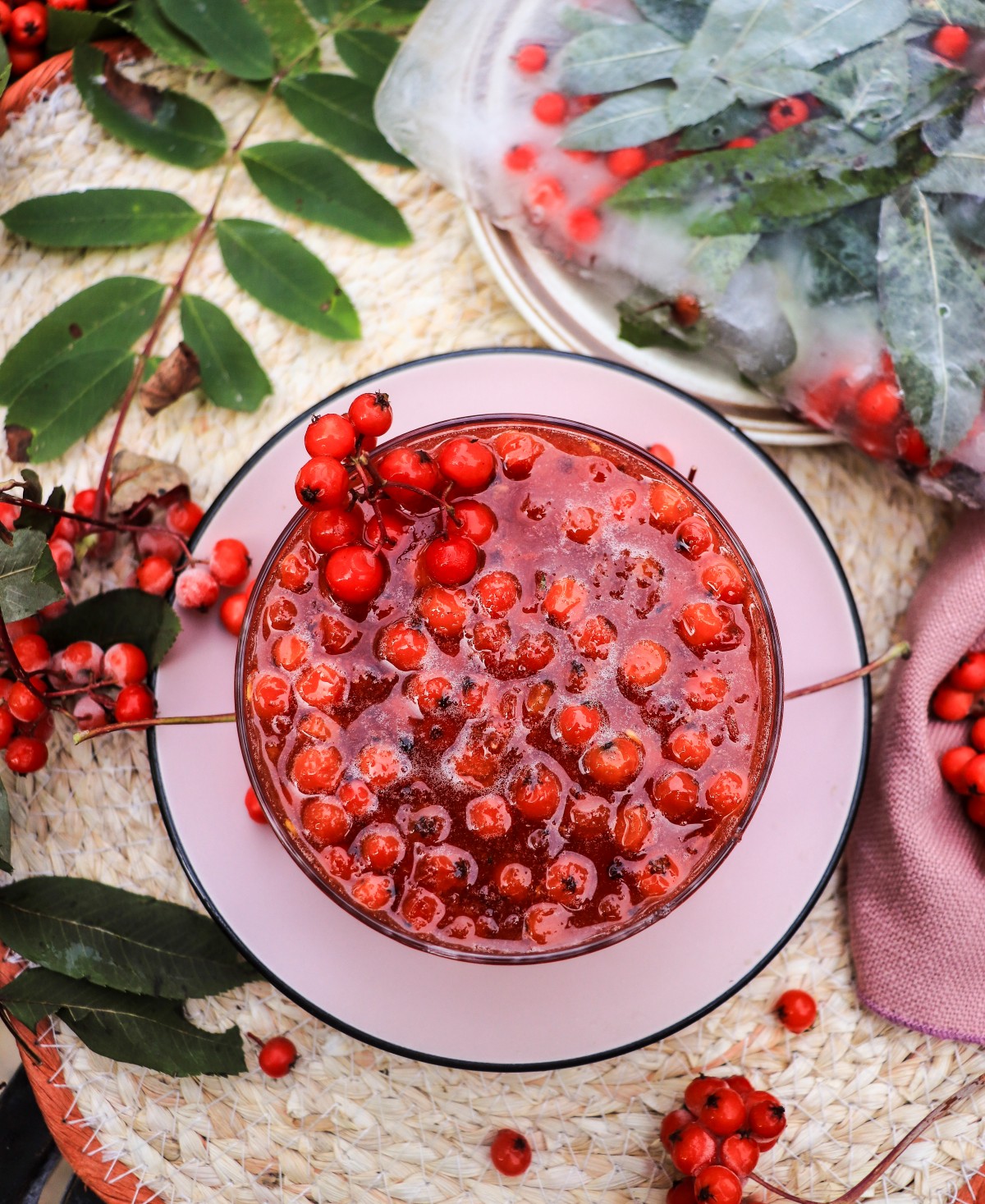
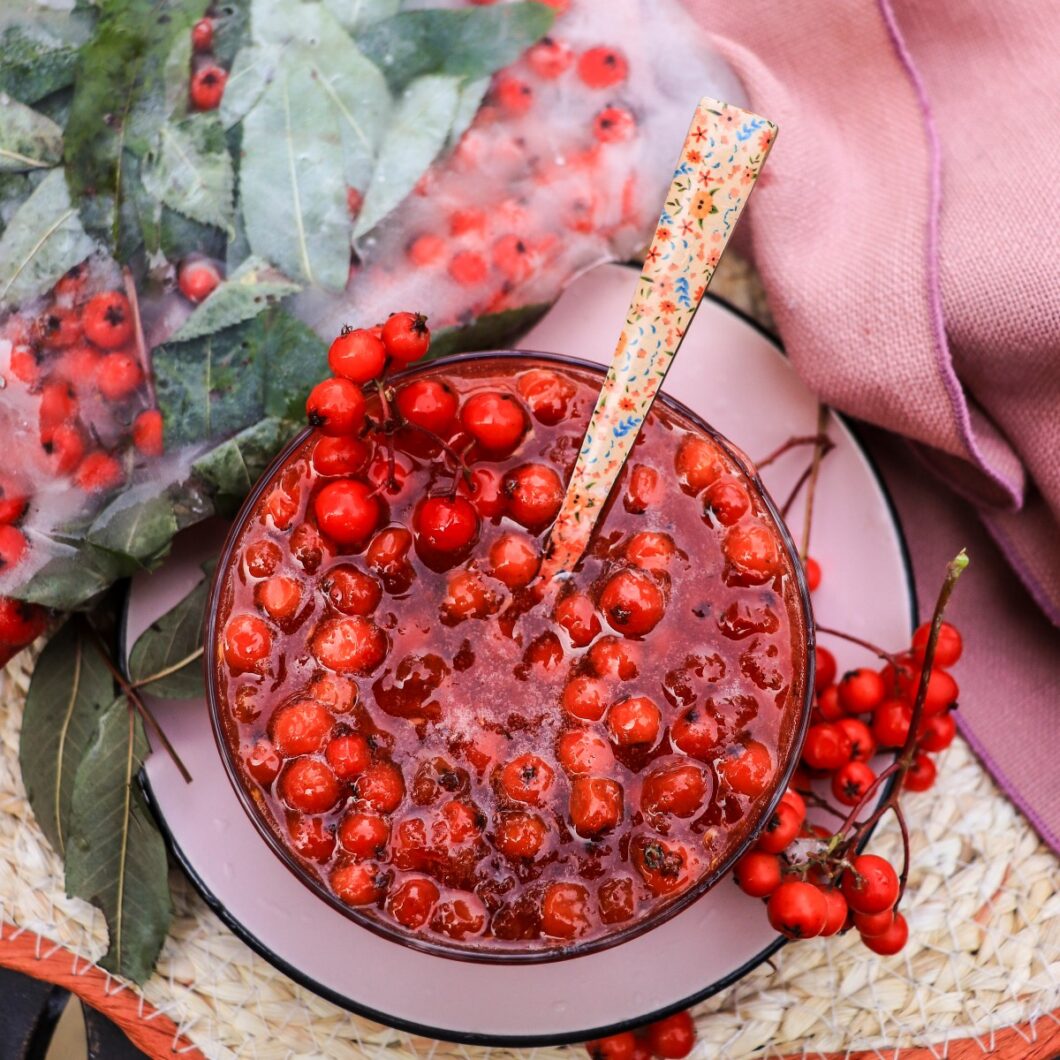
The final rowanberry preserves remain loose and syrupy, with plenty of whole fruit and some partially broken berries.
Why Briefly Heat A No-Cook Preserve?
Yes, there is a small contradiction in the name!
This rowan berry no-cook recipe is based on the traditional method of preserving berries with sugar rather than cooking them down into conventional jam. However, rowan benefits from additional heat treatment, so I recommend a brief simmer as a safeguard.
Heating also helps with the practical issue I encountered during testing. These berries don’t always release enough liquid for all that sugar to dissolve easily.
Once the mixture reaches a gentle simmer, 1–2 minutes is enough. Then turn off the heat.
So, technically, these are barely cooked preserves. However, we’re not boiling the fruit for an extended period, reducing the syrup, or cooking it to a setting point. The texture remains that of mostly whole rowan berries in syrup rather than jam.
Ingredients You’ll Need For Rowan Berry No-Cook Preserves
You need only three ingredients for these rowan berry no-cook preserves, but each one plays an important role.
- The fruit. Use ripe, carefully sorted rowan berries. Ideally, they should have experienced natural frost or have been frozen at home before use.
- The sweetener. Granulated sugar balances the berries’ strong tartness, bitterness, and astringency. It also draws moisture from the fruit and forms the syrup.
- The liquid. Rowan berries aren’t particularly juicy, so a little water helps the sugar dissolve. Usually 2–3 tablespoons is sufficient, although the exact amount depends on your berries.
For these mountain ash berries with sugar, I recommend at least equal weights of fruit and sugar. Particularly bitter berries can handle somewhat more.
This is intentionally different from my reduced-sugar sea buckthorn version. Rowan needs more sweetness to balance its naturally assertive flavour.
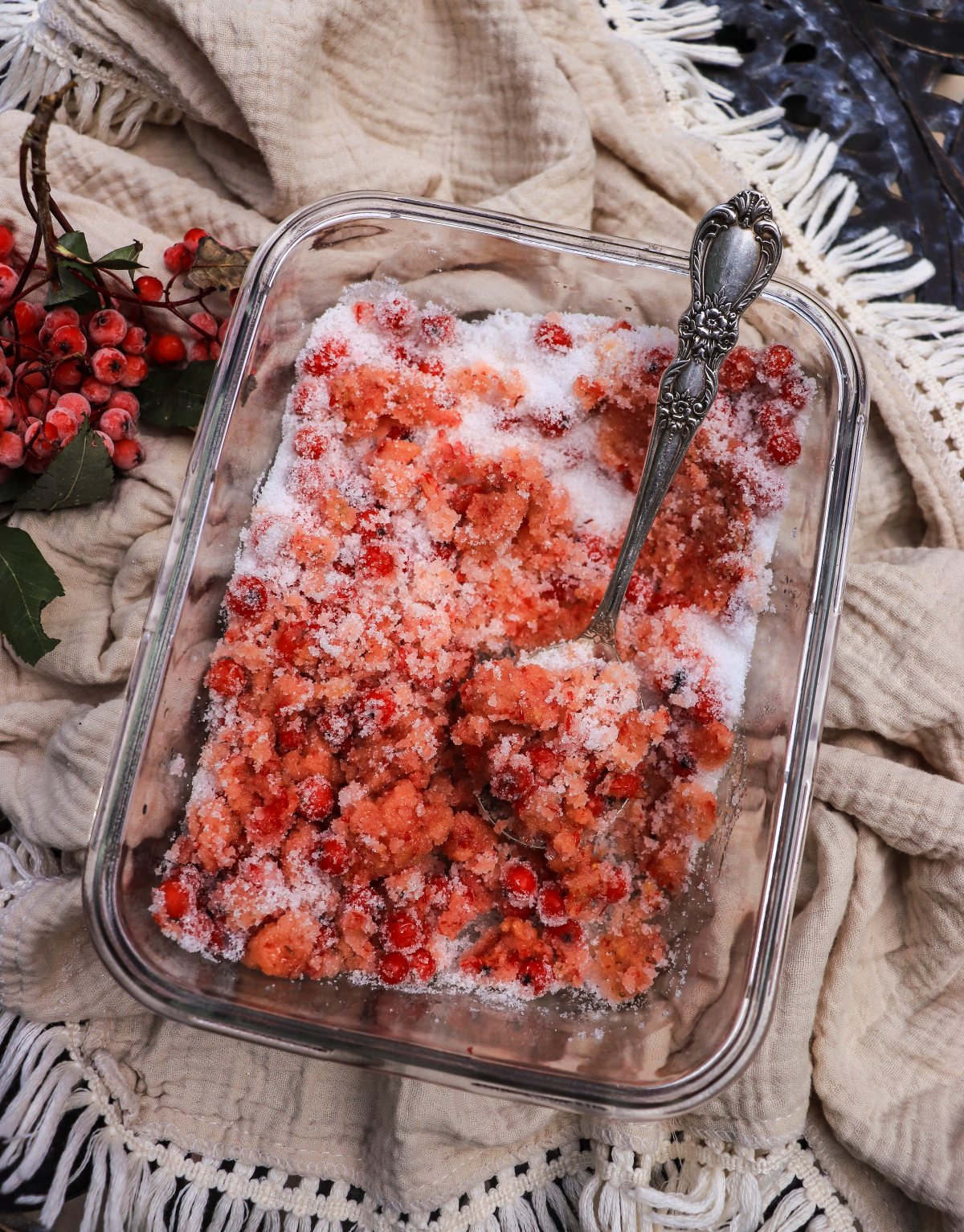
How To Make Rowan Berry No-Cook Preserves
The process is still quite simple, although rowan berries need a little more encouragement than juicier fruit.
Prepare And Mash The Berries
Remove the berries from their stems and sort them carefully. Wash and drain well. If they haven’t experienced natural frost, freeze them first, then thaw them while retaining any released juices.
Next, mash some of the fruit to help release more liquid.
A potato masher is the simplest option. You can also use an immersion blender, which I found effective during testing, but use only a few very brief pulses. The goal is to break some of the berries while leaving many whole, not to purée the mixture or pulverize the seeds.
Add Sugar And Water
Combine the prepared berries with at least an equal weight of granulated sugar. Then add about 2–3 tablespoons of water.
Stir and let the mixture begin releasing its juices. You should gradually see syrup forming around the berries.
If the sugar still isn’t dissolving well, don’t immediately add lots of water. Add another small splash only if necessary. The goal is a concentrated fruit syrup rather than a diluted one.
Give The Rowan Berry Preserves A Brief Simmer
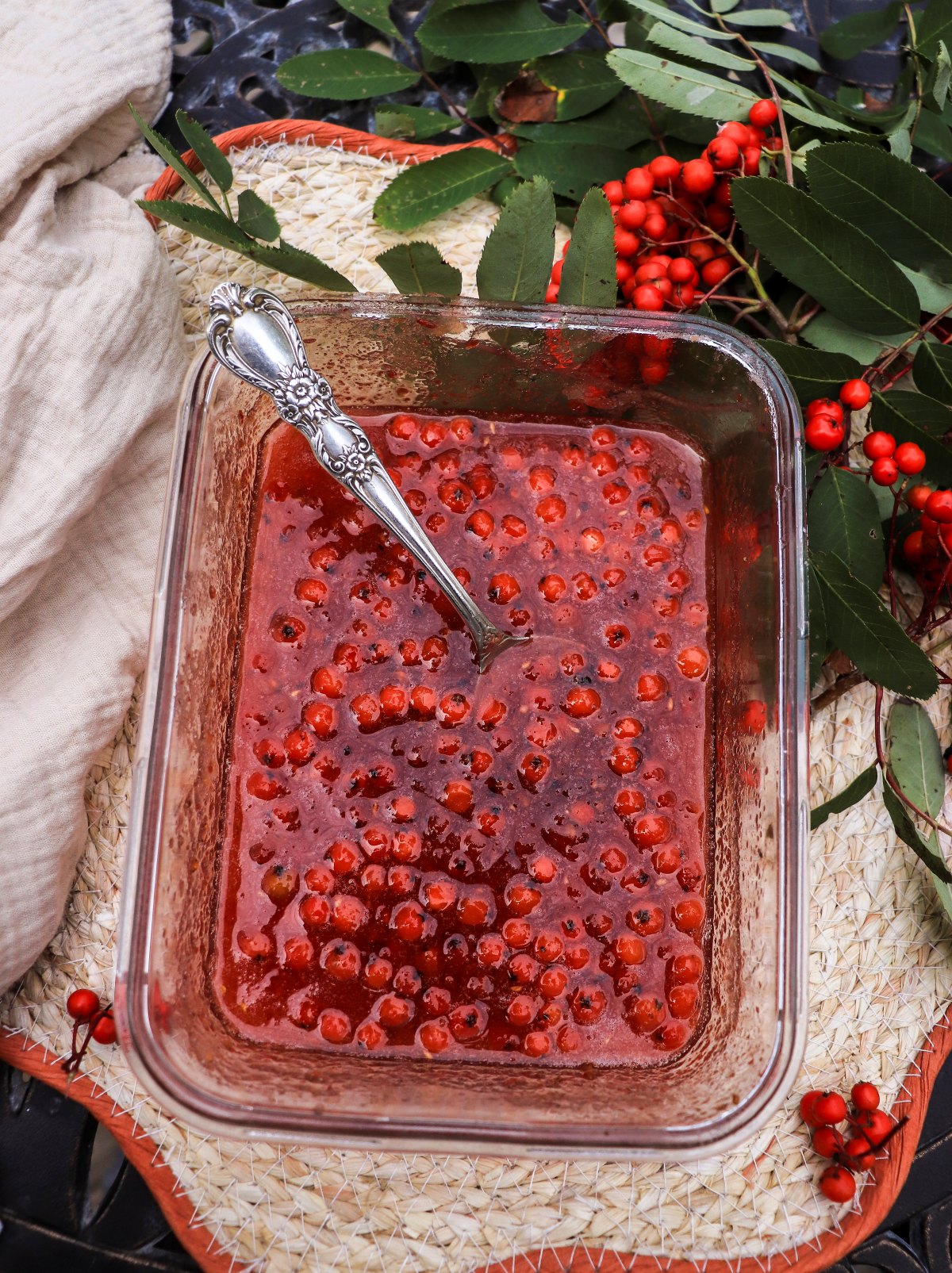
Gently heat the rowan berries with sugar until the mixture reaches a simmer. Simmer for only 1–2 minutes, stirring gently, then turn off the heat.
At this point, look for:
- Dissolved sugar. The syrup should no longer be noticeably grainy.
- Whole berries. Plenty of fruit should retain its shape.
- Some broken fruit. This provides additional juice and body.
- A loose syrup. The consistency should be fluid rather than thick or jam-like.
Don’t continue cooking to reduce the liquid or achieve a set. Once the sugar has dissolved and the mixture has received its brief simmer, it’s done.
Tips For The Best Rowan Berry No-Cook Preserves
Wild berries can vary considerably in bitterness, juiciness, and texture. Therefore, small adjustments are completely reasonable.
- Use frost or freezing. If nature hasn’t provided the frost, your freezer can.
- Mash some fruit. This is particularly important because rowan doesn’t readily release lots of juice.
- Don’t pulverize the berries. Keep the seeds intact rather than aggressively processing the fruit.
- Add water gradually. Start with 2–3 tablespoons and add another splash only if necessary.
- Use enough sugar. A 1:1 ratio by weight is a good starting point, while particularly bitter fruit may need somewhat more.
- Keep some bitterness. The sugar should balance rowan’s flavour, not make it taste like conventional sweet berry jam.
- Keep heating brief. One or two minutes at a gentle simmer is sufficient.
Also, don’t expect a thick consistency. These preserved rowan berries should remain surrounded by a relatively loose syrup.
How To Store Rowan Berry No-Cook Preserves
These rowan berry no-cook preserves are intended for refrigerated storage. This is not a tested shelf-stable canning method, despite the relatively high proportion of sugar.
A few simple practices will help keep the preserves in good condition:
- Cool before storing. Let the preserves cool before transferring them to the refrigerator.
- Use clean jars. Store in clean, dry containers with tight-fitting lids.
- Keep refrigerated. Don’t store jars at room temperature.
- Use clean utensils. Always use a clean, dry spoon when taking berries from the jar.
- Freeze for longer storage. Transfer to a freezer-safe container, leaving some room for expansion.
- Check before eating. Discard the preserves if you notice mould, unexpected fermentation, an unusual smell, or another obvious sign of spoilage.
The sugar and brief heat treatment help with preservation, but they don’t make this particular recipe suitable for room-temperature storage.
How To Use Rowan Berry Preserves
These no-cook rowan berries preserved with sugar have a distinctive combination of sweetness, tartness, bitterness, and astringency. Therefore, you don’t need much at once.
I recommend enjoying around 1 tablespoon at a time or no more than 2-3 tablespoons a day, even for people without particular health concerns. This is simply a practical serving suggestion for such an intensely flavoured preserve, not a medically established maximum.
Try them in both sweet and savoury combinations:
- Use in cocktails, lemonades or teas.
- With bread. Spoon a little over toast with butter, ricotta, or cream cheese.
- With cheese. Their tart-bitter flavour contrasts nicely with rich, creamy, or mature cheeses.
- At breakfast. Add berries and syrup to oatmeal, porridge, yogurt, pancakes, or waffles.
- With ice cream. Vanilla ice cream is particularly good because its creamy sweetness softens rowan’s assertive character.
- With desserts. Try a spoonful with panna cotta, cheesecake, or simple cakes.
- With savoury dishes. Rowan berry preserves can accompany pork, poultry, game, and other rich foods.
- Use the syrup. Add a little to tea, sparkling water, yogurt, desserts, cocktails, or mocktails.
If this is your first time trying Atlantic Canadian dogberry preserves, start with a small spoonful. Their pleasantly bitter character is quite different from familiar berry preserves, and that’s part of their appeal.
More Recipes with Rowan Berries
If you enjoy these rowan berry no-cook preserves, be sure to check more ideas with rowanberris:
- Rowan Berry Syrup (And How to Make Rowan Berries Less Bitter!)
- Rowan Berry Tea with Honey and Orange (Wild Herbal Tea Recipe)
- Orange Rowan Berry Jam
- Rowan Berry Apple Jam
- Rowan Berry Cocktail (Halloween Cocktail Recipe)
- Rowan Berry Shortbread Cookies
I’d love for you to try this recipe with rowan berries with sugar preserves. If you give it a go, please share your results in the comments, message me on Instagram, or post your photos with the hashtag #havocinthekitchen. I look forward to seeing your creations and hearing your thoughts.
Cheers!
Rowan Berry No-Cook Preserves
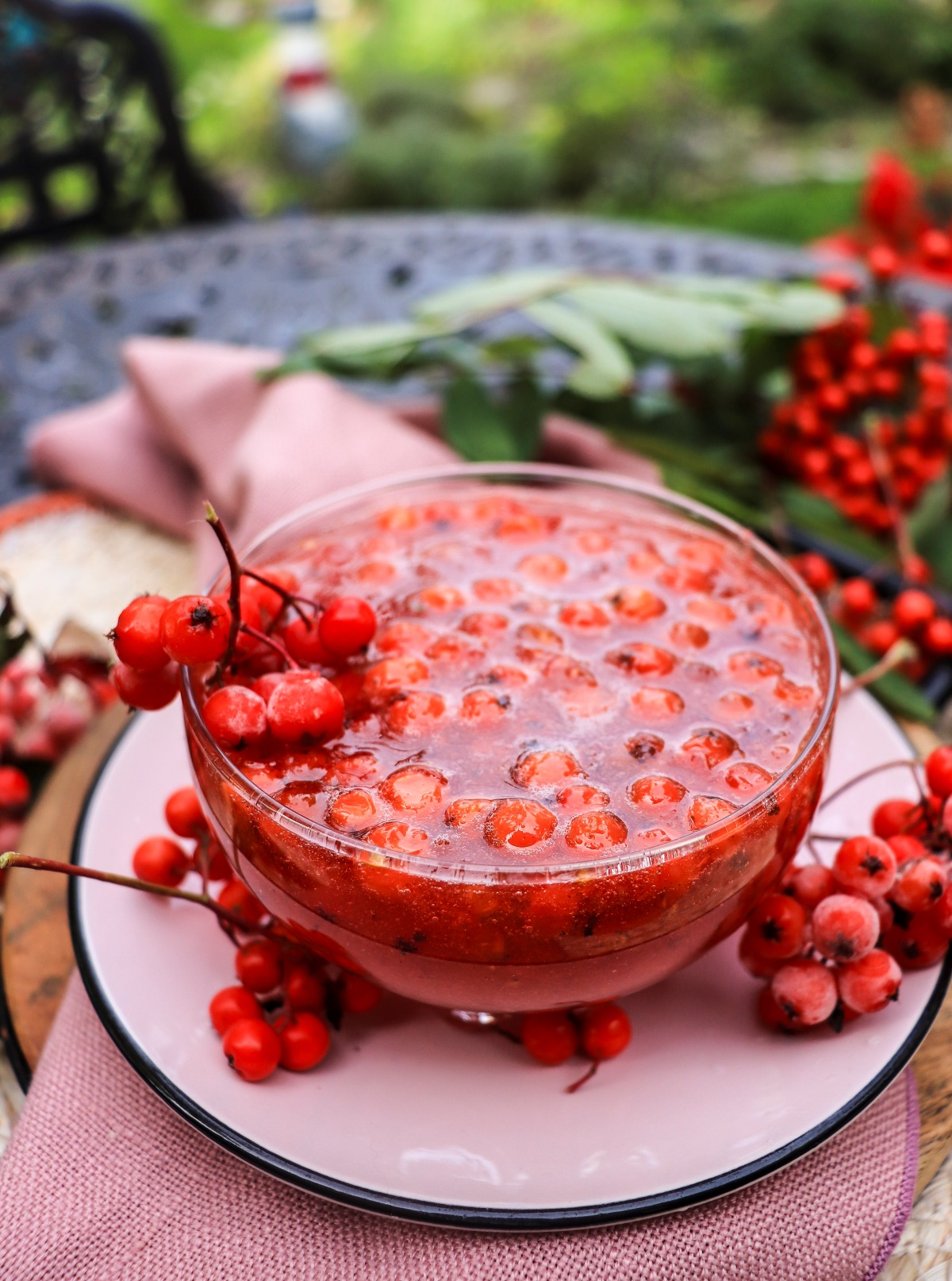
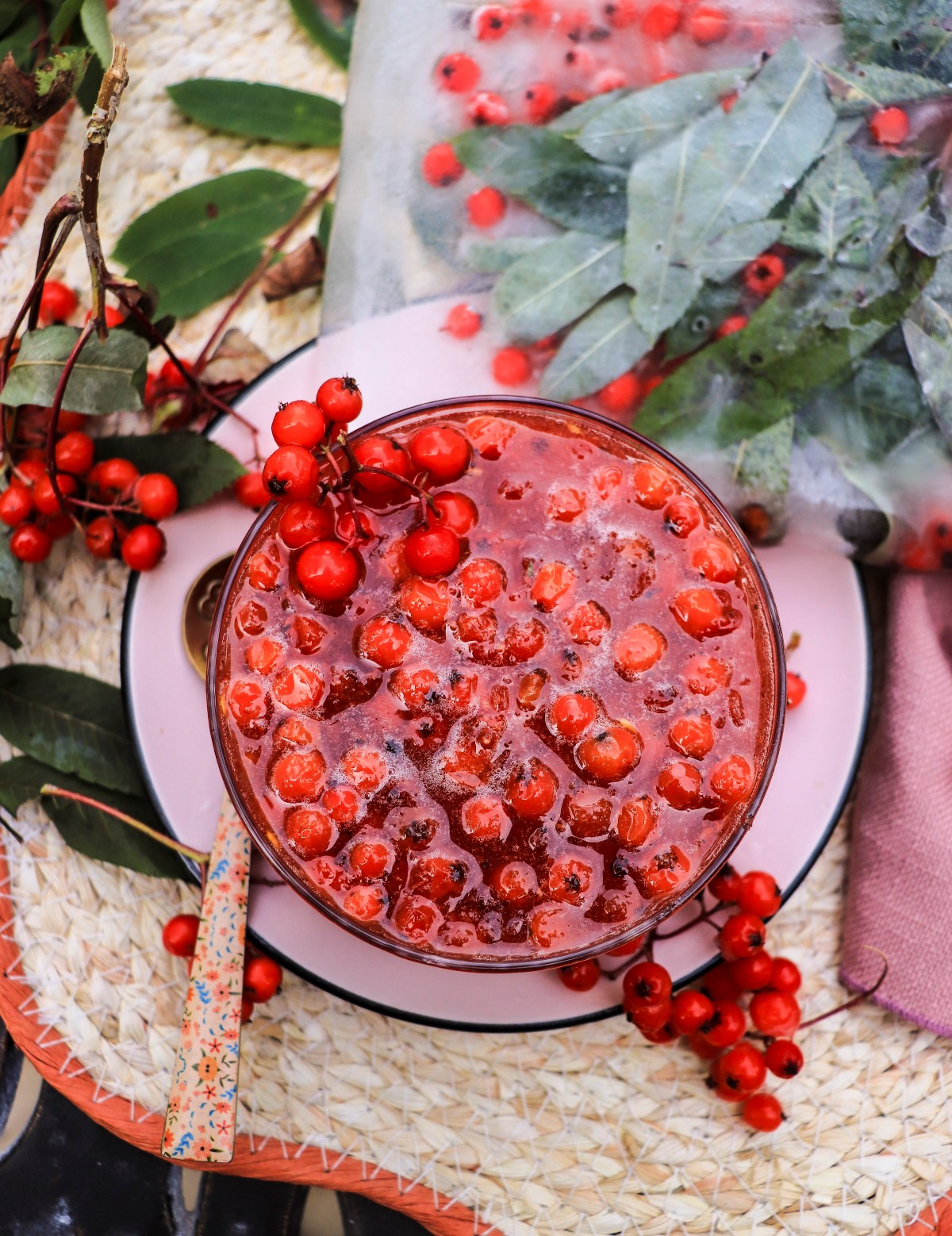
Tart and pleasantly bitter rowan berries are preserved with sugar, with plenty of whole berries retained in a loose syrup. Freezing, partial mashing, and a brief simmer help prepare the fruit and dissolve the sugar.



We call them Vogelbeeren (literally means bird berries) here. The preserve looks beautiful and inviting.