

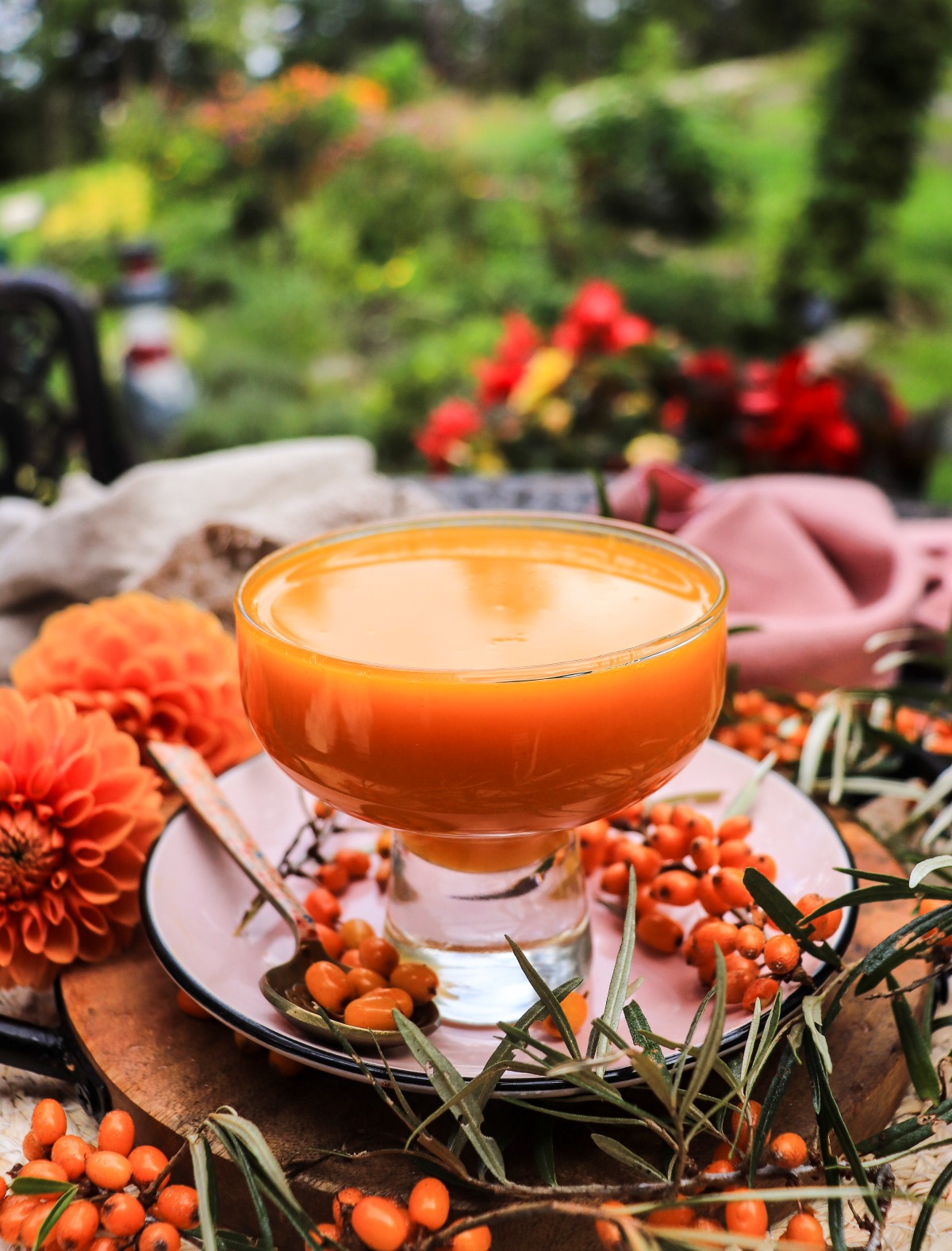
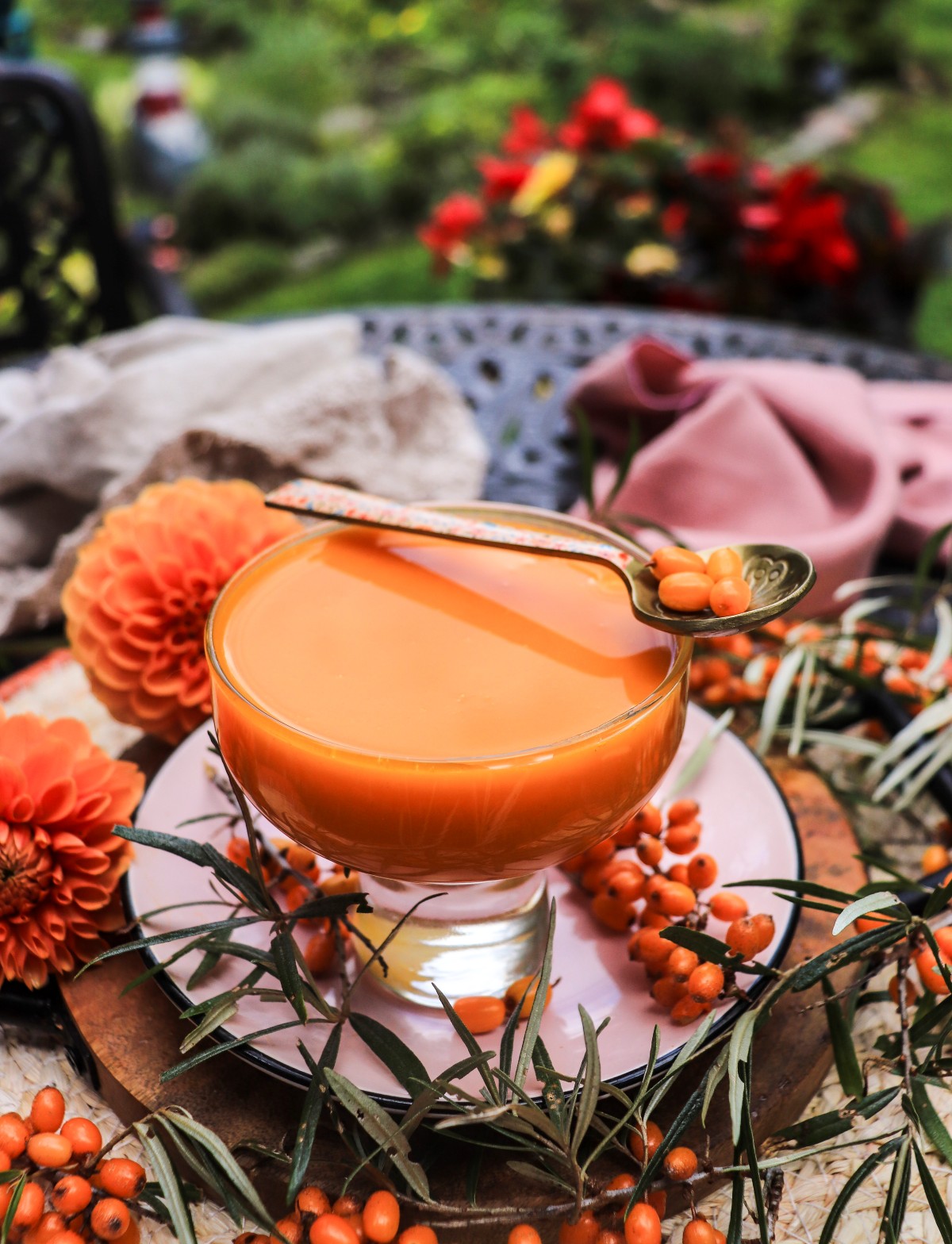
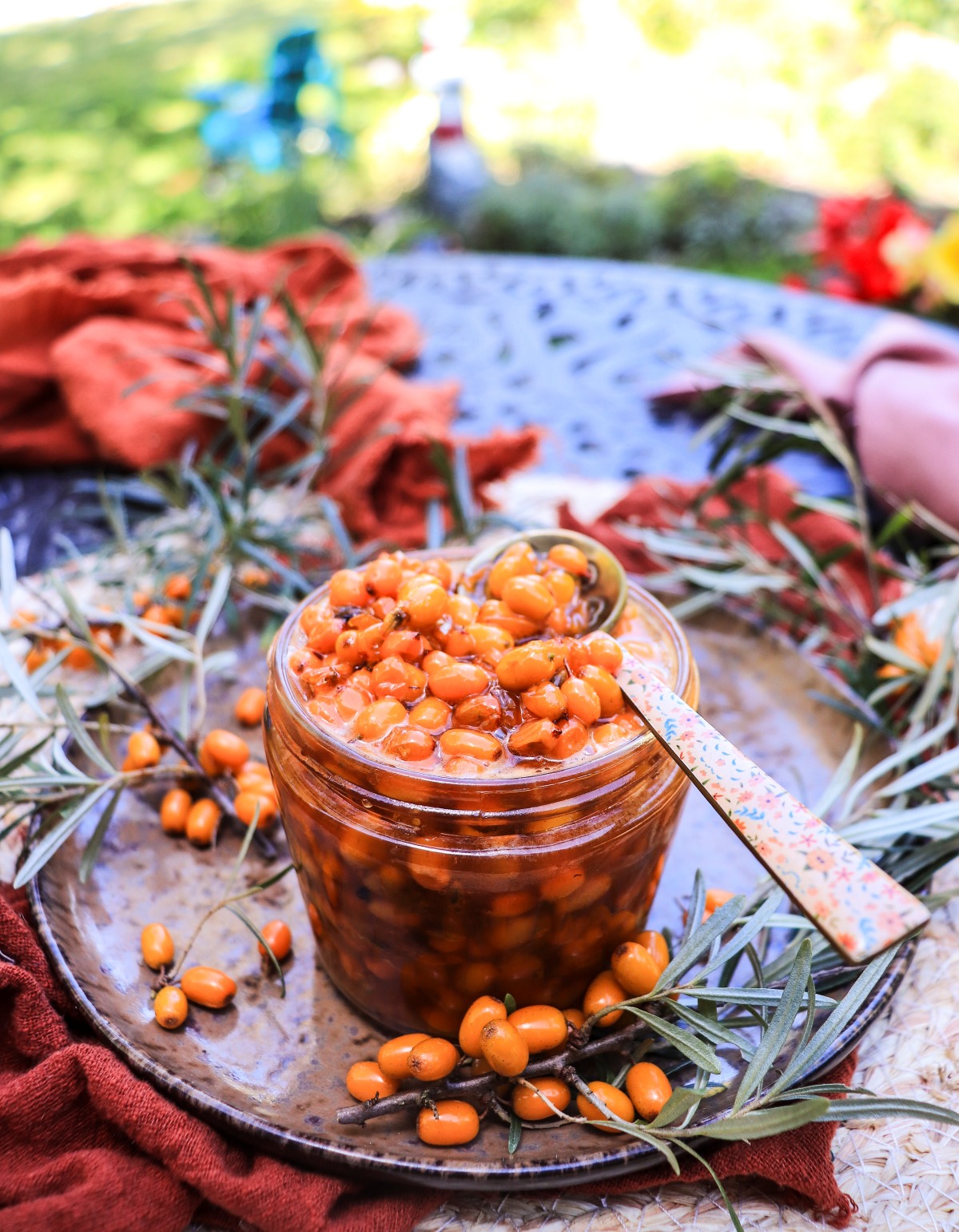
Homemade sea buckthorn syrup is a vibrant, intensely fruity preparation with refreshing tartness and a beautiful golden-orange colour. Make a tangy, pourable concentrate with relatively little sugar, or increase the sweetness and cooking time for a richer syrup suitable for drinks and desserts.
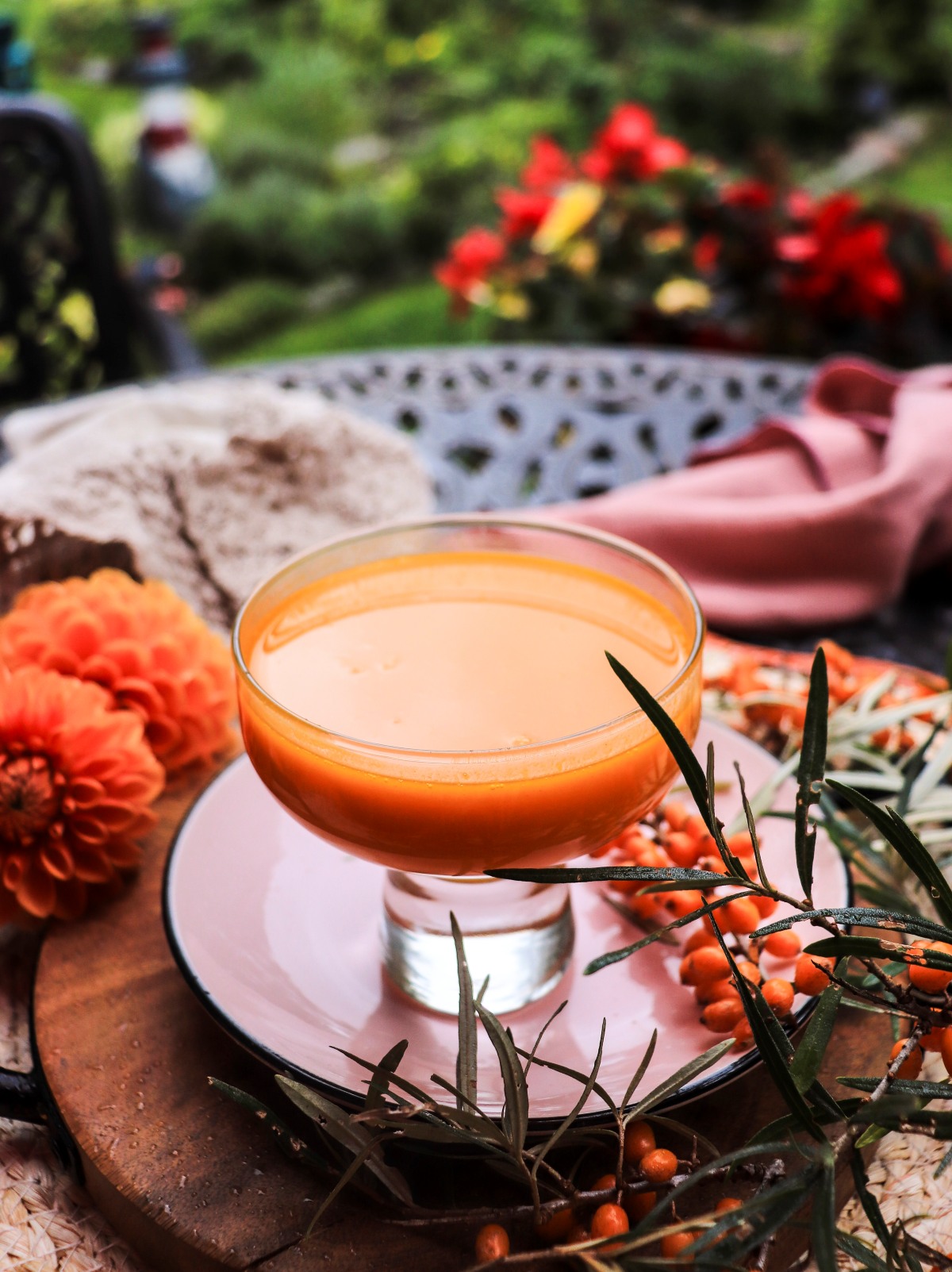
Hey folks – I hope you all are doing well!
If you’ve been following my recent recipes, you already know that I’ve been experimenting quite a bit with sea buckthorn this season. We harvested over a pound of these beautiful little berries, and one of the most useful preparations turned out to be this homemade concentrate. I’ve already used it in cocktails, ice cream, and savoury recipes, so it certainly deserves its own post!
What Makes This Sea Buckthorn Syrup / Concentrate Special?
Sea buckthorn has an unusually intense flavour, and making a concentrate or syrup is a convenient way to enjoy it in different recipes. Depending on the sugar quantity and cooking time, you can create two rather different preparations from the same berries.
One Recipe, Two Different Results
The main advantage of this sea buckthorn syrup recipe is its flexibility. You can adjust the sweetness and consistency according to how you intend to use it.
- Tart concentrate. Use approximately 100–125 g of sugar per 250 g of berries. This is my original version, with pronounced acidity and a light, pourable consistency.
- Sweeter syrup. Increase the sugar to approximately 200–250 g for the same quantity of fruit. A slightly longer cooking time produces a sweeter, fuller-bodied syrup.
- Adjustable sweetness. Begin with the smaller quantity of sugar within either range, then adjust according to the acidity of your berries.
- Different uses. The concentrate works particularly well in recipes containing other sweet ingredients, while the sweeter version is convenient for drinks and dessert toppings.
The tart concentrate is my original recipe. The sweeter syrup is an optional variation based on the same method rather than a separately tested formula.
Why Sea Buckthorn Makes Such a Distinctive Syrup
If you’ve ever tasted fresh sea buckthorn berries, you know they have a flavour that’s difficult to compare directly with other fruits. Their acidity is particularly pronounced, but there’s much more going on than simple tartness.
- Citrus-like acidity. The berries have a bright, refreshing sharpness reminiscent of citrus fruit.
- Tropical notes. Depending on the variety and ripeness, you may notice flavours reminiscent of passion fruit or pineapple.
- Subtle bitterness. A slightly bitter undertone gives the concentrate additional complexity.
- Vibrant colour. The berries produce a beautiful golden-orange liquid without artificial colouring.
- Natural oils. Sea buckthorn contains oils that contribute to its distinctive texture and may cause some separation during storage.
The finished homemade sea buckthorn syrup retains much of this character, particularly when you avoid prolonged cooking.
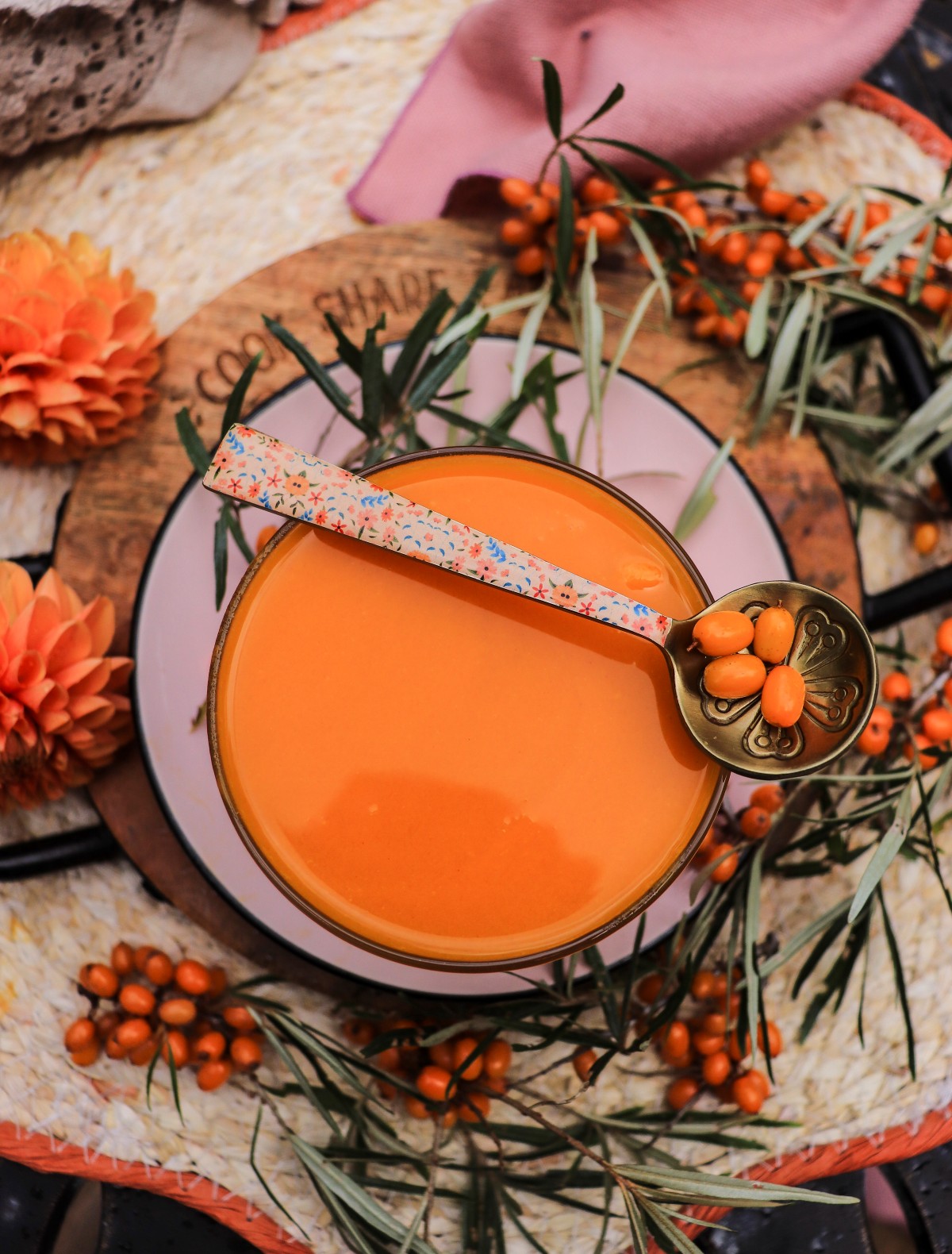
Concentrate vs. Syrup: Which Should You Make?
Both versions begin with the same berries and water. The differences are the amount of sugar and the final cooking time.
| Ingredients | Tart Concentrate | Sweeter Syrup |
|---|---|---|
| Berries | 250 g | 250 g |
| Water | 150 ml | 150 ml |
| Sugar | 100–125 g | 200–250 g |
| Cooking after straining | Until sugar dissolves | Approximately 5–10 minutes |
| Consistency | Light and pourable | Slightly thicker |
| Flavour | Intensely tart | Sweeter and more balanced |
| Best uses | Glazes, ice cream, cocktails | Drinks, pancakes, desserts |
Choose the concentrate if you prefer to control the sweetness of your final recipe. It’s particularly useful for ice cream, cocktails containing additional sweeteners, and savoury glazes.
The sweeter sea buckthorn syrup is a convenient alternative when you want something you can add directly to sparkling water or drizzle over pancakes without adding much additional sugar.
Fresh or Frozen Berries Work Equally Well
Another advantage of homemade sea buckthorn syrup is that you don’t need to prepare it immediately after harvesting. Frozen fruit is particularly convenient when you have a generous seasonal harvest.
- Fresh berries. Choose ripe fruit and remove any leaves, stems, or damaged berries before cooking.
- Frozen berries. Add them directly to the saucepan or thaw them beforehand.
- Thawing juices. If you thaw the berries first, retain all the released liquid.
- Seasonal convenience. Freeze your harvest in smaller portions so you can prepare fresh batches throughout the year.
Because the berries are cooked, mashed, and strained anyway, frozen sea buckthorn berries work particularly well for this recipe.
Ingredients You’ll Need For Homemade Sea Buckthorn Syrup
You need only three ingredients for this sea buckthorn syrup recipe. The quantities are flexible depending on whether you prefer a tart concentrate or a sweeter syrup.
- Sea buckthorn berries. Fresh or frozen berries both work. Choose ripe fruit with a vibrant orange colour and discard any damaged or questionable berries.
- Water. A relatively small amount helps soften the fruit, release its juices, and prevent the berries from catching on the bottom of the saucepan.
- Granulated sugar. Use a moderate amount for the concentrate or increase it substantially for the sweeter syrup.
Sea buckthorn berries vary in acidity depending on the variety, ripeness, and growing conditions. Therefore, you can adjust the final sweetness rather than follow the suggested quantities rigidly.
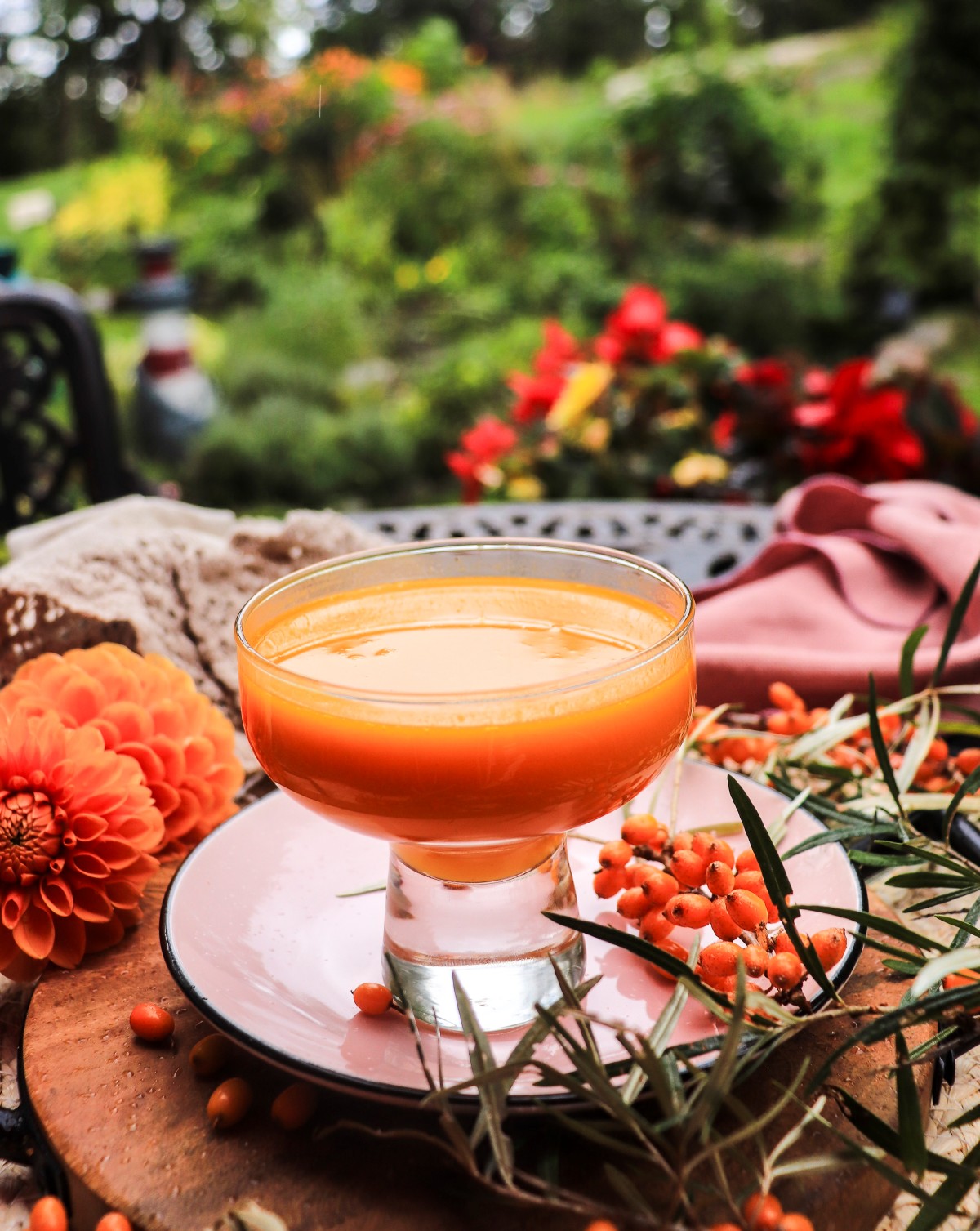
How To Make Sea Buckthorn Syrup or Concentrate
Making homemade sea buckthorn syrup is straightforward. The main thing is to extract as much flavour and juice as possible without cooking the berries unnecessarily long.
Prepare And Soften The Berries
Rinse fresh berries and remove any leaves, stems, or debris. If you’re using frozen sea buckthorn, you can add the berries directly to the saucepan.
Combine approximately 250 g of berries with 150 ml of water. Bring to a gentle simmer and cook for about 5–8 minutes, until the fruit softens and releases its juices.
Mash And Strain
Gently mash the softened berries to release more juice. Then transfer the mixture to a fine-mesh sieve set over a bowl.
Press the fruit to extract as much liquid as possible, leaving the seeds and most of the skins behind. Don’t worry if your sea buckthorn concentrate looks slightly cloudy, as the berries naturally contain oils and fine fruit particles.
Sweeten The Sea Buckthorn Concentrate Or Syrup
Once you’ve extracted the juice, choose which version you’d like to make.
For a tart concentrate:
- Return the juice. Pour the strained liquid into a clean saucepan.
- Add sugar. Stir in 100–125 g of sugar, starting with the smaller amount.
- Warm gently. Stir until the sugar dissolves completely.
- Avoid reduction. Remove from the heat without significantly reducing the liquid.
The finished sea buckthorn concentrate should remain light, intensely tart, and easy to pour.
For a sweeter syrup:
- Return the juice. Pour the strained liquid into the saucepan.
- Increase the sugar. Add approximately 200–250 g, depending on your preferred sweetness.
- Simmer gently. Once the sugar dissolves, continue simmering for approximately 5–10 minutes.
- Check consistency. The syrup should become slightly fuller-bodied but remain pourable. Remember that it will thicken somewhat as it cools.
The additional cooking time is a suggested starting point for the sweeter variation rather than a separately tested result. Avoid reducing the syrup too aggressively.
Tips For The Best Sea Buckthorn Syrup
A few small details can make a noticeable difference when preparing sea buckthorn concentrate.
- Use ripe berries. Fully ripe fruit generally provides better flavour and colour.
- Keep the juices. If you’ve thawed frozen berries beforehand, add any released liquid to the saucepan.
- Mash thoroughly. Sea buckthorn contains plenty of juice, but the skins need to be broken to release it.
- Press through the sieve. A little extra effort helps extract more flavour and colour.
- Taste before sweetening. It’s much easier to add more sugar than to correct an overly sweet syrup.
- Avoid excessive cooking. Prolonged boiling can change the fresh, bright character of the fruit.
- Expect some separation. Natural oils and fine particles may rise or settle during storage. Stir or shake the concentrate before using it.
If you prefer a clearer syrup, you can strain the liquid a second time through a finer sieve or several layers of cheesecloth. However, I personally don’t mind a little cloudiness, especially when the concentrate is destined for cooking or mixed drinks.
How Sweet Should Sea Buckthorn Syrup Be?
This really depends on how you intend to use it. Sea buckthorn is exceptionally tart, and even a fairly generous amount of sugar won’t completely eliminate its acidity.
For a versatile sea buckthorn concentrate, I recommend keeping the sweetness relatively restrained. However, there are several situations where the sweeter version may be more convenient.
- Cocktails. Consider the other ingredients in your drink. A cocktail containing honey, liqueur, or another sweetener may benefit from a tart-forward concentrate.
- Sparkling water. A sweeter syrup is convenient when you’re adding only a small splash to an otherwise unsweetened drink.
- Dessert toppings. Additional sugar balances the berries’ sharp acidity when drizzling the syrup over pancakes, waffles, or ice cream.
- Cooking. The concentrate gives you greater control when making glazes, marinades, and other savoury preparations.
You can also prepare the concentrate first, divide it into smaller portions, and sweeten one portion further for a particular recipe.
How To Use Sea Buckthorn Concentrate
This is where homemade sea buckthorn syrup really becomes useful. Its bright acidity can complement both sweet and savoury ingredients.
Cocktails And Refreshing Drinks
Sea buckthorn concentrate is particularly useful in drinks because its acidity can replace or complement some of the citrus.
Try it in:
- Mojitos. Combine with rum, fresh mint, and lime. Sea Buckthorn Mojito – A Vibrant Seasonal Cocktail.
- Gin and white rum cocktails. Pair with gin and complementary citrus or herbal ingredients.
- Sparkling drinks. Add to sparkling water or homemade lemonade.
- Iced tea. Stir in a little concentrate and adjust the sweetness.
- Warm drinks. Combine with tea and honey. Sea Buckthorn Tea (Seaberry Tea with Honey).
For cocktails that already contain sweet ingredients, the tart concentrate is particularly convenient. If you’re simply adding a splash to sparkling water, the sweeter syrup may be preferable.
Desserts
The concentrate is also a convenient way to incorporate sea buckthorn into desserts without introducing whole berries and seeds.
Some possibilities include:
- Creamy desserts. Add it to cheesecake or panna cotta.
- Breakfast bowls. Stir a little into yogurt or drizzle over porridge.
- Dessert toppings. Spoon the sweeter syrup over vanilla ice cream.
- Cake fillings. Use it to flavour suitable fillings and dessert sauces.
- Cookie glaze. Sea Buckthorn Shortbread Cookies
How To Store Homemade Sea Buckthorn Syrup
Because the concentrate is relatively lightly sweetened, it should be treated as a refrigerated preparation rather than a shelf-stable syrup.
- Refrigerate. Transfer the cooled syrup to a clean bottle or jar with a tight-fitting lid.
- Use clean utensils. Avoid introducing contaminants when serving.
- Freeze for longer storage. Divide the concentrate into smaller freezer-safe containers or ice cube trays for convenient portions.
- Check before using. Discard the syrup if you notice mould, unexpected fermentation, or an unusual smell.
The higher-sugar variation has not been tested for shelf-stable preservation either. Adding more sugar doesn’t automatically make homemade sea buckthorn syrup suitable for storage at room temperature.
More Sea Buckthorn Recipes To Try
If you’re looking for more ways to enjoy these wonderfully tart berries, you may also like some of my other sea buckthorn recipes:
- Sea Buckthorn No-Cook Preserves – Berries with Sugar
- Sea Buckthorn Jam
- Orange Sea Buckthorn Milkshake with Triple Sec
- Sea Buckthorn Ice Cream – No-Churn, No-Custard Recipe
- Sea Buckthorn Sauce Meatballs
- Sea Buckthorn Curd – A Bright Seaberry Recipe
I’d love for you to try this homemade sea buckthorn syrup or concentrate. If you give the recipe a go, please share your results in the comments, message me on Instagram, or post your photos with the hashtag #havocinthekitchen. I look forward to seeing your creations and hearing your thoughts!
Cheers!
Homemade Sea Buckthorn Syrup (Concentrate)
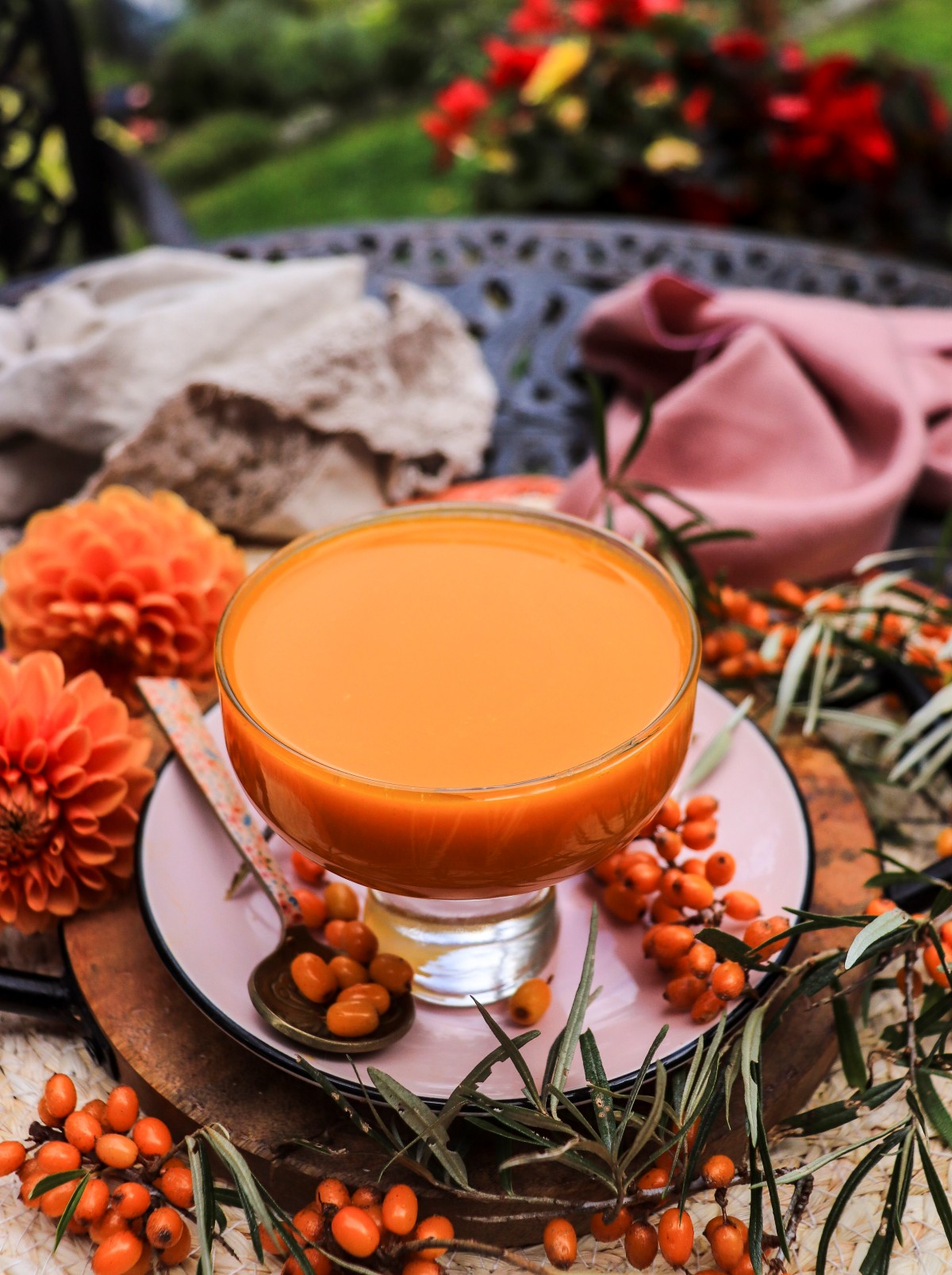
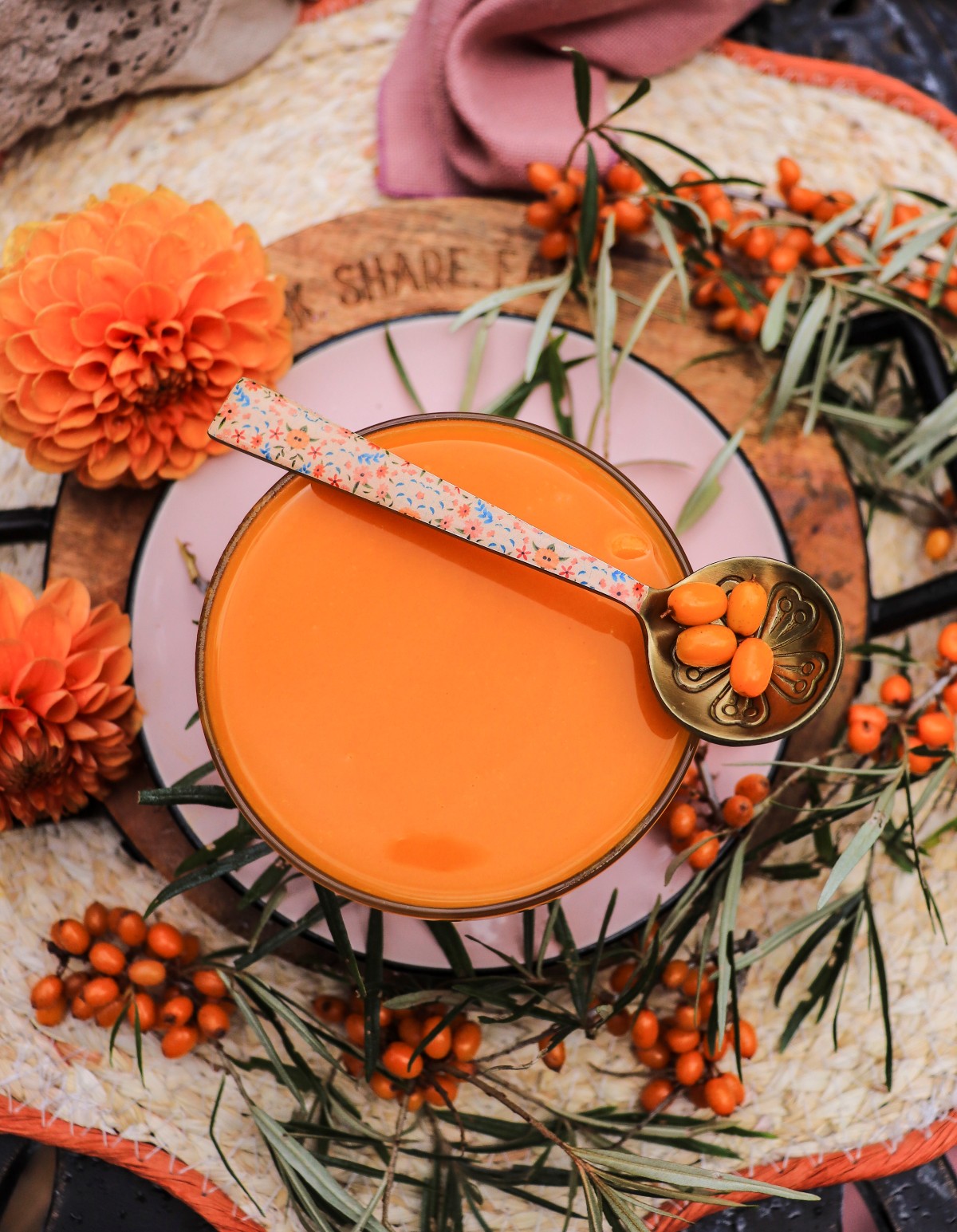
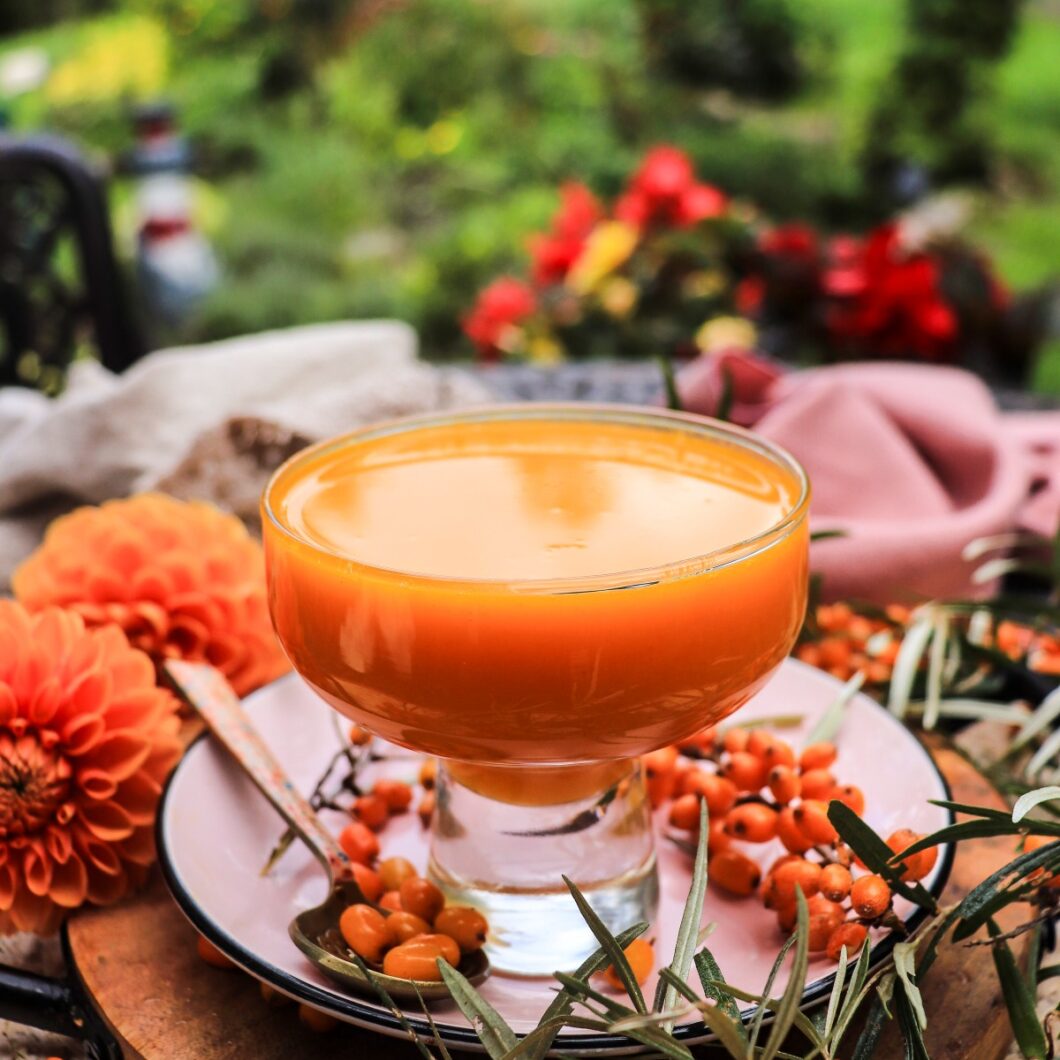
This homemade sea buckthorn concentrate is intensely tart, fruity, and beautifully golden-orange. Use it in cocktails, ice cream, and savoury glazes, or follow the optional variation to make a sweeter, slightly thicker syrup.




)