


Beetroot Vinegret Salad is a classic Eastern European winter salad made with tender beets, potatoes, carrots, sauerkraut or brined pickles, and peas, lightly tossed with oil. Earthy, tangy, and naturally vibrant, this traditional dish is especially popular during the holidays yet delicious throughout the entire winter season.

Hey, folks! Today, I’m sharing a nostalgic winter favourite that appears on many festive tables year after year. While it’s often associated with Christmas and New Year celebrations, this salad is far too good to reserve for special occasions only. So, let’s dive into this Beetroot Vinegret Salad.
Vinegret Salad: A Little Background
Beetroot Vinegret Salad, often simply called Vinegret, is a traditional Eastern European winter salad built around cooked root vegetables and a sour component such as sauerkraut or brined pickles. Although many associate it with festive holiday tables, it is equally popular throughout the colder months.
There is no single “authentic” recipe. In fact, many families proudly consider their own version the best — and they may all be right.
Why You’ll Love This Beetroot Vinegret Salad
- Naturally Vibrant: The deep ruby beets make this salad visually stunning on any winter table.
- Balanced Flavours: Sweet root vegetables contrast beautifully with tangy sauerkraut or pickles.
- Holiday-Worthy Yet Everyday-Friendly: Festive enough for celebrations, simple enough for regular winter meals.
- Make-Ahead Perfect: It tastes even better after resting in the refrigerator.
Flavour and Texture Profile
This Beetroot Vinegret Salad is earthy, slightly sweet, and pleasantly tangy. The potatoes soften the acidity, the carrots add gentle sweetness, and the peas contribute freshness. The sauerkraut or pickles provide brightness, while a light drizzle of oil ties everything together without making the salad heavy.
Vinegret Salad (Eastern European Beetroot Salad): Core Ingredients and Balance
In my view, the most important ingredients are beets and a sour element. Sauerkraut or brined pickles are essential because they balance the natural sweetness of the root vegetables. It’s important to use sauerkraut that isn’t overly sweet or vinegary. Finding non-sweet pickles can be more difficult, so relying primarily on good-quality sauerkraut works beautifully.
Carrots and potatoes are also traditional components. While some people omit them, I wouldn’t recommend eliminating both, as the salad benefits from the starch and structure they provide.
Green peas or beans are optional but common. I personally prefer green peas for freshness and colour, though beans make the salad more substantial.
What I Skip (and Why)
Many versions include finely chopped onions or scallions. Personally, I avoid them because I find they overpower the delicate vegetable balance. Instead, I prefer adding a little chopped dill or parsley when available.
Proportions and Seasoning
Proportions are flexible and largely intuitive. A general guideline is that one cup of cubed beets pairs well with roughly one cup of mixed carrots and potatoes. However, many cooks use equal quantities of all three.
The amount of sauerkraut or pickles depends entirely on their sharpness and your personal taste. Adjust gradually and taste as you go.
Seasoning is minimal. Usually, only a pinch of black pepper is added. Salt is optional and depends on how salty the sauerkraut or pickles are. Traditionally, there is no heavy dressing — just a light drizzle of aromatic oil if desired.

Resting Time and Storage
Do not serve Vinegret immediately. It needs time to rest so the flavours can meld. After several hours in the refrigerator, it becomes noticeably more harmonious. In fact, it is often even better the next day.
We typically prepare a large batch and enjoy it for two to three days. It keeps safely refrigerated for up to three days. If storing, avoid adding oil to the entire salad; instead, drizzle oil only over the portion you plan to serve.
How to Serve
Although this salad is hearty and high in carbohydrates, it pairs beautifully with bread. Toasted rye bread, in particular, is an exceptional companion.
How to Make Beetroot Vinegret Salad
To prepare this Beetroot Vinegret Salad, start by boiling the beets until tender, or roast them if preferred. In separate pots, cook the potatoes and carrots until just fork-tender, being careful not to overcook. Allow all vegetables to cool completely, then peel and dice them into small, even cubes.
Combine the potatoes and carrots in a large bowl, then stir in the sauerkraut and/or chopped pickles along with green peas or beans. Dice the beets separately and fold them in at the end to prevent the entire salad from turning intensely red. If desired, lightly coat the beets with a few drops of oil before mixing, which also helps control colouring.
Adjust the balance by adding more sour ingredients if needed and season with black pepper and salt to taste. Refrigerate for at least two hours before serving to allow the flavours to meld. Serve chilled, optionally drizzled with a little oil just before serving.
More Eastern-European Recipes
Are you looking for more fun recipes, like this Beetroot Vinegret Salad? Be sure to check more recipes below:
- Mimosa Salad – Layered Fish Salad
- Layered Pomegranate Bracelet Salad with Chicken, Beet & Walnut
- Potato Beetroot Herring Salad
- No Bake Hedgehog Cakes (Chocolate Cookie Dessert)
- Mini “Potatoes” Cakes – No-Bake Chocolate Cookie Dessert
- Homemade Processed Spreadable Cheese from Cottage Cheese
- Dulce de Leche Cake (Russian Anthill Cake “Muraveinik”)
- Cottage Cheese Pancakes (Syrniki) – Pan-Fried Cakes
I hope you like this Homemade Spreadable Cheese (Made from Cottage Cheese), and you will give it a try shortly. If you make it, please let me know in the comment section of this post below, send me an Instagram message, or share your photos by adding the hashtag #havocinthekitchen.
Cheers!
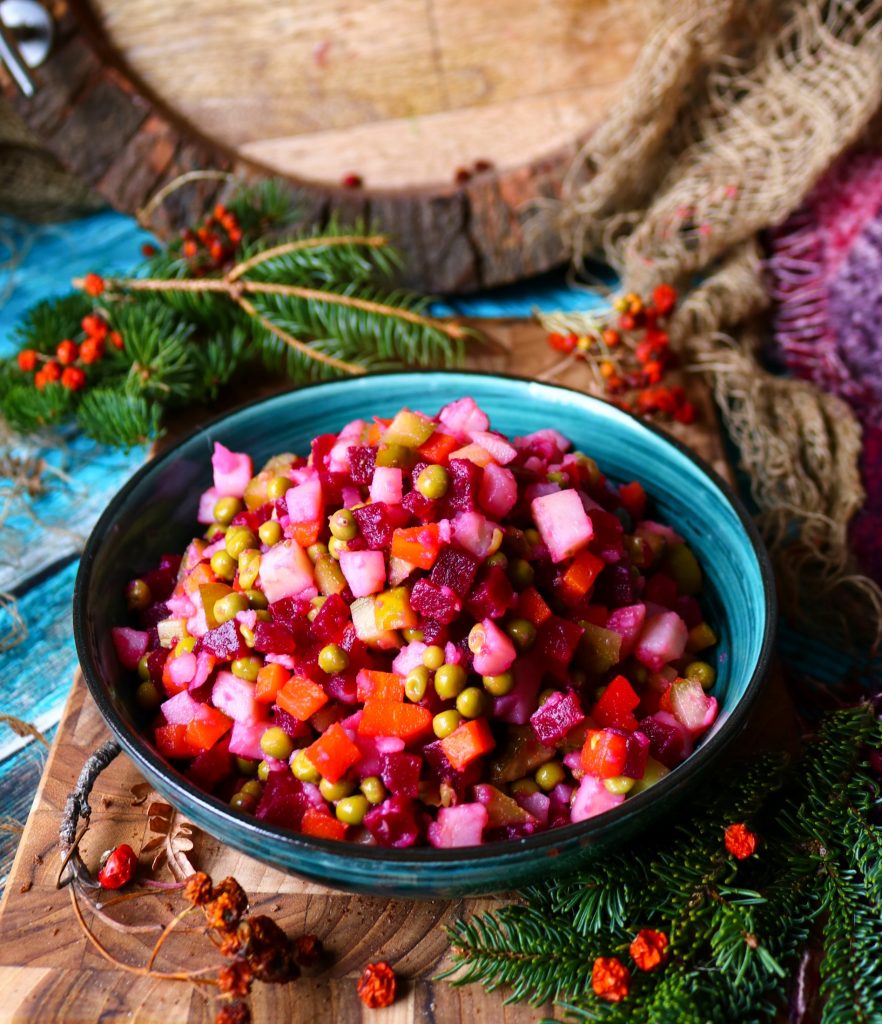
Vinegret Salad (Eastern European Beetroot Salad)
Vinegret salad is a classic Eastern European beetroot salad with potatoes, carrots, peas and pickles, lightly dressed with oil.
6-8
servings20
minutes1
hourKeep the screen of your device on
Ingredients
3 medium beets
2 medium potatoes
2 medium carrots
About 2/3 to 1 cup sauerkraut or 4–5 brined pickles (or a combination)
About 2/3 cup canned green peas or beans
Black pepper and salt, to taste
Olive or other aromatic oil, optional
Directions
- Boil or roast the beets until tender, then cool and peel. Separately boil the potatoes and carrots until just fork-tender. Cool, peel, and dice all vegetables into small cubes.
- In a large bowl, combine the potatoes, carrots, sauerkraut and/or pickles, and peas or beans. Dice the beets separately and fold them in gently to avoid excessive colouring. Season with black pepper and salt as needed.
- Refrigerate for at least 2 hours before serving. Drizzle lightly with oil just before serving, if desired. Serve chilled, ideally with toasted rye bread.
Notes
- If you don’t mind all ingredients coloured in red – don’t worry and mix everything together! That’s not about the taste but about the visual thing.




)
I love seeing all your traditional Russian recipes. And I’ve loved all your desserts so far. This salad recipe is one thar is particularly up my street though. I love the colour and all those healthy vegetables! As you say I would leave this to marinate in the fridge for a while. To let all those delicious flavours mingle together. And yes, I would definitely love to serve this with some toasted rye bread. Yum!
This Vinegret salad sounds like a dance in your mouth! I love tangy salads and eat sauerkraut straight with a spoon, lol! So I know I’d love this!
Loving the beets, Ben! I eat them a lot, but I’ve never actually used saurkraut as an ingredient in a salad. I do LOVE my saurkraut though, so I think it’s time I try this traditional recipe!
What a beautiful salad, Ben! I often have sauerkraut in my fridge, for the occasional sausage or Reuben sandwich. But putting it in a salad seems like a fantastic idea! And with beets and potatoes? It sounds wonderful, and I totally love a salad that improves with age. 😉
Your Russian salad would really add color to any meal you are serving. Although different, it reminds me of a Russian potato salad that I had while living in Santo Domingo…it just didn’t have sauerkraut.
Beets, potatoes, and sauerkraut all in the same salad? I’m IN! Those are three of my favorite foods in the world. And like David, I’ve never seen a salad with kraut as an ingredient. This sounds awesome! I hope you’ll continue to share traditional Russian recipes. It’s so much fun to learn about other cuisines. (By the way, I ordered Karlson on the Roof. It hasn’t arrived yet but I’m excited to read it!)
Interesting! I’ve never seen a salad recipe that uses saurkraut as an ingredient. I’m used to topping salads or hot dogs with kraut, but I’m intrigued by this salad now! It sounds like a great option for summer picnics. And your comment about serving this one with toasted rye bread sounds delicious. Thanks for sharing this traditional Russian recipe…I learned something new today! :-)