

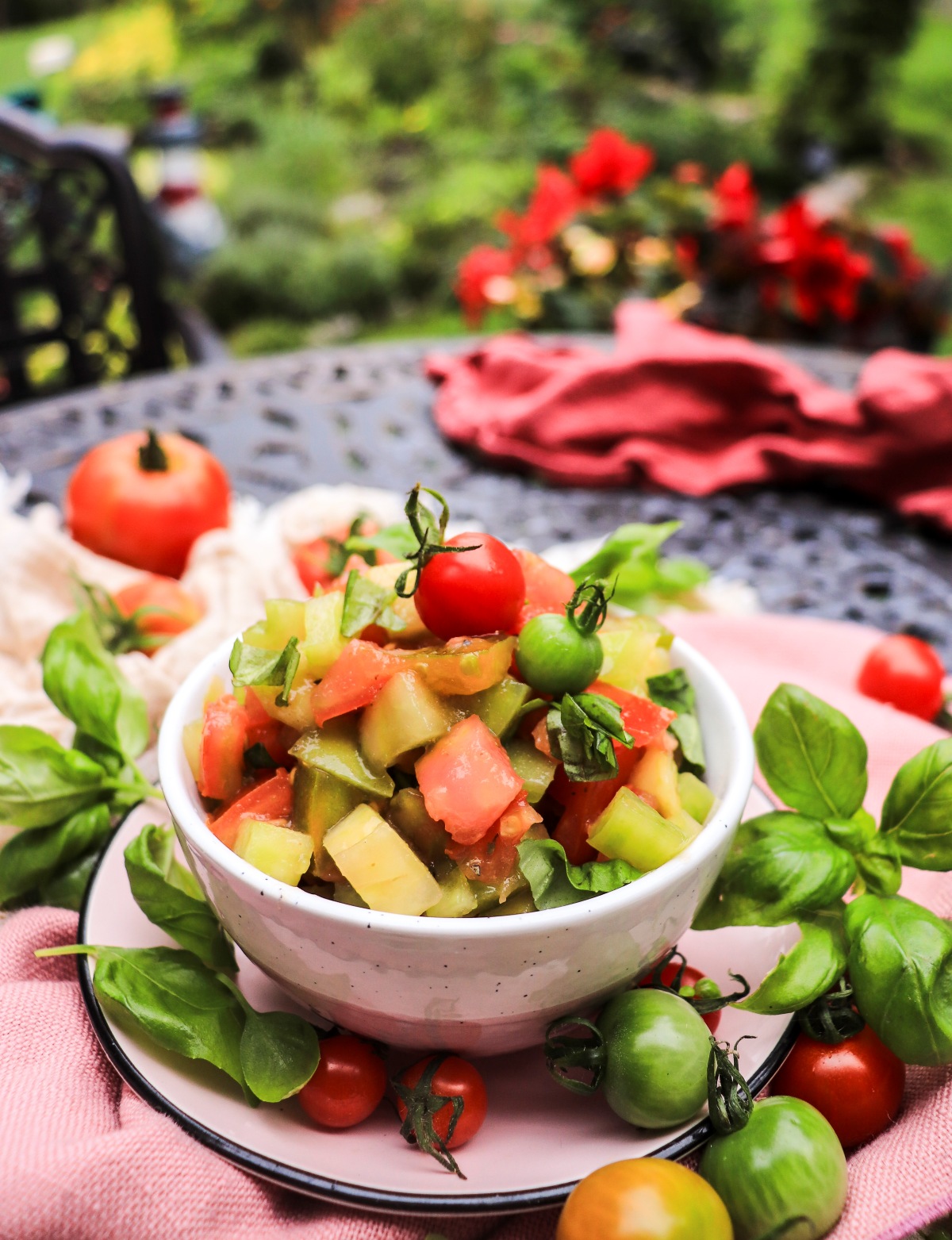
This fresh tomato relish combines juicy ripe tomatoes with crisp green tomatoes, balsamic vinegar, garlic, oregano, and basil. Fresh, chunky, and completely no-cook, it is a lovely way to use a late-summer tomato harvest.
Hey folks – I hope you all are doing well!
Our garden is still producing plenty of tomatoes, including quite a few that have not had a chance to ripen yet. And this fresh tomato relish turned out to be an excellent way to use both at once. In fact, the green tomatoes are not just here to use up the harvest – their crisp texture makes this simple relish particularly good. So, let’s dive into this green tomato relish!
What Is Tomato Relish?
Tomato relish is a broad term for a chopped tomato condiment served alongside other foods. Depending on the recipe and culinary tradition, it can be raw or cooked, sweet or savoury, and made for immediate serving or preserving.
This fresh tomato relish belongs firmly in the fresh and savoury category. The tomatoes are chopped and lightly macerated with balsamic vinegar, olive oil, garlic, and herbs. There is no cooking, canning, added sugar, or lengthy pickling involved.
As a result, the tomatoes retain their fresh character. The finished relish is juicy and spoonable but still pleasantly chunky.
Tomato Relish vs. Salsa vs. Chutney
These terms can overlap, so there is no single definition that covers every recipe. However, there are some useful general distinctions.
- Relish. This is a broad category of chopped condiments made from vegetables, fruit, or both. Relishes can be fresh or cooked and vary considerably in flavour and texture.
- Salsa. Salsa simply means “sauce” in Spanish and covers many different preparations. Fresh tomato salsas often include ingredients such as onion, chile, lime, and cilantro. Although their chopped texture may resemble this tomato relish recipe, the flavour profile here is quite different.
- Chutney. Chutneys also vary enormously, particularly across different regional traditions. However, many Western-style tomato chutneys are cooked with vinegar, sugar, and spices, producing a softer and more concentrated sweet-and-sour condiment.
So why call this recipe a relish? Its chunky texture, simple dressing, and versatile savoury character fit the term particularly well. At the same time, calling it a fresh tomato relish helps distinguish it from cooked tomato relishes intended for preserving.
What Makes This Fresh Tomato Relish Special?
This is a very simple recipe, and that is intentional. Instead of adding many competing flavours, it keeps the focus on fresh garden tomatoes.
Fresh Relish With Ripe and Green Tomatoes
Using tomatoes at two different stages of ripeness creates both flavour and textural contrast.
- Ripe tomatoes contribute sweetness, softness, and plenty of juice.
- Green tomatoes are firmer, crisper, and pleasantly tart.
- Together, they create a more interesting relish than ripe tomatoes alone.
As the relish rests, the ripe tomatoes release some of their juices and create a natural dressing with the olive oil and balsamic. Meanwhile, the green tomatoes remain noticeably firmer.
Tomato Relish With A Fresh, Chunky Texture
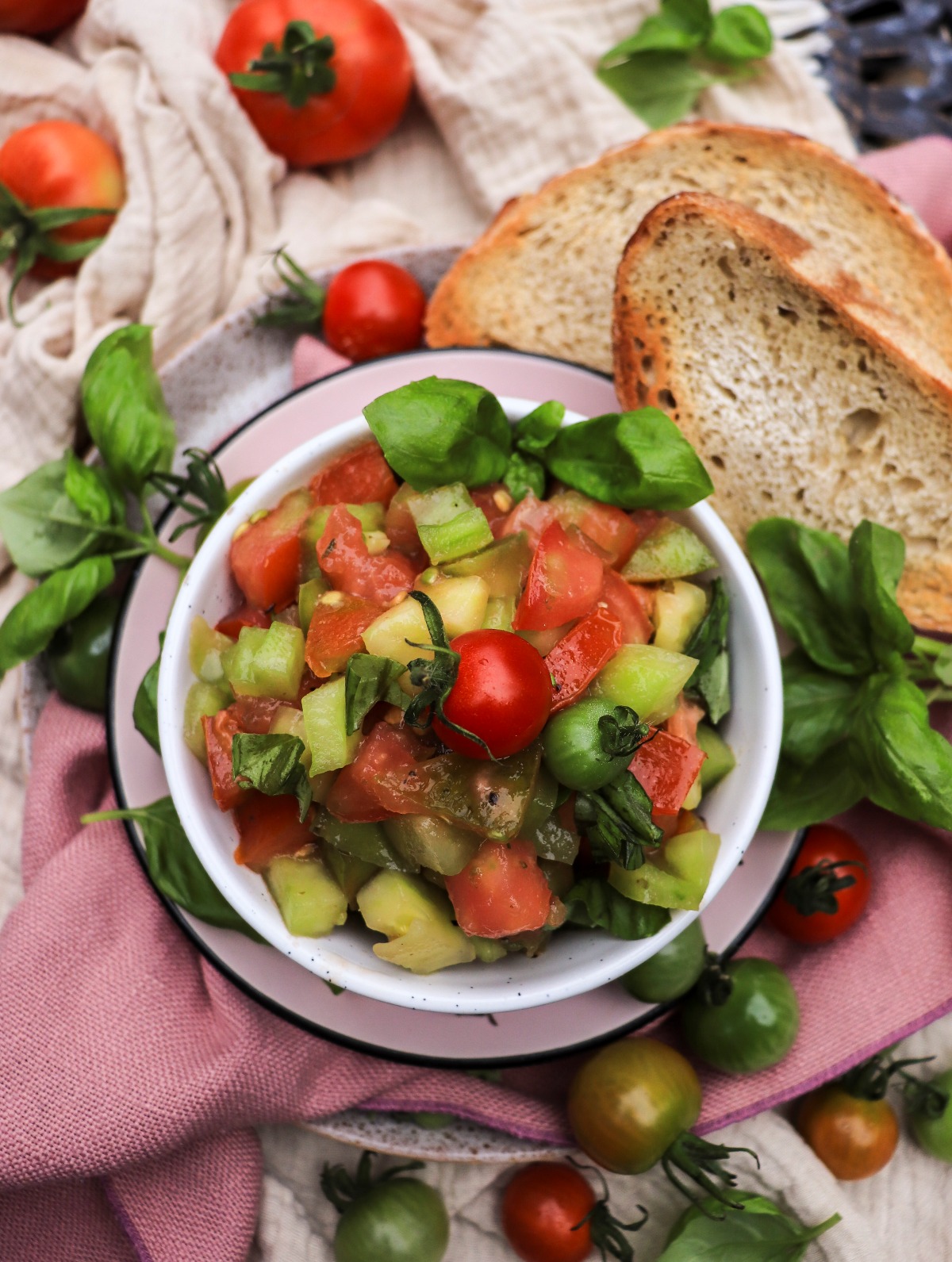
This fresh tomato relish is deliberately chunky. Rather than finely mincing the tomatoes, cut them into reasonably substantial pieces.
The green tomatoes are particularly useful for maintaining this texture. Their firm flesh holds its shape during maceration and gives the relish a cleaner, more defined appearance. Meanwhile, softer ripe tomatoes become juicier without turning the entire mixture into a sauce.
You can dice particularly firm green tomatoes slightly smaller than the ripe ones. This makes the finished texture more balanced while keeping those crisp pieces noticeable.
Simple Mediterranean-Inspired Flavours
The seasonings are deliberately restrained. You will need only a few ingredients to complement the tomatoes.
- Balsamic vinegar provides acidity with a naturally rounded flavour.
- Extra virgin olive oil combines with the tomato juices to form the simple dressing.
- Garlic adds savoury depth, but one large clove is sufficient.
- Dried oregano gives the relish a subtle herbal background.
- Fresh basil adds a fresher aromatic note just before serving.
And yes, dried oregano and fresh basil work beautifully together here. The oregano has time to mingle with the tomatoes while they macerate, whereas basil tastes brightest when added closer to serving.
Completely No-Cook
Unlike many recipes for green tomato relish, this one never goes near the stove. It is also not intended for canning.
Instead, the tomatoes simply macerate in their seasonings for an hour or two. This brief rest softens the ripe tomatoes slightly and allows the flavours to mingle while preserving the crisp character of the green ones.
Ingredients You’ll Need For This Fresh Tomato Relish With Green Tomatoes
You will need only a handful of simple ingredients for this fresh tomato relish recipe.
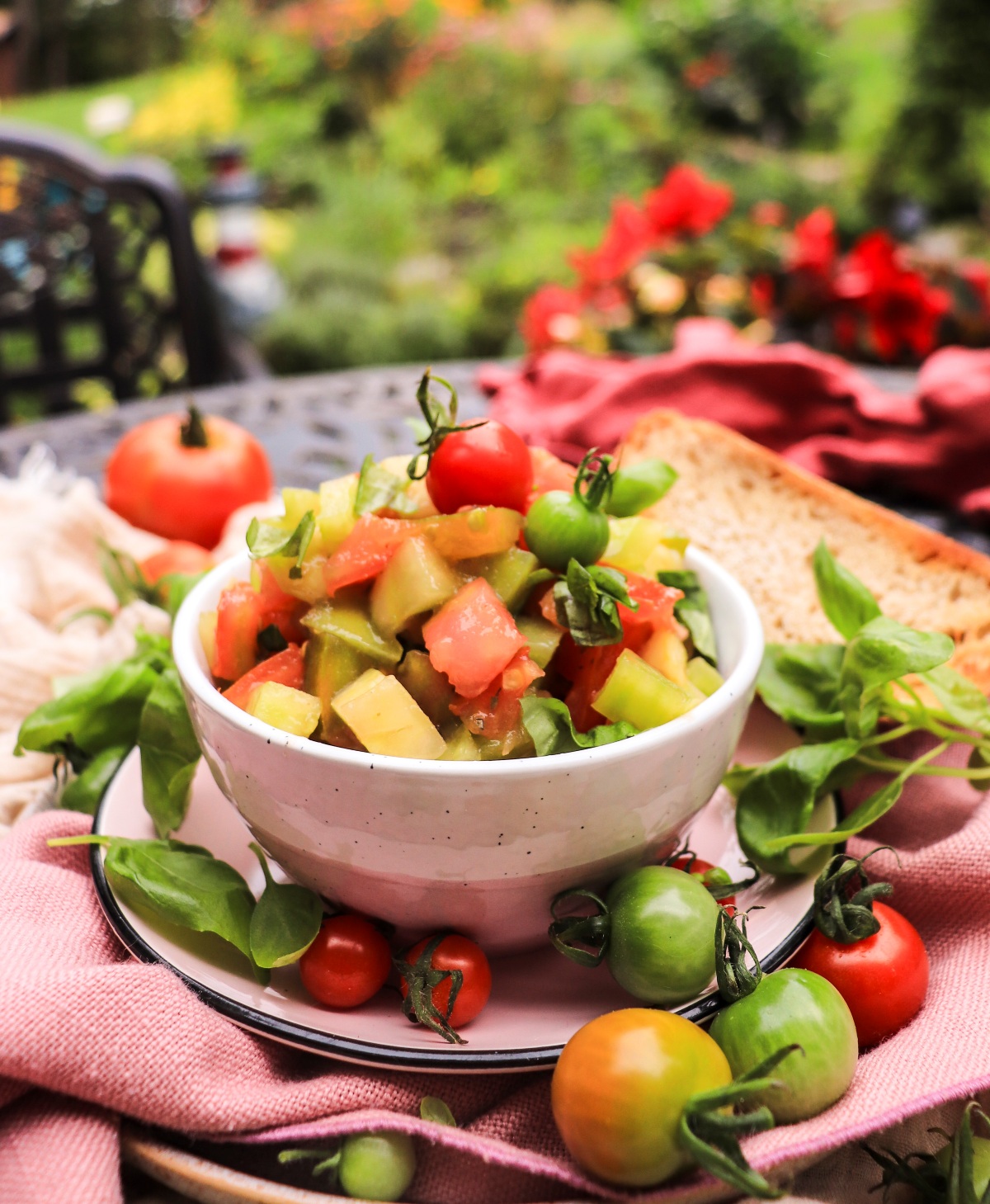
- Tomatoes. Use about 500 grams (1.1 lb.) total. A combination of ripe and unripe green garden tomatoes provides the best contrast. A ratio of roughly three parts ripe to two parts green is a useful starting point, but it does not need to be exact.
- Garlic. One large clove is enough. Too much raw garlic could easily dominate the tomatoes.
- Balsamic vinegar. It adds gentle acidity and a little natural sweetness without the need for added sugar.
- Extra virgin olive oil. Use one you enjoy for uncooked preparations.
- Dried oregano. Its concentrated savoury flavour works particularly well during maceration.
- Fresh basil. Add it shortly before serving so it remains fragrant and vibrant.
- Salt and black pepper. Salt is particularly important because it draws some juice from the tomatoes and brings the simple flavours together.
There is intentionally no onion, chile, honey, or added sugar in this garden tomato relish. Keeping the ingredient list restrained allows both ripe and green tomatoes to remain the focus.
How to Make Fresh Tomato Relish
The preparation is straightforward, but a short resting time makes a noticeable difference.
- Prepare the tomatoes. Dice the ripe and green tomatoes into chunky pieces. You can cut the firmer green tomatoes slightly smaller for a more even finished texture.
- Salt the tomatoes. Season them with salt and let them stand for about 10–15 minutes. The ripe tomatoes will begin releasing some of their juices.
- Add the seasonings. Gently stir in the minced garlic, balsamic vinegar, extra virgin olive oil, dried oregano, and black pepper.
- Macerate the relish. Refrigerate it for about 1–2 hours. This gives the flavours time to mingle without significantly softening the green tomatoes.
- Finish with basil. Gently stir the relish before serving and add freshly chopped or torn basil.
There is generally no need to drain the tomatoes. The juices are part of what makes this no-cook tomato relish so good. However, exceptionally juicy tomatoes may produce more liquid than you need, in which case you can spoon a little away.
Why Use Green Tomatoes in Tomato Relish?
Green tomatoes bring more than tartness to this recipe. Their greatest advantage is arguably their texture.
Even after macerating, they remain considerably firmer than ripe tomatoes. This gives fresh green tomato relish a pleasant crunch and helps the individual pieces retain their shape.
They are also useful for balancing particularly sweet, fully ripe late-summer tomatoes. Consequently, you get a condiment that tastes fresh and lively without needing large quantities of vinegar.
Green Heirloom Tomatoes vs. Unripe Green Tomatoes
It is worth pointing out that green tomatoes are not necessarily unripe tomatoes.
Some heirloom varieties remain green, yellow-green, or green-striped even when fully ripe. These tomatoes generally become softer and develop the sweetness and complexity associated with ripe fruit.
Unripe green tomatoes are different. They are tomatoes picked before reaching their mature colour. Typically, they are:
- Firmer and denser than ripe tomatoes.
- More tart and less sweet.
- Crisper when eaten raw.
- Better at holding their shape after chopping and macerating.
For this fresh tomato relish, it is specifically the firmness of unripe green tomatoes that creates the lovely textural contrast. If you use a ripe green heirloom variety instead, it will certainly work, but the texture will be closer to that of the other ripe tomatoes.
Can You Eat Unripe Green Tomatoes?
Yes, green tomatoes have a long history of culinary use, both cooked and raw. However, there is a little more nuance to the answer.
Unripe tomatoes naturally contain higher concentrations of glycoalkaloids, including α-tomatine, than fully ripe tomatoes. The concentration generally decreases as tomatoes mature. For most people, the quantities consumed as part of normal meals are not considered problematic, although eating very large amounts of unripe tomatoes is not advisable.
They can also taste quite tart or slightly bitter when very immature. For this green tomato relish, choose firm, developed green tomatoes rather than extremely small, hard, immature fruit.
What to Serve with Fresh Tomato Relish
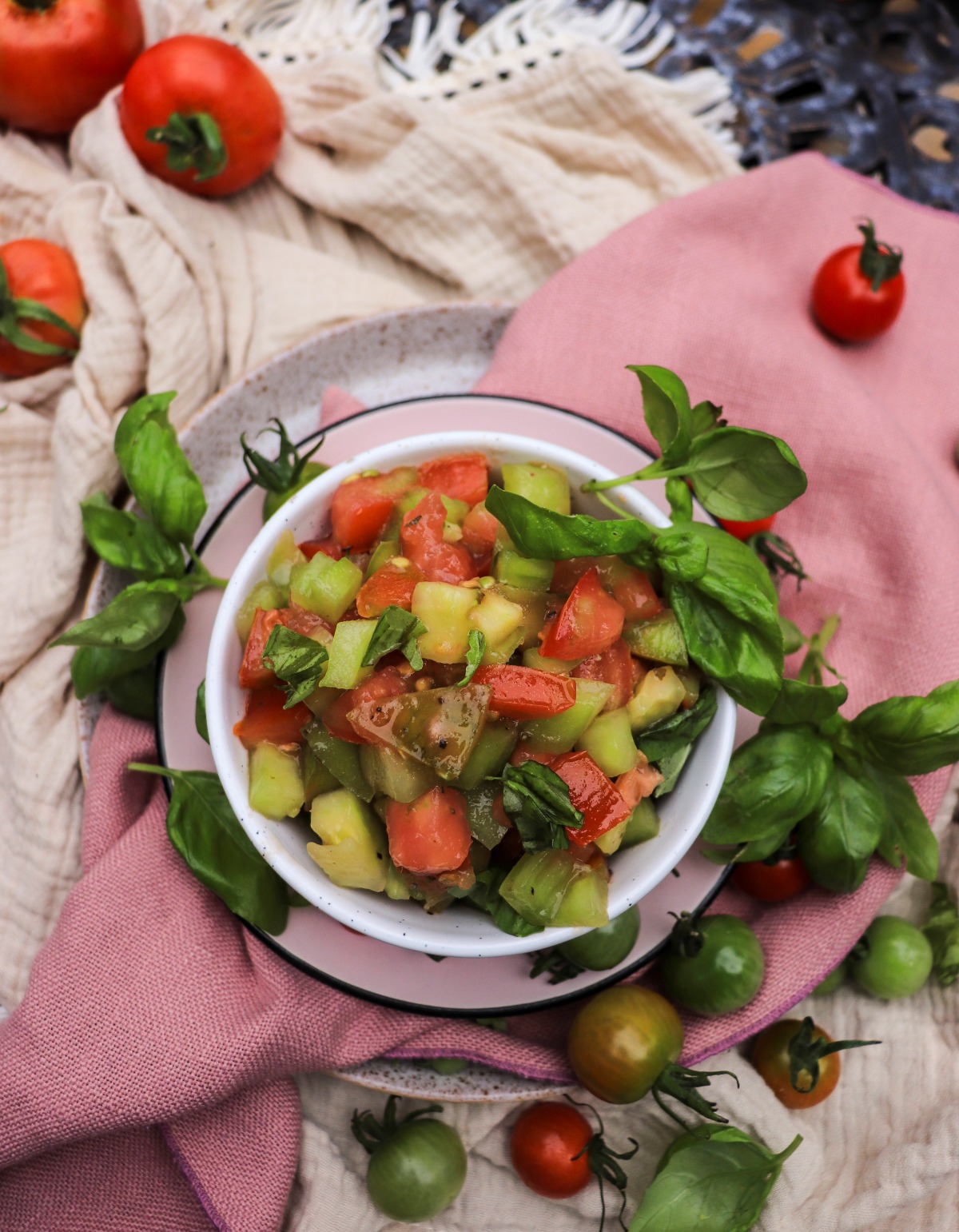
Think of this chunky fresh tomato relish as a versatile savoury condiment rather than a standalone salad. Its combination of acidity, fresh herbs, and juicy tomatoes works particularly well with simple foods.
Try serving it:
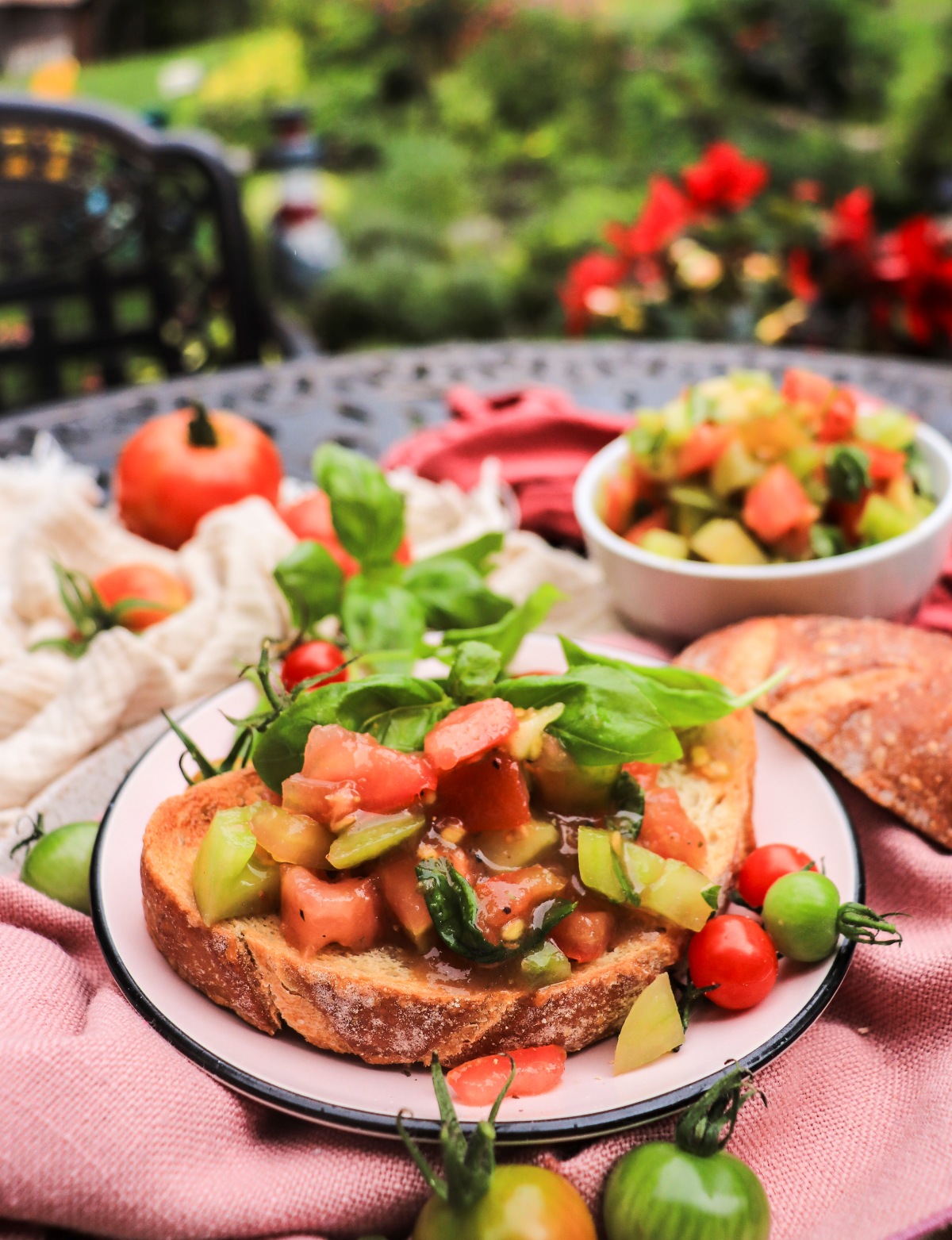
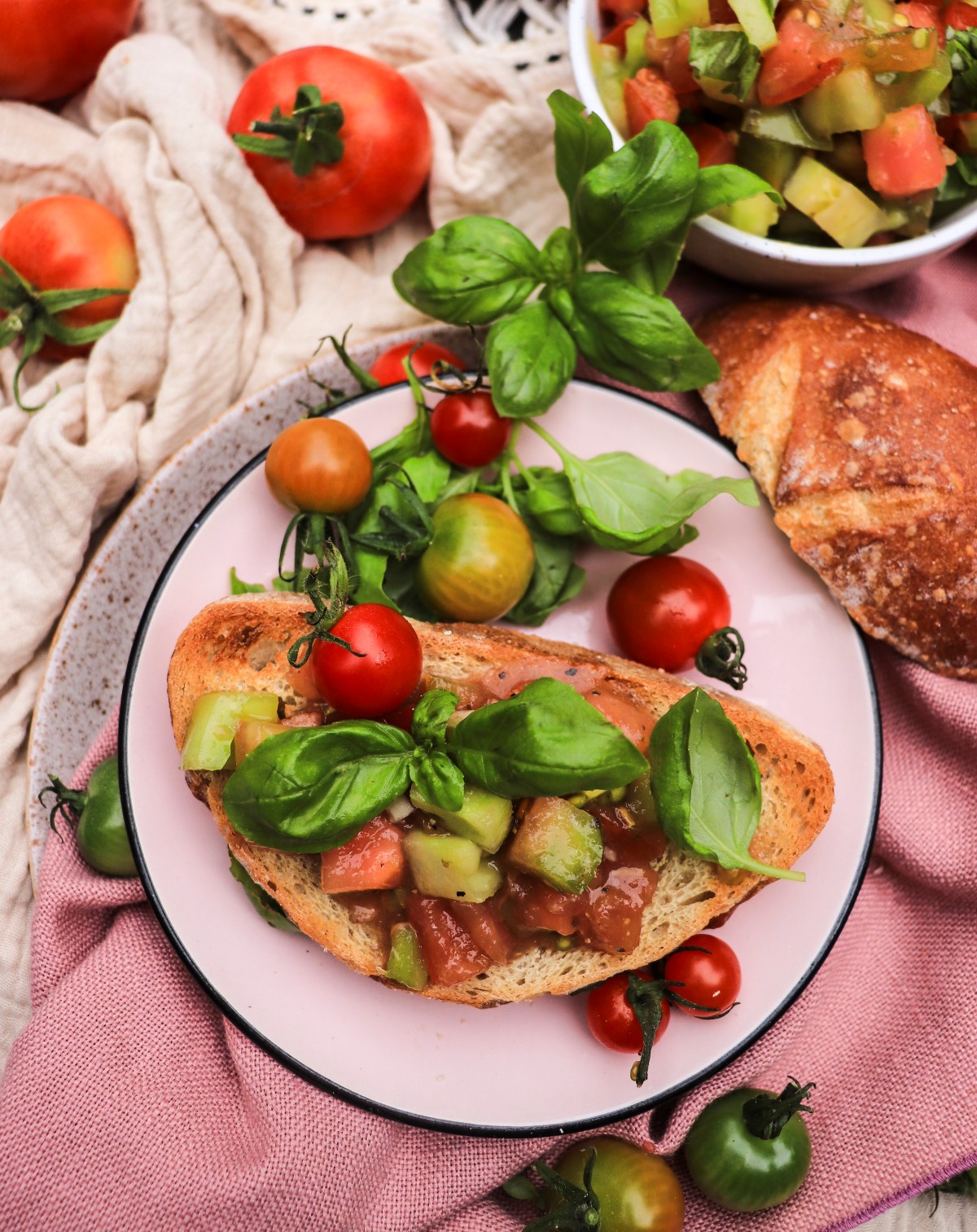
- With toasted bread. Spoon it over crostini or rustic toasted bread.
- With grilled meats. Chicken, pork, and steak all work well with the fresh acidity.
- With fish. It makes a fresh accompaniment to simply cooked or grilled fish.
- With cheese. Try it alongside mozzarella, feta, goat cheese, or a cheese board.
- With eggs. Spoon some over fried eggs, scrambled eggs, or an omelette.
- In sandwiches. Use a small amount as a juicy condiment for savoury sandwiches.
- With grains. Add it to rice, farro, couscous, or other grain bowls.
And don’t discard that flavourful tomato liquid at the bottom of the bowl. Spoon a little of it over bread or whatever you are serving with the relish.
How to Store Fresh Tomato Relish
Fresh tomato relish is best when the tomatoes still retain their contrasting textures. Store leftovers covered in the refrigerator.
Keep a few things in mind:
- Texture changes with time. Ripe tomatoes continue releasing liquid, while green tomatoes gradually lose some of their crispness.
- Stir before serving. The tomato juices, balsamic, and olive oil will naturally collect at the bottom.
- Add basil later when possible. If preparing the relish ahead, reserve the fresh basil until shortly before serving.
- Enjoy it fresh. This is a fresh condiment rather than a preserve, so make it in relatively small batches and enjoy it within a few days.
Also, this tomato relish recipe is not suitable for shelf-stable storage or canning as written. The modest amount of balsamic vinegar is included for flavour and maceration, not preservation.
More Late-Summer Vegetable Recipes
Still have tomatoes, zucchini, cucumbers, or beans coming from the garden? Here are a few more late-summer recipes to enjoy before we fully surrender to apples, pumpkins, and other autumn produce:
- Green Tomato Panzanella Salad – Tuscan-Inspired Bread Salad
- Spaghetti with No-Cook Fresh Tomato Sauce and Basil
- Tomato Bruschetta with Mozzarella and Lavender
- Balsamic Cherry Tomatoes with Feta
- Tomato Mozzarella Antipasto with Lavender
- Quick Pickled Cucumbers with Dill and Garlic
- Marinated Zucchini with Lemon and Honey – Easy Summer Side
I’d love for you to try this fresh green tomato relish recipe. If you give it a go, please share your results in the comments, message me on Instagram, or post your photos with the hashtag #havocinthekitchen. I look forward to seeing your creations and hearing your thoughts.
Cheers!
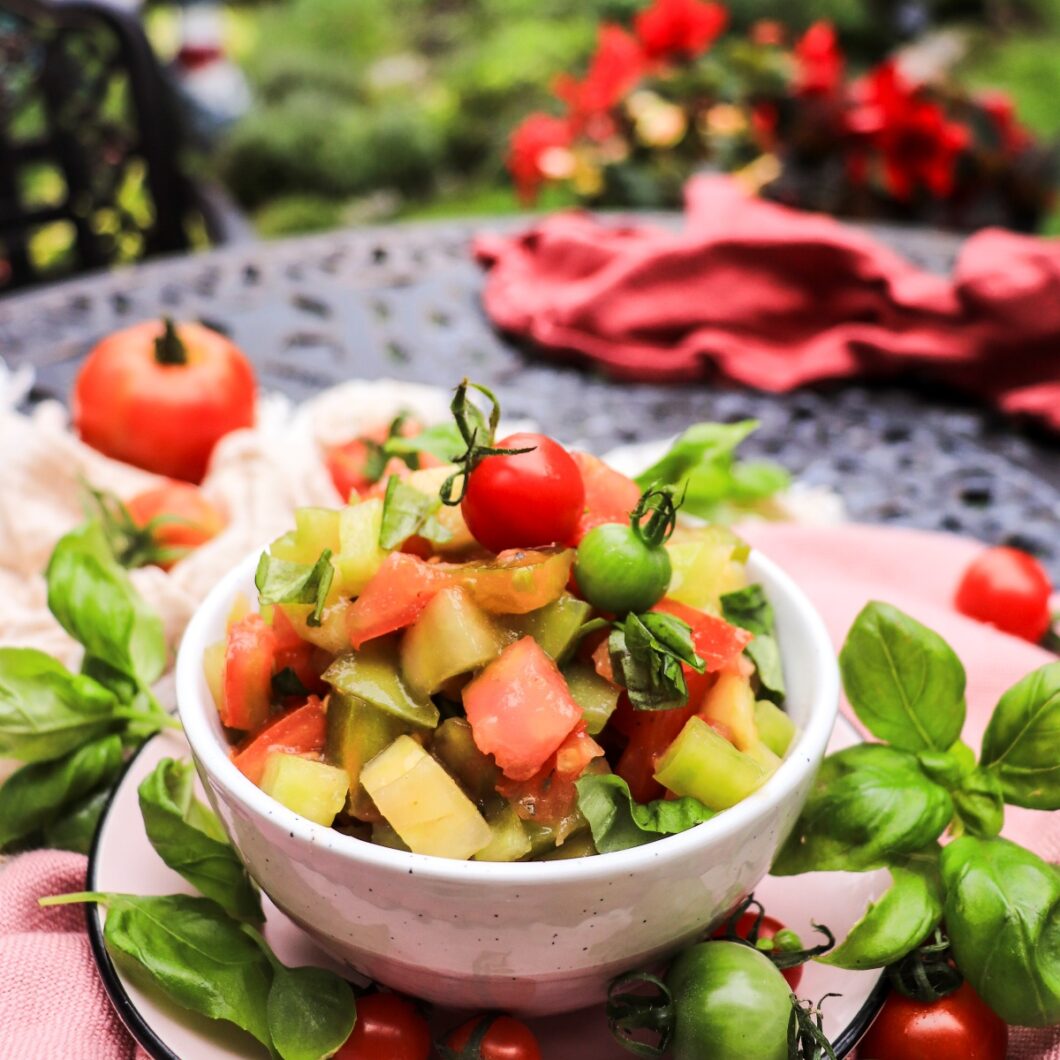
Fresh Tomato Relish with Green Tomatoes
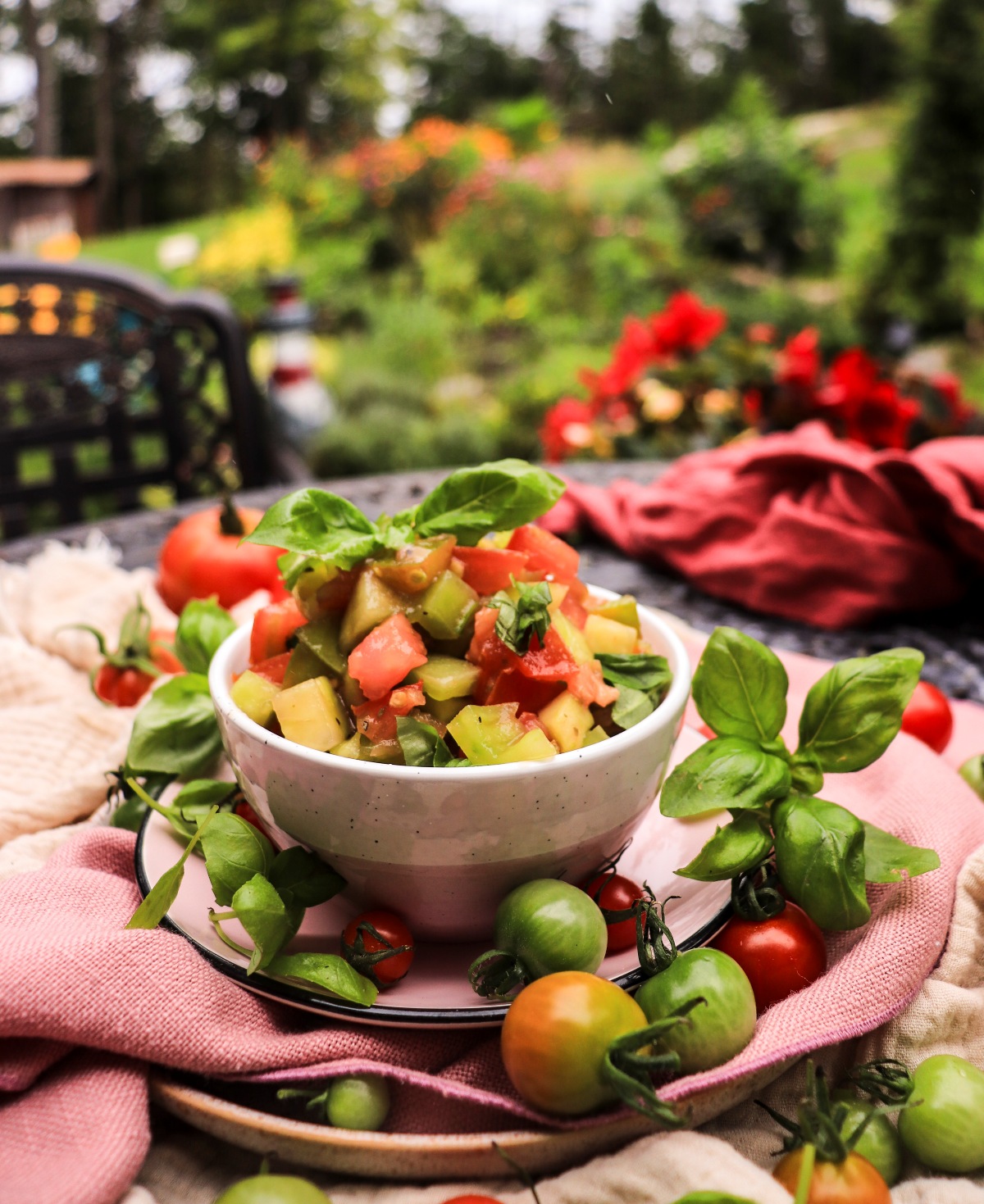
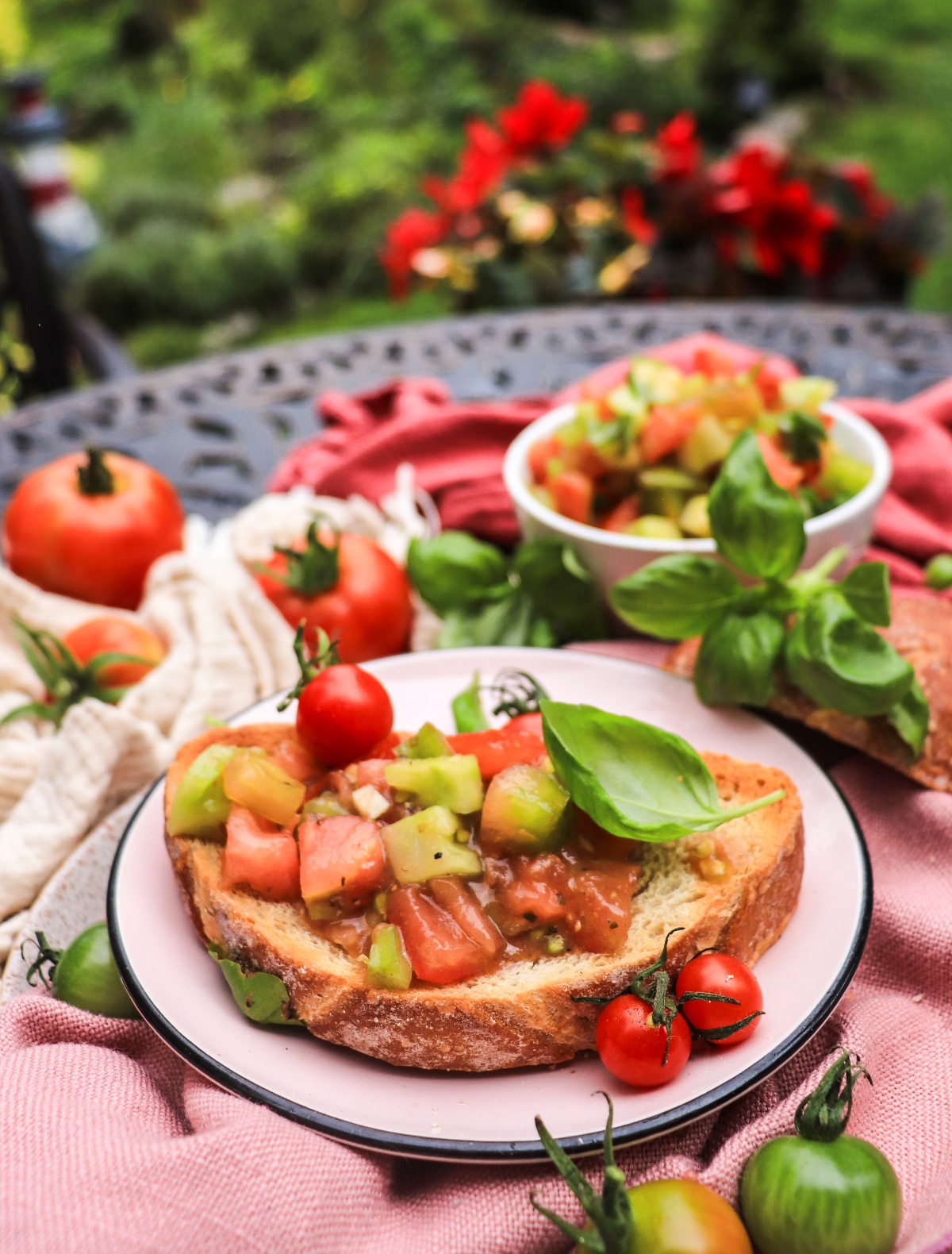
This fresh tomato relish combines juicy ripe tomatoes with crisp green tomatoes, balsamic vinegar, garlic, oregano, and fresh basil. It is chunky, fresh, and completely no-cook.





So pretty and I love heirloom tomatoes! Happy Sunday, Ben.