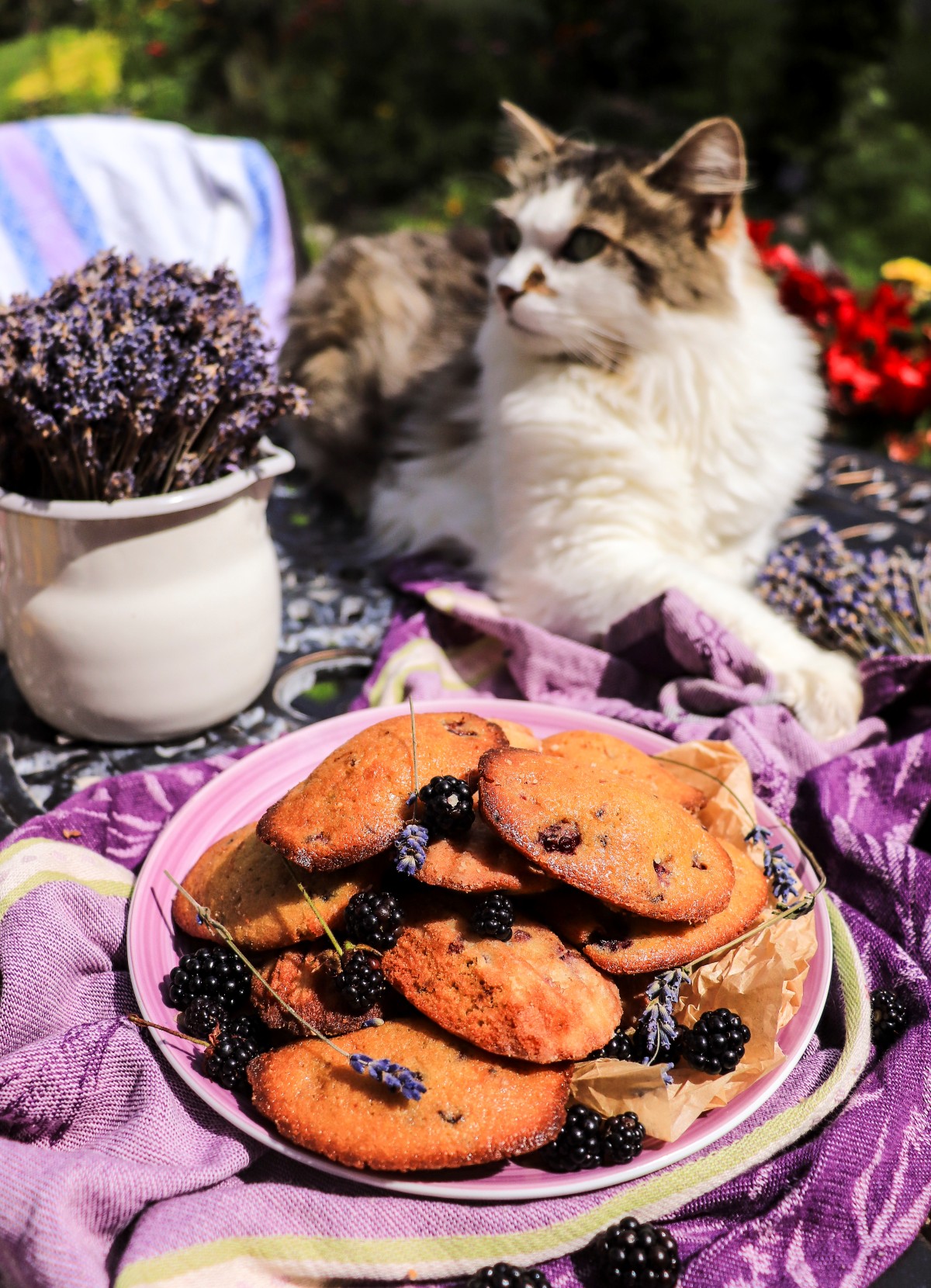
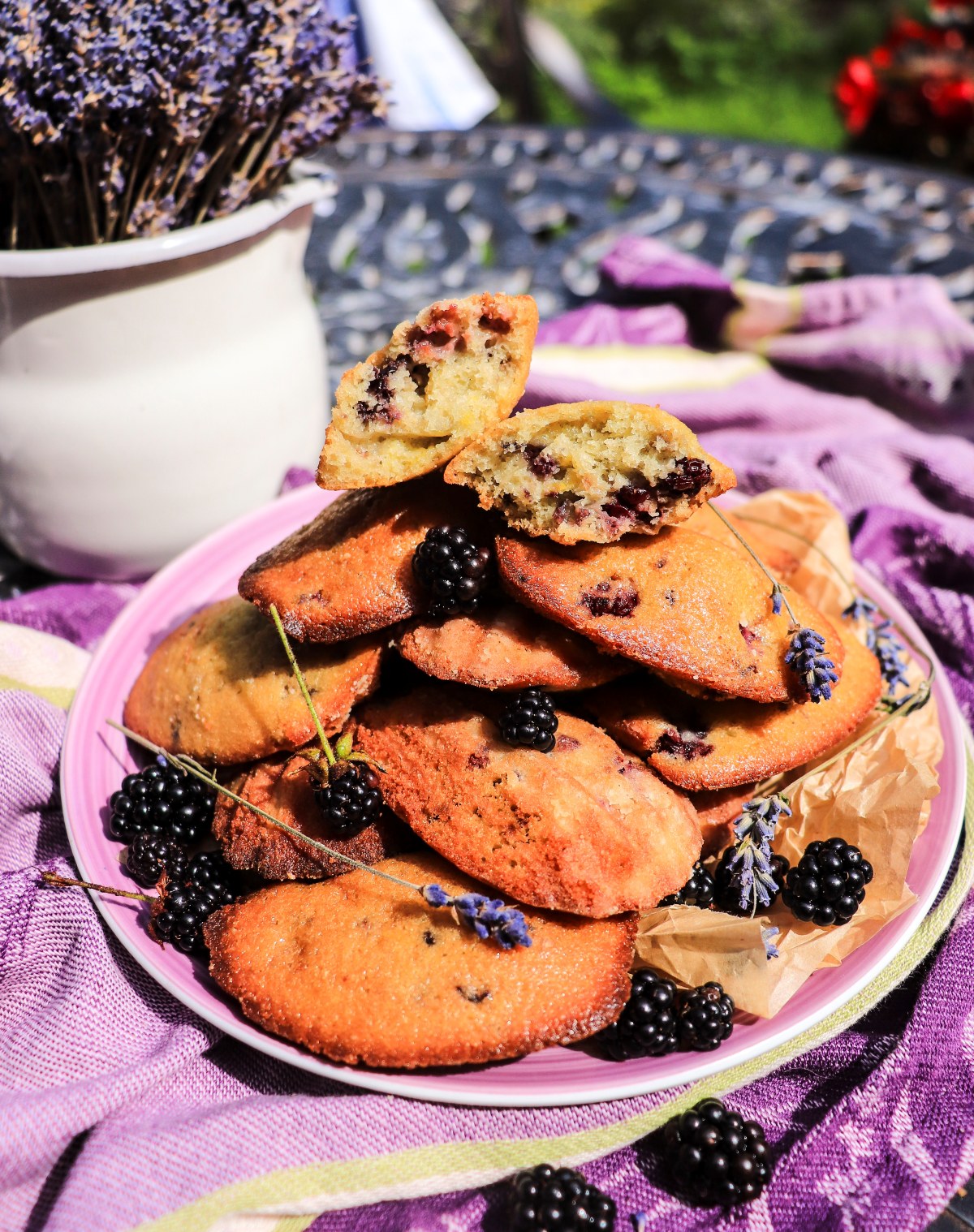
These blackberry honey madeleines with lavender are buttery and tender French tea cakes packed with fresh blackberries and complemented by floral honey, a delicate touch of lavender, and bright lemon zest.
Hey folks – I hope you all are doing well!
September is already here, but I still have a few late-summer berry recipes to share. And since my garden blackberries have been particularly lovely this year, these blackberry madeleines seemed like a good way to use some of them. So let’s dive into these blackberry and lavender madeleines with honey!
What Are Madeleines?
Madeleines are small French butter cakes traditionally baked in distinctive shell-shaped moulds. Their beautiful ridged surface and characteristic hump make them instantly recognizable.
Although they are sometimes described as cookies because of their size and shape, madeleines are really little cakes. Their texture is soft, light, and buttery, with slightly crisp and golden edges when freshly baked.
Classic French madeleines are usually quite simple. However, their buttery flavour also makes an excellent base for additions such as citrus zest, berries, nuts, honey, and floral notes.
In this blackberry madeleine recipe, I have added fresh berries, plenty of honey, and just enough lavender to complement them.
What Makes These Blackberry Honey Madeleines Special?
These blackberry honey madeleines are relatively simple compared to some of my more loaded madeleine recipes. Still, there is plenty of flavour packed into each little cake.
Blackberry, Honey, and Lavender Madeleines
Blackberry, honey, and lavender make a lovely late-summer combination.
- Blackberries. Fresh berries add tart and fruity pockets throughout the buttery crumb.
- Honey. A generous amount gives these honey madeleines a mellow sweetness and noticeable honey flavour.
- Lavender. Depending on how much you add, lavender can be either a subtle background note or a more pronounced part of the flavour.
- Lemon zest. A little citrus brightness balances both the honey and floral notes.
- Butter. Finally, plenty of butter provides the rich flavour you expect from homemade madeleines.
The result is fragrant and interesting without being overly sweet.
Buttery Blackberry Madeleines with a Tender Crumb
These blackberry madeleines have a particularly tender and moist interior. Fresh berries create soft, juicy pockets, while the edges become lightly golden in the oven.
Honey can also help the cakes retain moisture. Since honey is hygroscopic, it attracts and holds onto water. As a result, baked goods made with honey can stay softer for longer.
However, keep in mind that fresh blackberries introduce additional moisture, too. The exact texture and baking time can vary somewhat depending on the berries you use.
Why Use More Honey in These Blackberry and Lavender Madeleines?
I used 45 grams of honey and only 60 grams of granulated sugar in this recipe. So, honey is not simply a background flavour here.
There are a few reasons I like this balance:
- Flavour. You can actually taste the honey rather than simply sweetness.
- Moisture. Honey helps create a soft and tender crumb.
- Browning. It also encourages beautiful golden colour during baking.
- Sweetness. Using less granulated sugar keeps these blackberry honey madeleines pleasantly sweet rather than sugary.
Besides, honey naturally pairs with both blackberries and lavender, so it ties the entire flavour combination together.
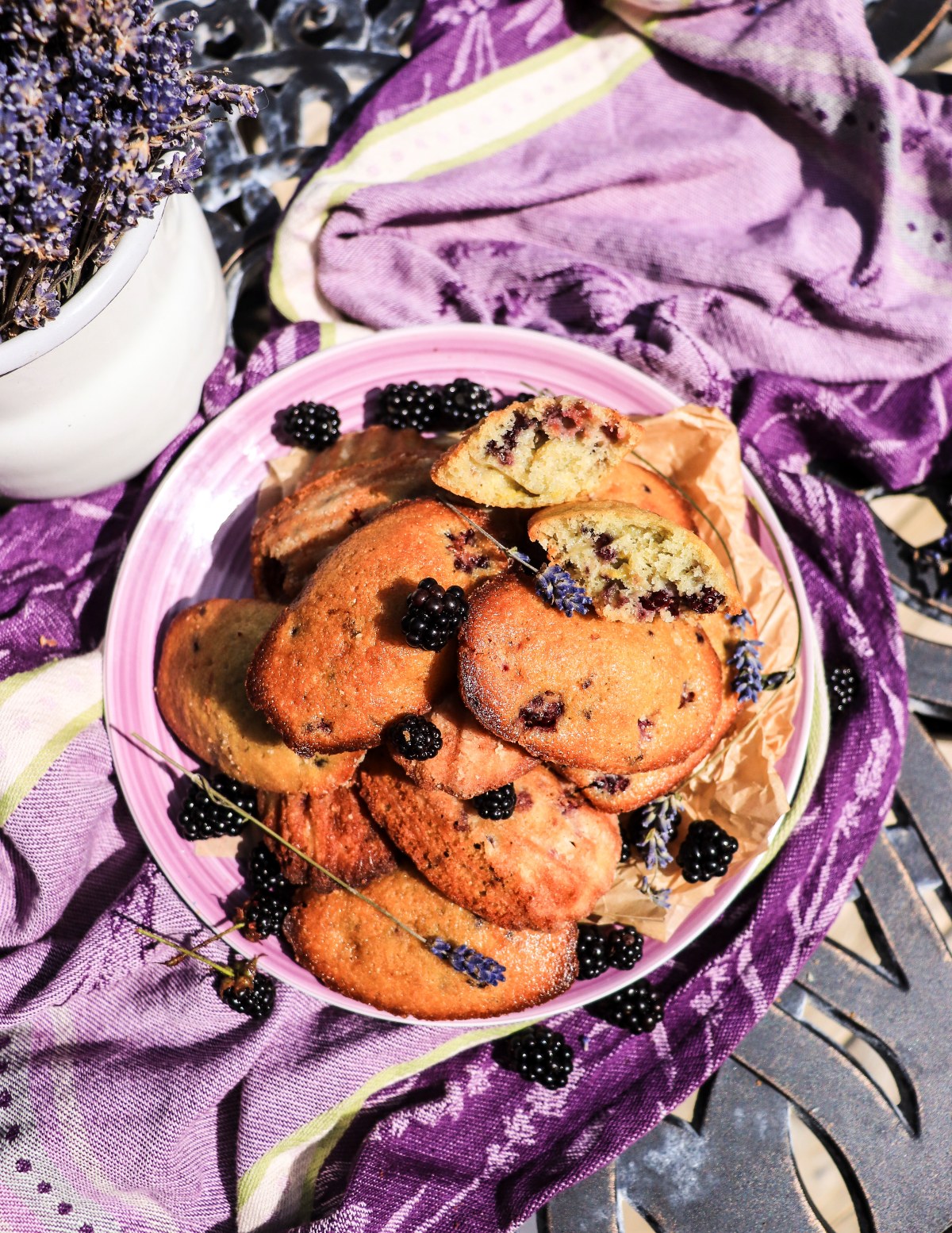
Ingredients You’ll Need For These Blackberry Honey Madeleines
You will need only a relatively short list of ingredients for these blackberry lavender madeleines with honey.
- Butter. Unsalted butter works best because you can control the amount of salt. You will also need a little extra for preparing the madeleine pan.
- Eggs. Bring the eggs to room temperature before whisking for better volume.
- Granulated sugar. This recipe uses a modest amount because honey provides additional sweetness.
- Honey. Use a honey you enjoy, as its flavour is noticeable in the finished cakes.
- All-purpose flour. Measure it carefully to avoid making the madeleines heavy.
- Baking powder. It provides additional lift and helps create the characteristic madeleine hump.
- Salt. A small amount balances the sweetness.
- Fresh blackberries. Small, relatively firm berries are particularly convenient for madeleines.
- Culinary lavender. Rub or crush it before adding to release its aroma.
- Lemon zest. It adds freshness without competing with the blackberries.
I did not use vanilla in these blackberry honey madeleines. Between the honey, berries, lemon, butter, and lavender, there is already plenty happening in the flavour department.
How Much Lavender Should I Use?
Lavender pairs beautifully with both blackberries and honey, but the amount you use makes a noticeable difference.
For this recipe, I suggest 1/4 to 1/2 teaspoon of dried culinary lavender.
- For a subtle hint: Use about 1/4 teaspoon. The lavender will remain in the background and primarily enhance the honey and berries.
- For a more pronounced flavour: Increase it to 1/2 teaspoon. At this amount, the lavender becomes a recognizable part of the flavour profile.
- For the best aroma: Rub or crush the dried buds between your fingers before adding them to the batter.
I would not use more than 1/2 teaspoon here. These are blackberry honey madeleines first, and lavender should complement rather than overwhelm the fruit.
What Blackberries Work Best for Madeleines?
Fresh blackberries vary considerably in size and juiciness. That can make a difference in a small cake such as a madeleine.
The garden blackberries I used were quite small and not particularly juicy. They worked beautifully because they added distinct blackberry pockets without releasing too much liquid into the batter.
Keep these points in mind:
- Small berries work particularly well. Depending on their size, you may be able to leave some whole.
- Cut larger blackberries. Halve or cut them into smaller pieces so you don’t have one enormous berry taking over a madeleine.
- Avoid overly soft berries when possible. Very ripe and juicy blackberries release more liquid and may increase the baking time.
- Handle them gently. Excessive mixing can crush the berries and turn the batter purple.
- Consider moisture. Juicier berries can make the centres look softer even when the surrounding cake is nearly baked.
Can I Use Frozen Blackberries?
Yes, although I prefer fresh blackberries for this recipe.
If using frozen berries, add them while still frozen rather than thawing them first. Thawed blackberries release considerable juice, which can colour and loosen the batter.
Also, frozen berries may make these madeleines with blackberries somewhat wetter and can increase the baking time. Use the visual doneness cues rather than relying exclusively on the clock.
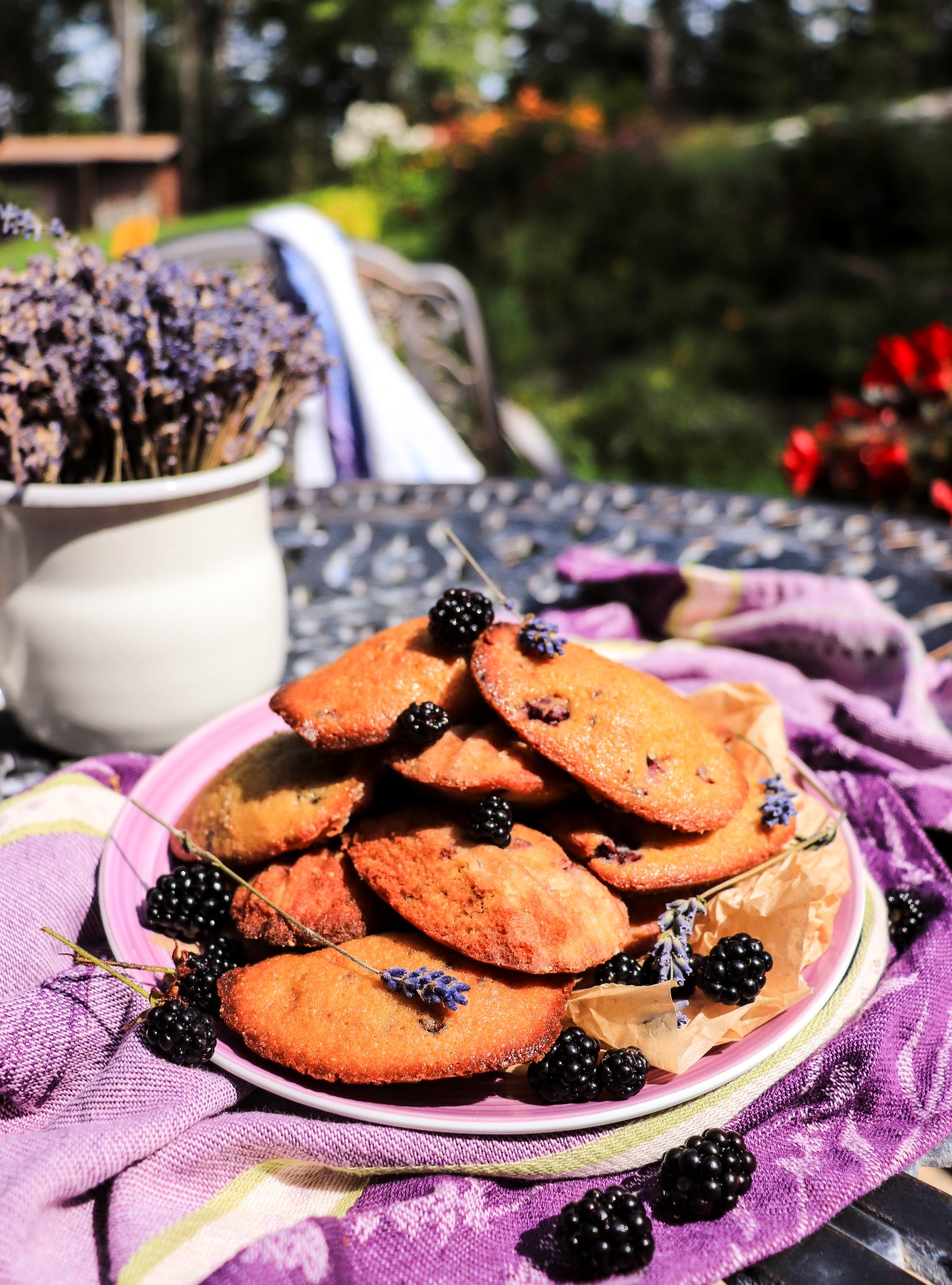
How to Make Blackberry, Lavender, and Honey Madeleines
The batter itself is straightforward. However, chilling, gentle mixing, and properly preparing the pan all contribute to better homemade madeleines.
Prepare the Ingredients
A little preparation makes the process much smoother.
- Bring the eggs to room temperature. If you forget, place cold eggs in their shells in warm, not hot, water for about 5–10 minutes.
- Melt the butter and let it cool until just lukewarm.
- Combine the flour, baking powder, and salt.
- Rub the lavender between your fingers to release its aroma.
- Zest the lemon.
- Sort the blackberries and cut larger berries into smaller pieces.
Whisk the Eggs, Sugar, and Honey
Whisk the eggs with the granulated sugar and honey until the mixture becomes lighter, foamy, and somewhat thickened. This usually takes a few minutes.
You do not need to whip the mixture into an extremely voluminous foam. Still, proper whisking incorporates air and gives the batter a good foundation before you add the flour and butter.
Add the lemon zest once the egg mixture is ready.
Fold the Batter Gently
Next, fold the dry ingredients into the egg mixture. Work gently and stop once you no longer see obvious pockets of dry flour.
Gradually fold in the cooled melted butter. Finally, add the rubbed lavender.
Avoid vigorous stirring at this stage. Overworking the batter can knock out the air you incorporated earlier and produce heavier French madeleines.
Chill the Madeleine Batter
Cover the batter and refrigerate it for at least 1–2 hours. You can also chill it for several hours if that works better with your schedule.
Chilling allows the batter to rest and firm up. The contrast between cold batter and a hot oven also helps encourage the distinctive hump associated with madeleines.
Once the batter is cold, gently fold in the prepared blackberries. Use only a few strokes so you don’t crush the fruit or overmix the rested batter.
How to Prepare a Madeleine Pan
Madeleine pans have plenty of narrow ridges where delicate cake batter can stick. Therefore, preparing the mould properly is worth the extra minute or two.
- Butter thoroughly. Brush butter over the entire surface of each cavity, making sure it reaches all the ridges and corners.
- Add flour. Dust the buttered cavities lightly with flour, then tap out the excess.
- Keep the coating thin. You shouldn’t have thick or visibly floury areas in the moulds.
- Prepare non-stick pans, too. I still recommend buttering and lightly flouring them, particularly when working with a fruit-filled batter.
This simple preparation helps the blackberry madeleines release cleanly while preserving the pretty shell pattern.
Can I Reuse the Madeleine Pan Between Batches?
Absolutely. If you have one madeleine pan, there is no reason to wash it between batches.
After removing the first batch, allow the pan to cool enough to handle. Then:
- Brush away any loose crumbs or bits of blackberry.
- Butter the cavities again.
- Dust lightly with flour and remove the excess.
- Add the remaining chilled batter and bake as usual.
I recommend greasing and flouring the pan again rather than simply refilling it. Some of the original coating comes away with the first batch.
Also, washing isn’t particularly helpful at this point. A freshly washed pan would need to be completely dry before you could butter and flour it again.
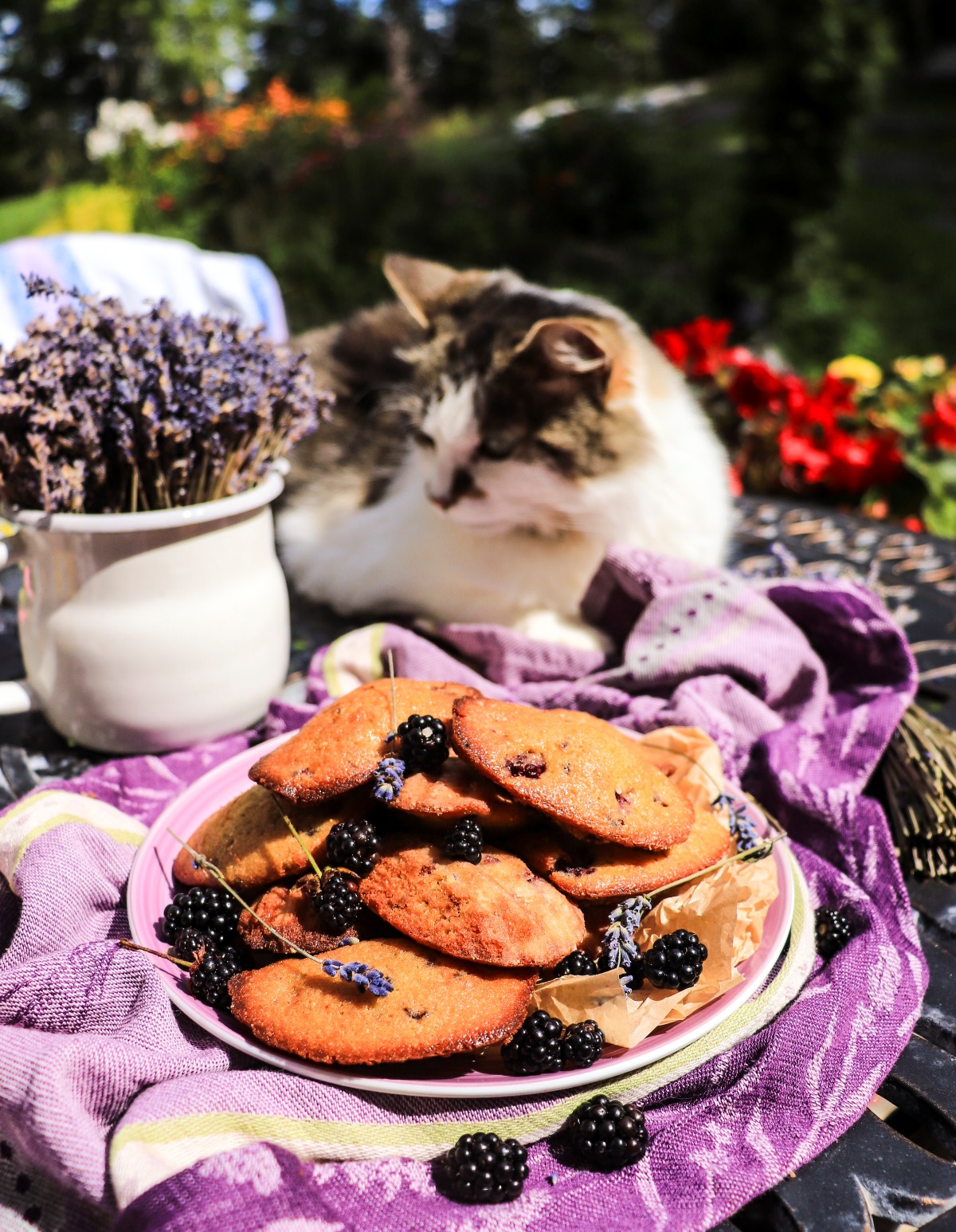
How to Bake Blackberry Honey Madeleines
Once your pan is ready, fill each cavity approximately three-quarters full. There is no need to spread or flatten the batter.
A hotter initial oven temperature helps the cold batter rise quickly. Then, reducing the temperature allows the centres to finish baking without excessively browning the edges.
Standard vs. Large Madeleine Pans
The exact baking time depends on the size and depth of your moulds. Fresh blackberry moisture can affect it as well.
| Pan | Initial Temperature | Reduce To | Baking Time |
|---|---|---|---|
| Standard madeleine pan | 425°F / 220°C | 375°F / 190°C | Start checking around 9–10 minutes |
| Large madeleine pan | 425°F / 220°C | 375°F / 190°C | Start checking around 12–14 minutes |
Do not open the oven during the initial high-temperature stage. Reduce the temperature without opening the door.
These times are guidelines rather than strict rules. In particular, large or juicy blackberries may require additional baking time.
How Do You Know When Blackberry Madeleines Are Ready?
Because fruit can make the interior look exceptionally moist, visual and textural cues are more useful than time alone.
Look for several signs:
- Hump. The centres should be well risen.
- Colour. The edges should be golden, although honey may encourage slightly deeper browning.
- Surface. The tops should look set rather than wet or shiny with raw batter.
- Texture. Gently press the centre. It should feel springy and recover rather than remaining indented.
- Edges. They may begin pulling very slightly from the mould.
- Extra time. If the centres still feel unusually soft, give them another minute or two.
A toothpick can be useful, but it is not foolproof in blackberry madeleines. If you happen to pierce a berry, the toothpick can look wet even when the surrounding cake is baked.
Let the madeleines rest in the pan for about two minutes. Then gently release them and transfer them to a cooling rack.
Tips for the Best Blackberry Honey Madeleines
Madeleines are not difficult, but several small details can improve their shape and texture.
- Use room-temperature eggs. They whip more readily with the sugar and honey.
- Cool the butter. Hot melted butter can deflate the egg mixture.
- Don’t overmix. Fold only until the ingredients are incorporated.
- Chill the batter. Give it at least 1–2 hours rather than skipping the resting stage.
- Choose your berries carefully. Smaller and less juicy blackberries are especially convenient for this recipe.
- Prepare the pan thoroughly. Butter and flour every ridge for cleaner release.
- Don’t overfill. About three-quarters full leaves enough space for the batter to rise.
- Keep the oven closed initially. Opening the door during the high-temperature stage can interfere with the rise.
- Watch the cakes, not just the timer. Berry size, moisture, pan material, and mould depth can all affect the final baking time.
Most importantly, don’t worry if every madeleine isn’t identical. Fresh blackberry pieces naturally create some variation from one little cake to another.
How to Store Blackberry Honey Madeleines
Like most homemade madeleines, these are at their best while relatively fresh.
Once completely cool, transfer them to an airtight container. A few simple precautions will help preserve their texture:
- Room temperature: Keep them tightly covered for about 1–2 days.
- Avoid refrigeration when possible: Refrigeration can make small butter cakes firmer and less delicate.
- Cool completely first: Trapping warm madeleines in a container creates condensation and can make their surfaces sticky.
- Keep them dry: Honey and fresh blackberries both contribute moisture, so airtight storage is particularly important.
If they have been sitting for a day, bringing them to room temperature before serving helps restore their buttery texture.
More Madeleine and Blackberry Recipes
If you enjoy these blackberry honey madeleines with lavender, you may also like some of my other madeleine and berry recipes.
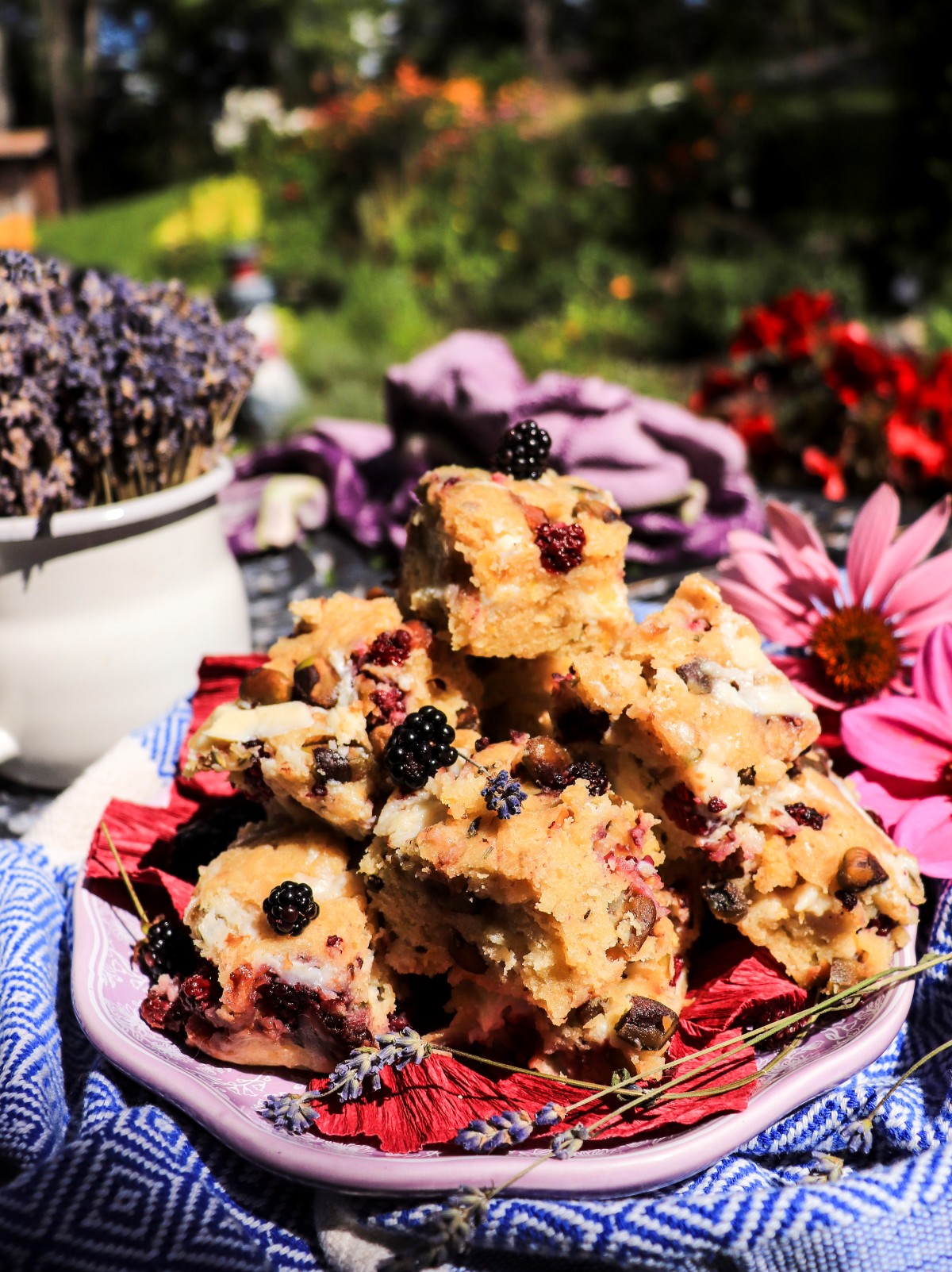
- Raspberry Pistachio Madeleines with White Chocolate
- Blueberry Madeleines with Lavender – French Tea Cakes
- Lavender Madeleines with Honey (Soft, Buttery French Tea Cakes)
- Spiced Orange Madeleines with Brandy Glaze
- Rose and Pistachio Madeleines (Floral French Madeleine Recipe)
I’d love for you to try these blackberry and lavender madeleines with honey and lemon. If you give it a go, please share your results in the comments, message me on Instagram, or post your photos with the hashtag #havocinthekitchen. I look forward to seeing your creations and hearing your thoughts.
Cheers!
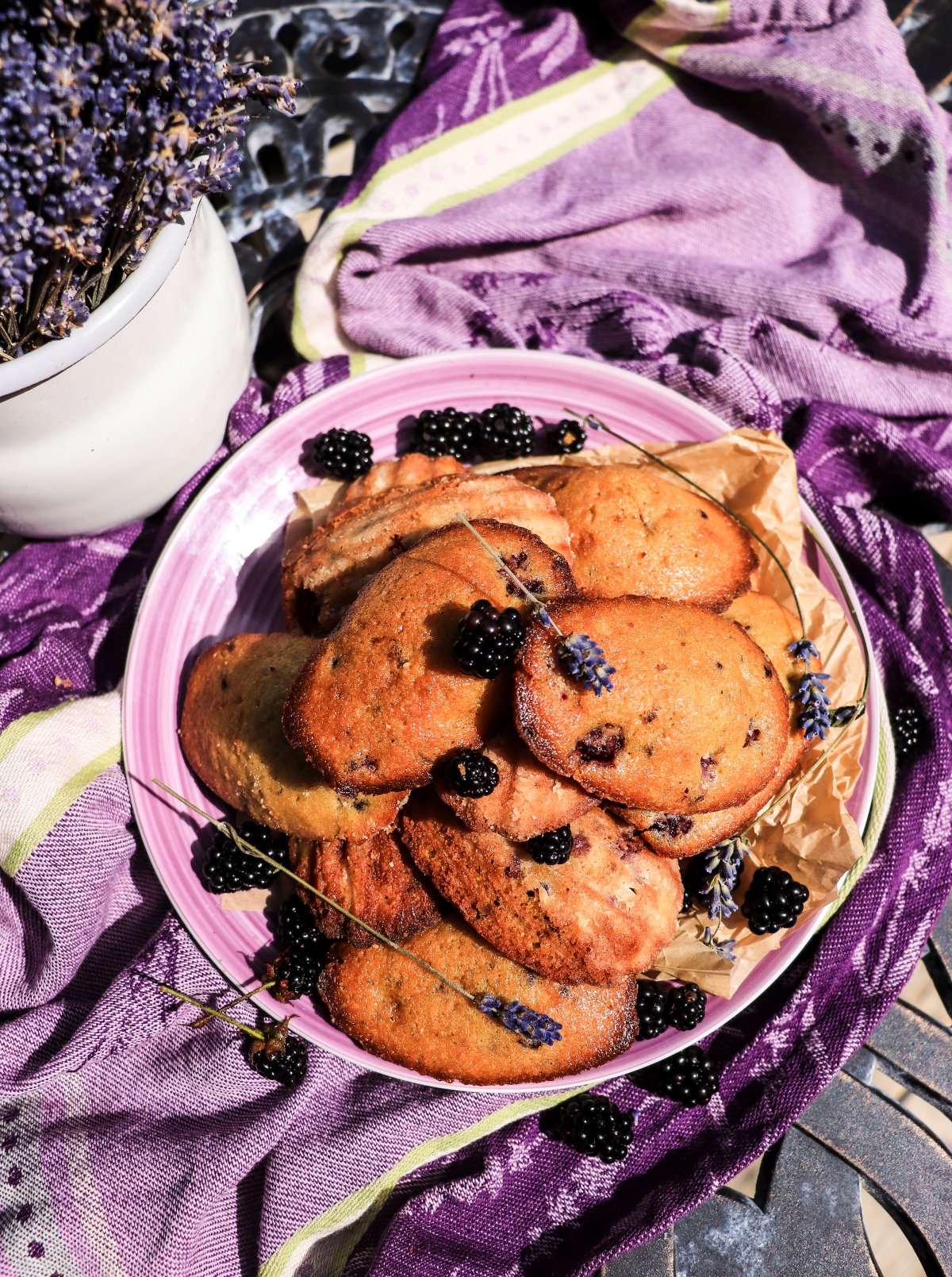
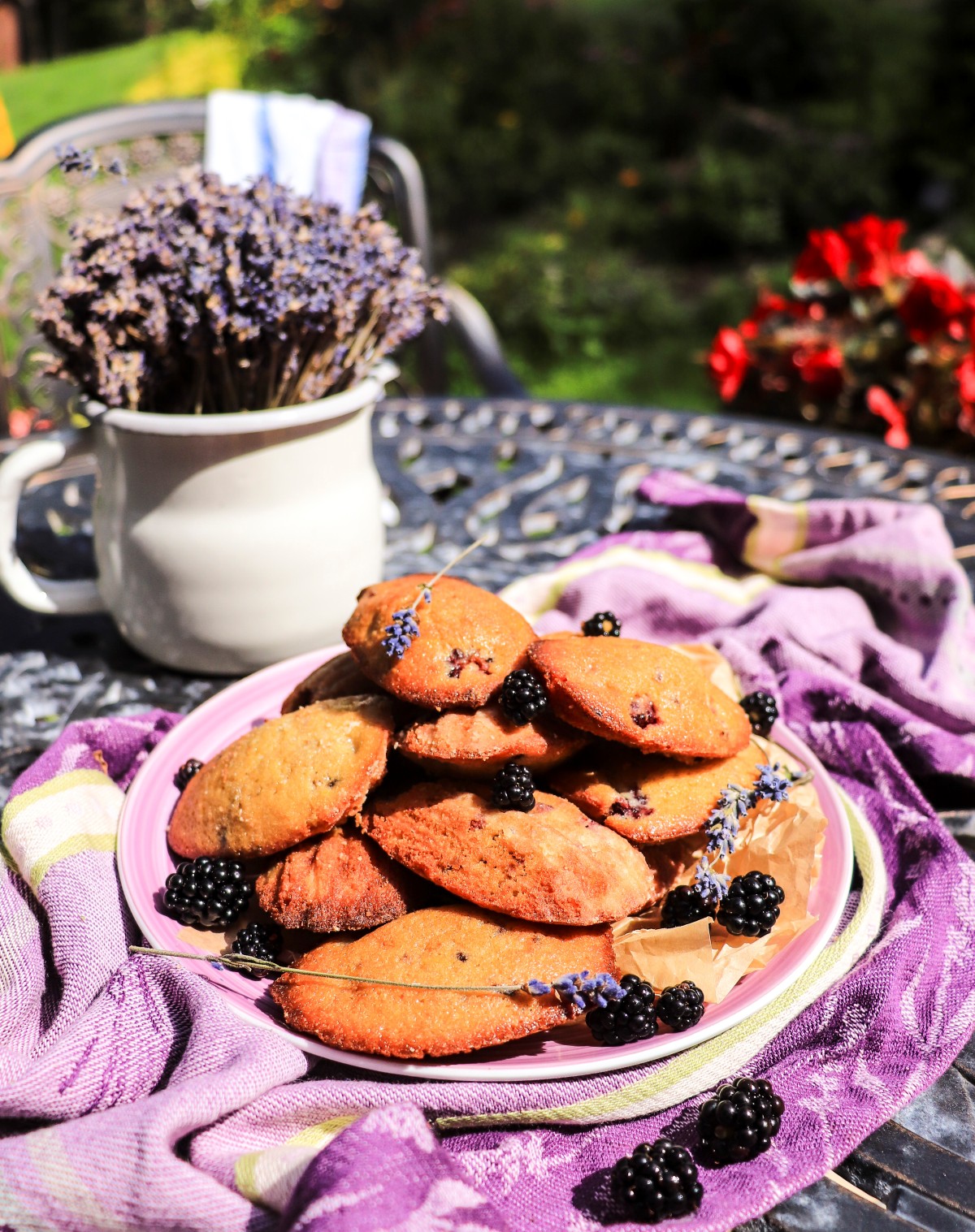
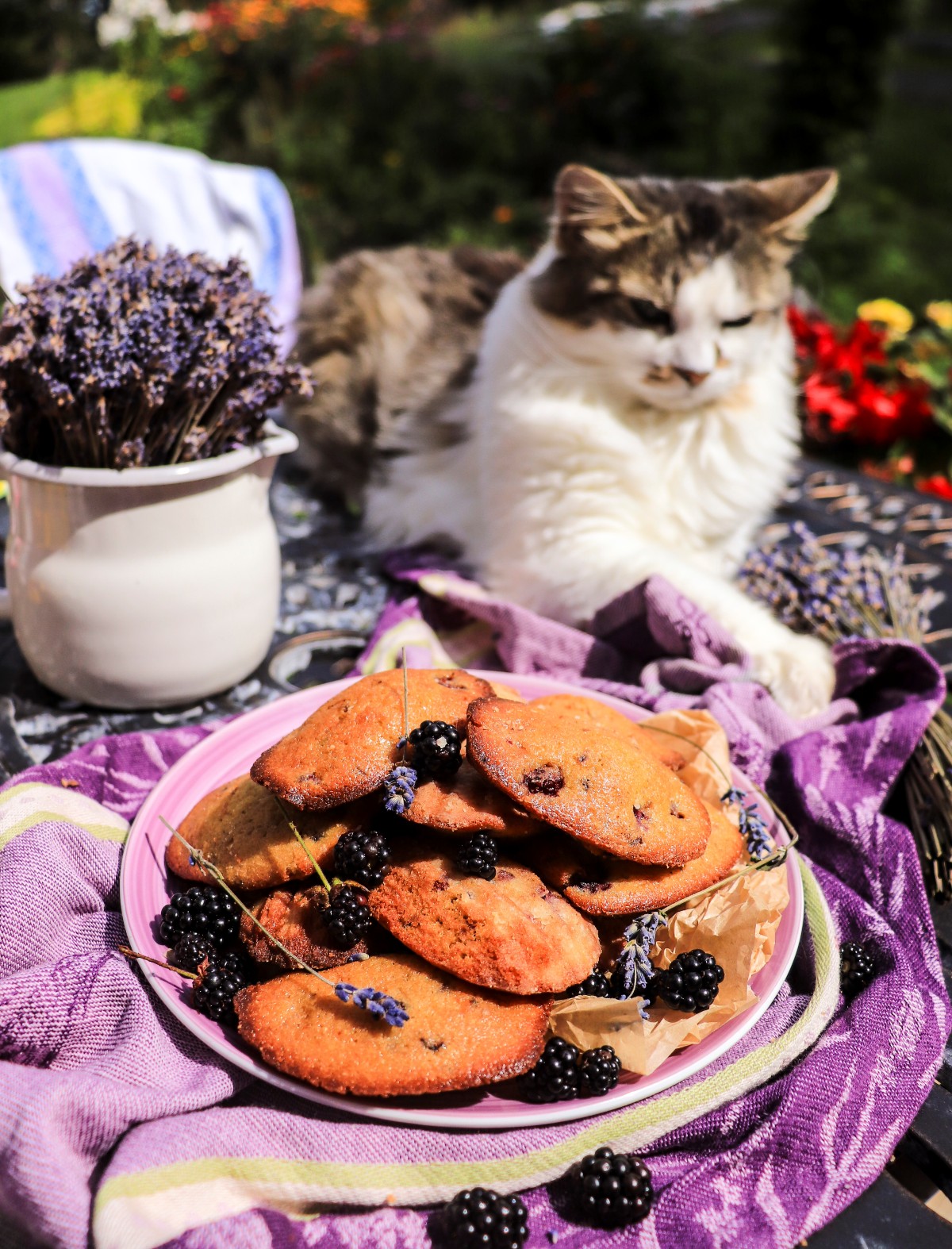
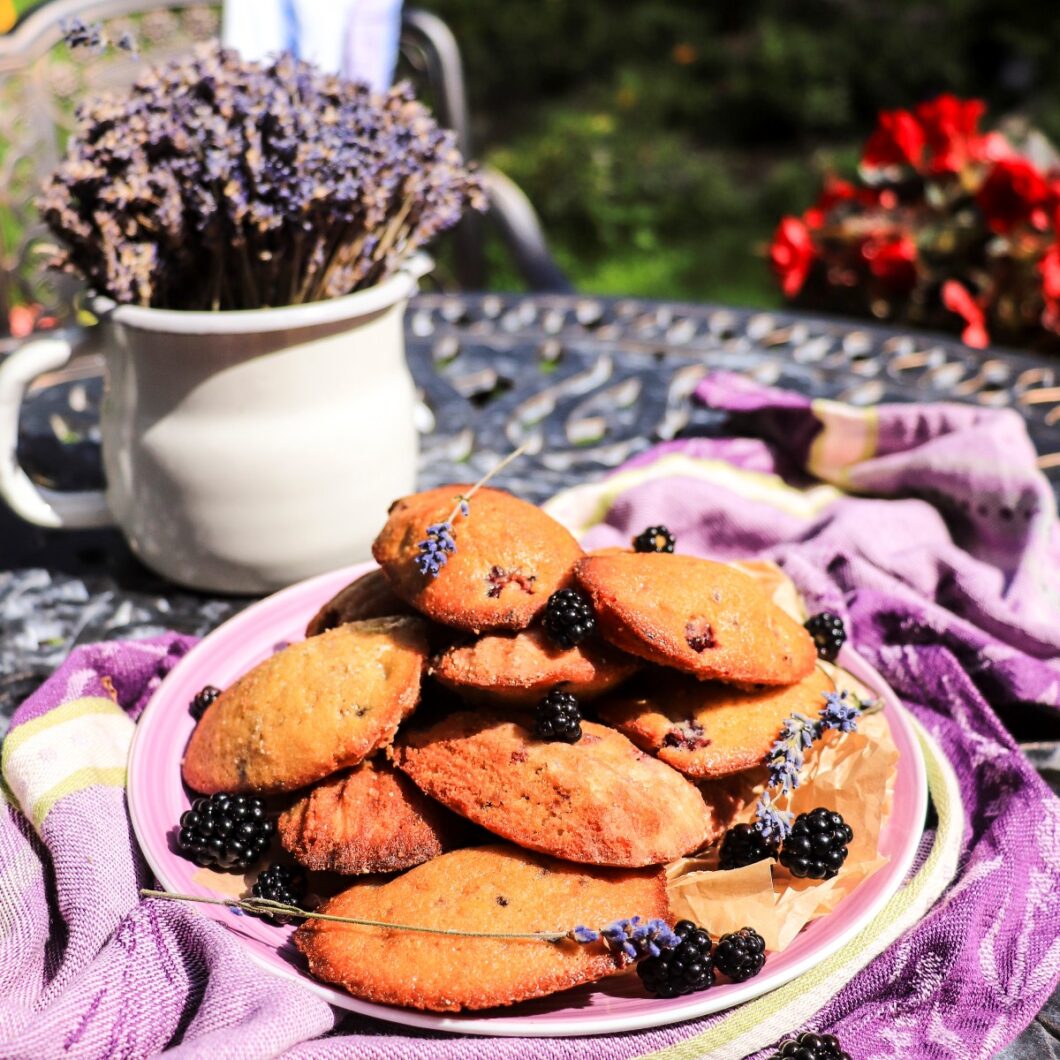
Blackberry Honey Madeleines with Lavender
These blackberry honey madeleines are tender, buttery French tea cakes made with fresh blackberries, plenty of honey, lemon zest, and culinary lavender. Use less lavender for a subtle floral hint or more for a pronounced flavour.