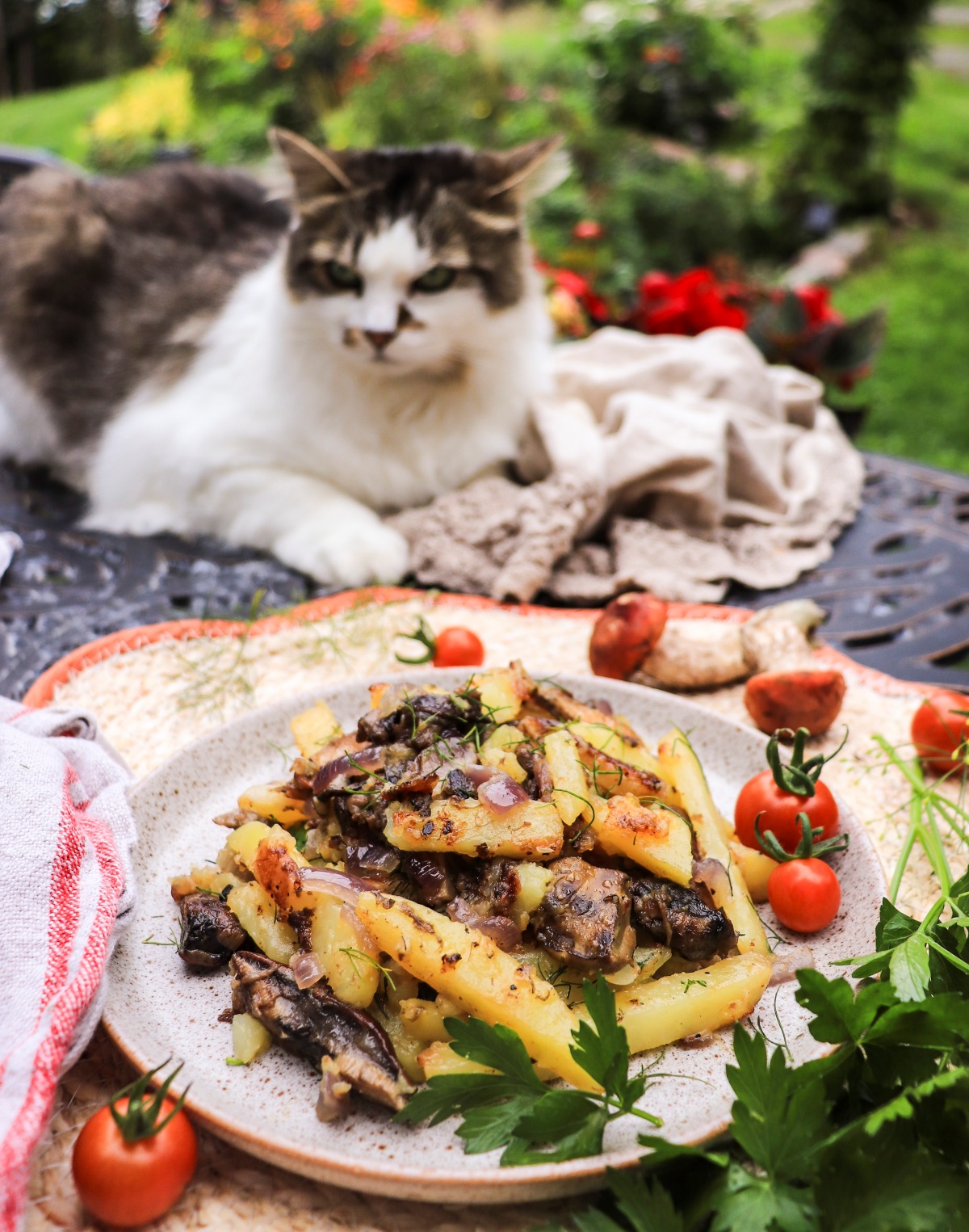
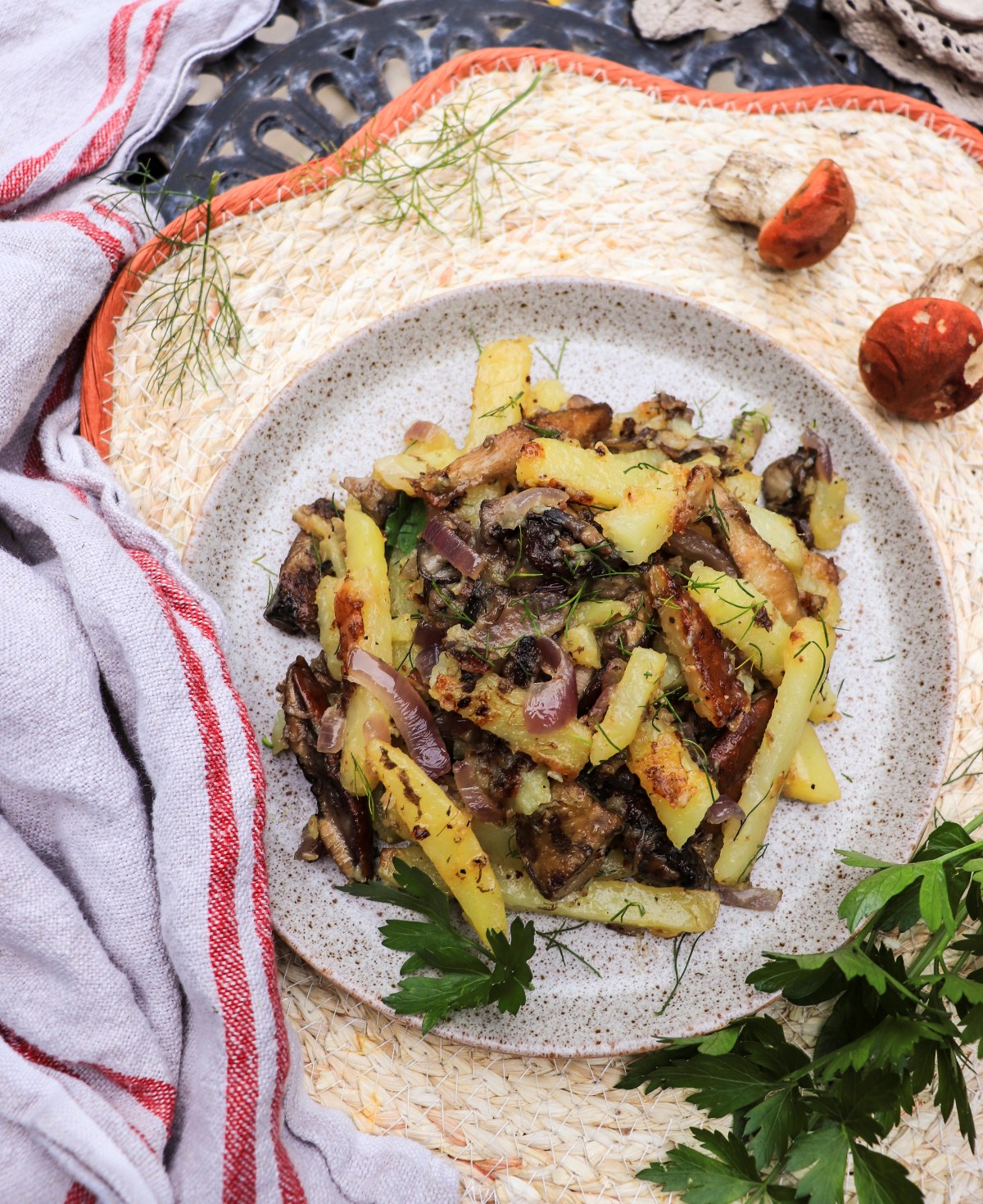
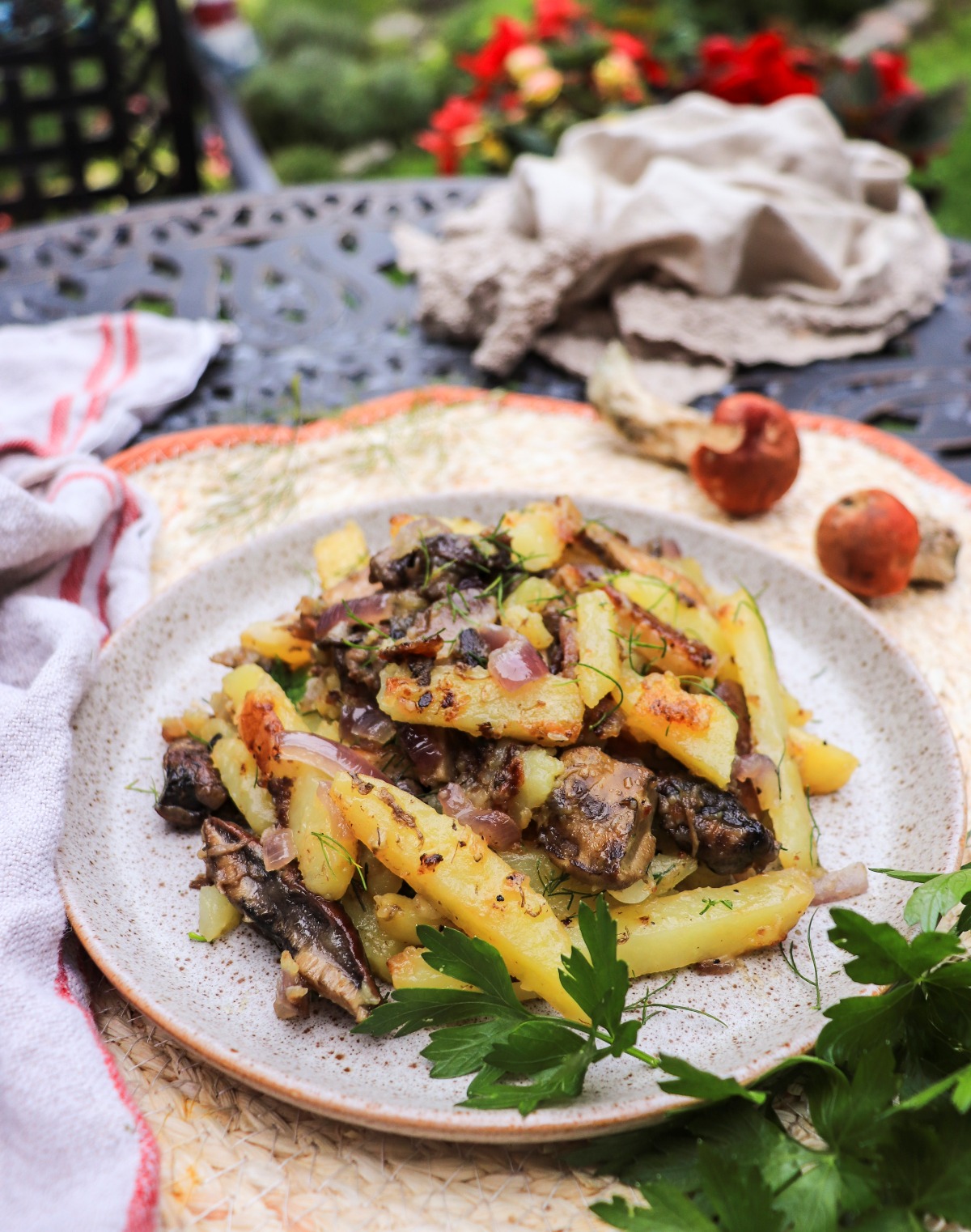
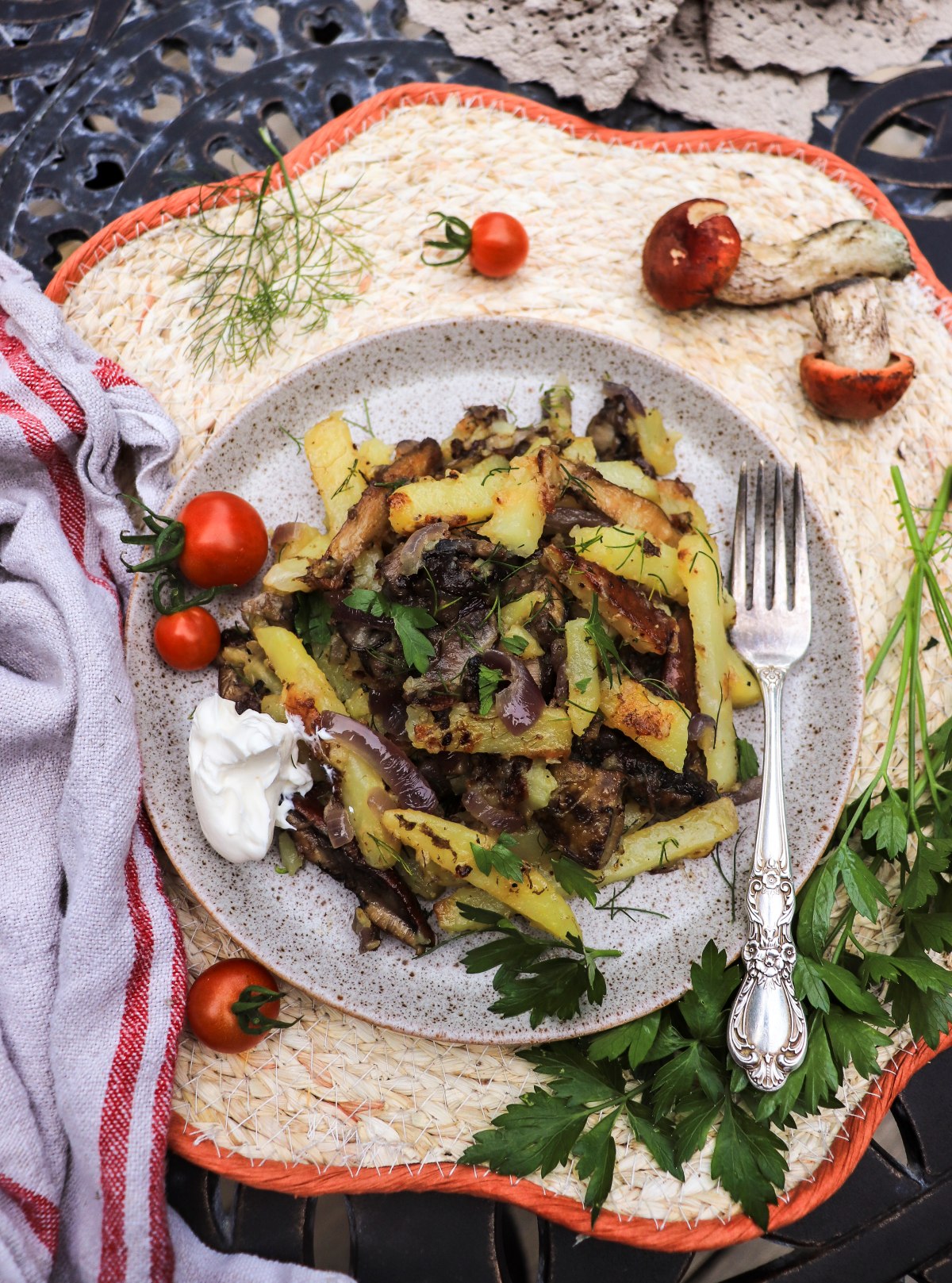
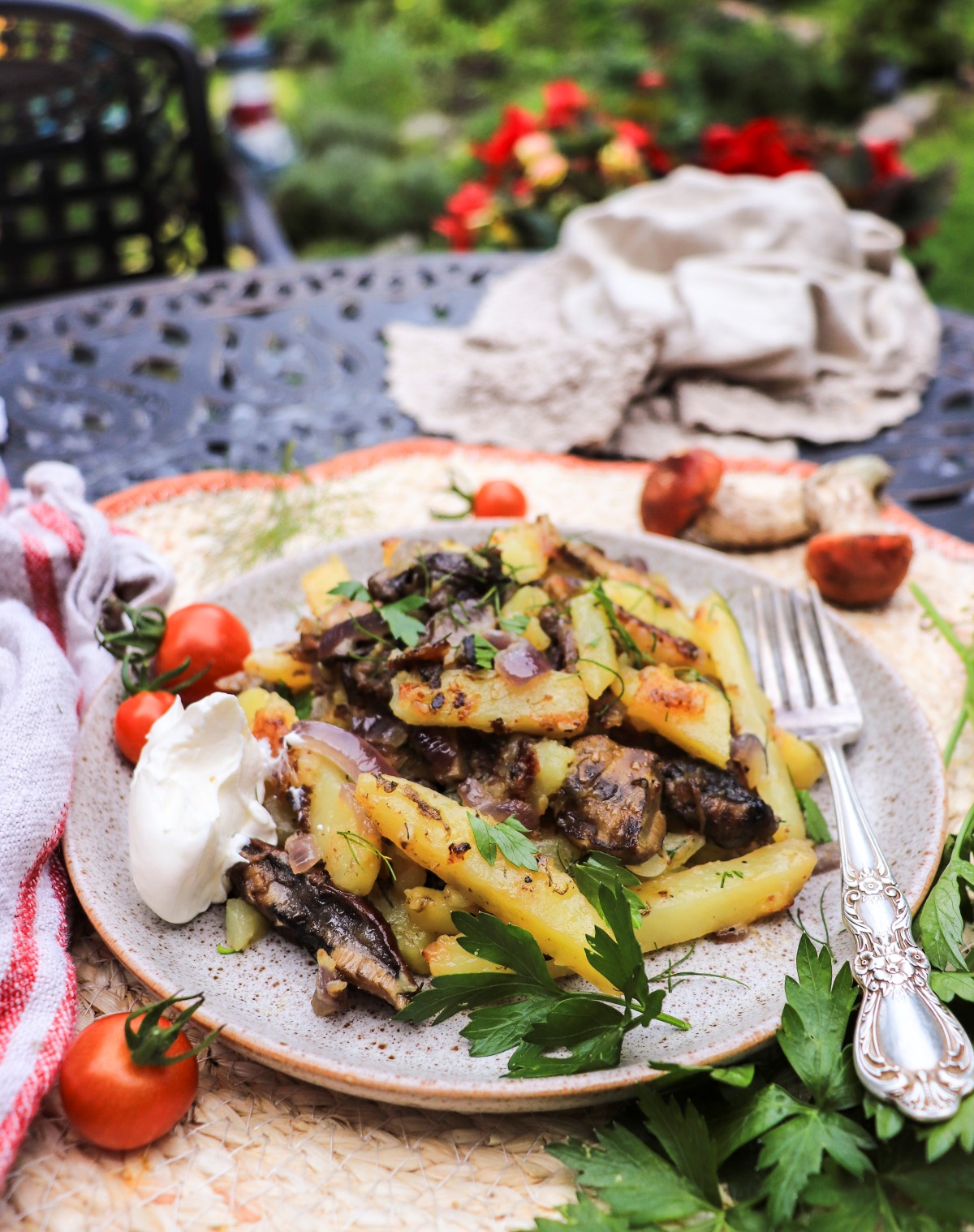
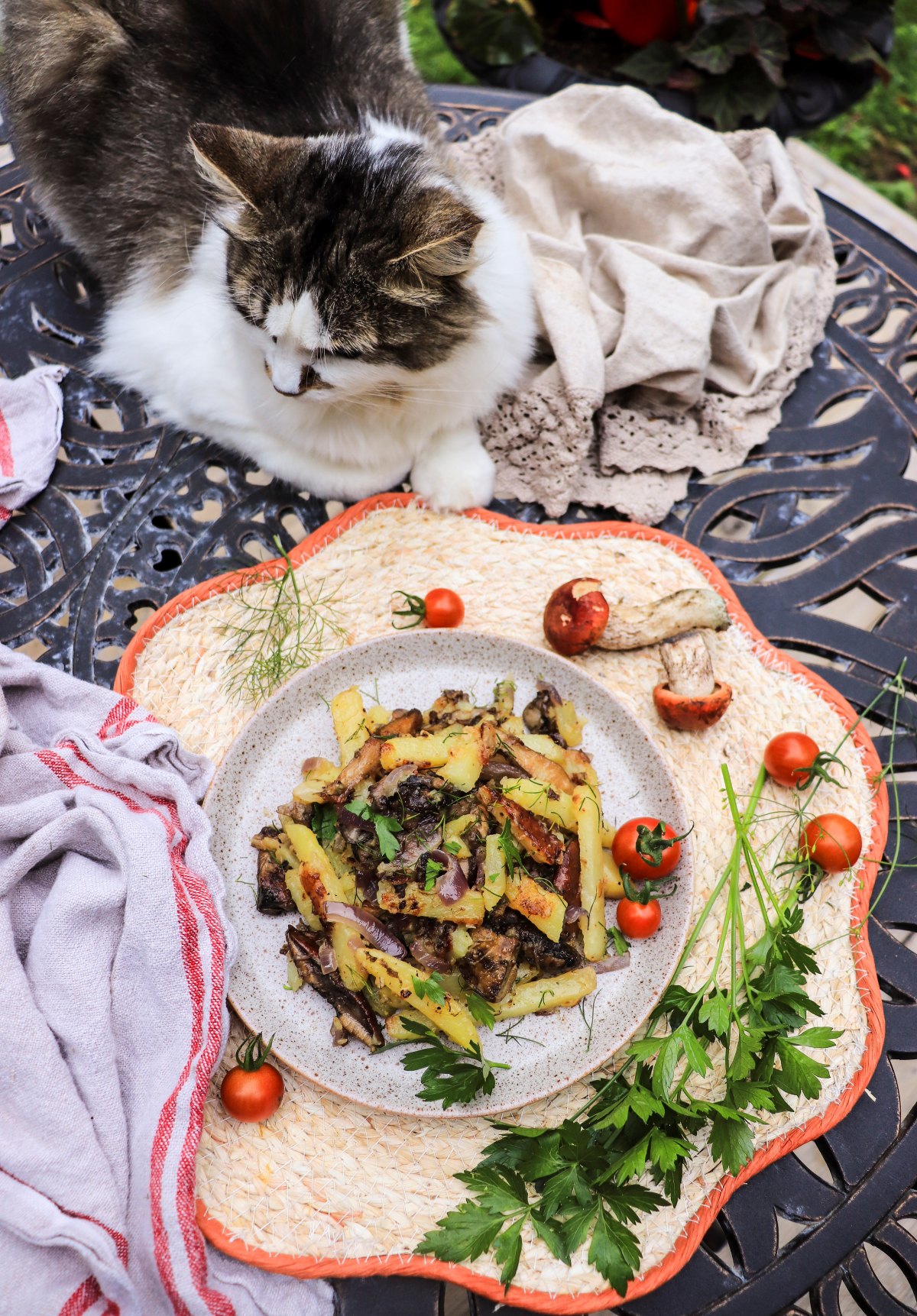
Fried potatoes with wild mushrooms are a hearty and rustic dish packed with earthy boletus mushrooms, plenty of onions, and rich butter and olive oil. Inspired by simple Eastern European home cooking, this is an excellent way to enjoy a generous late-summer or autumn mushroom harvest.
Hey folks – I hope you all are doing well!
This mushroom season has been particularly good for us. In fact, we have been foraging plenty of wild mushrooms without even leaving our property, thanks to its forested areas. And while there are many ways to enjoy them, fried potatoes with wild mushrooms and onions are certainly one of my favourites.
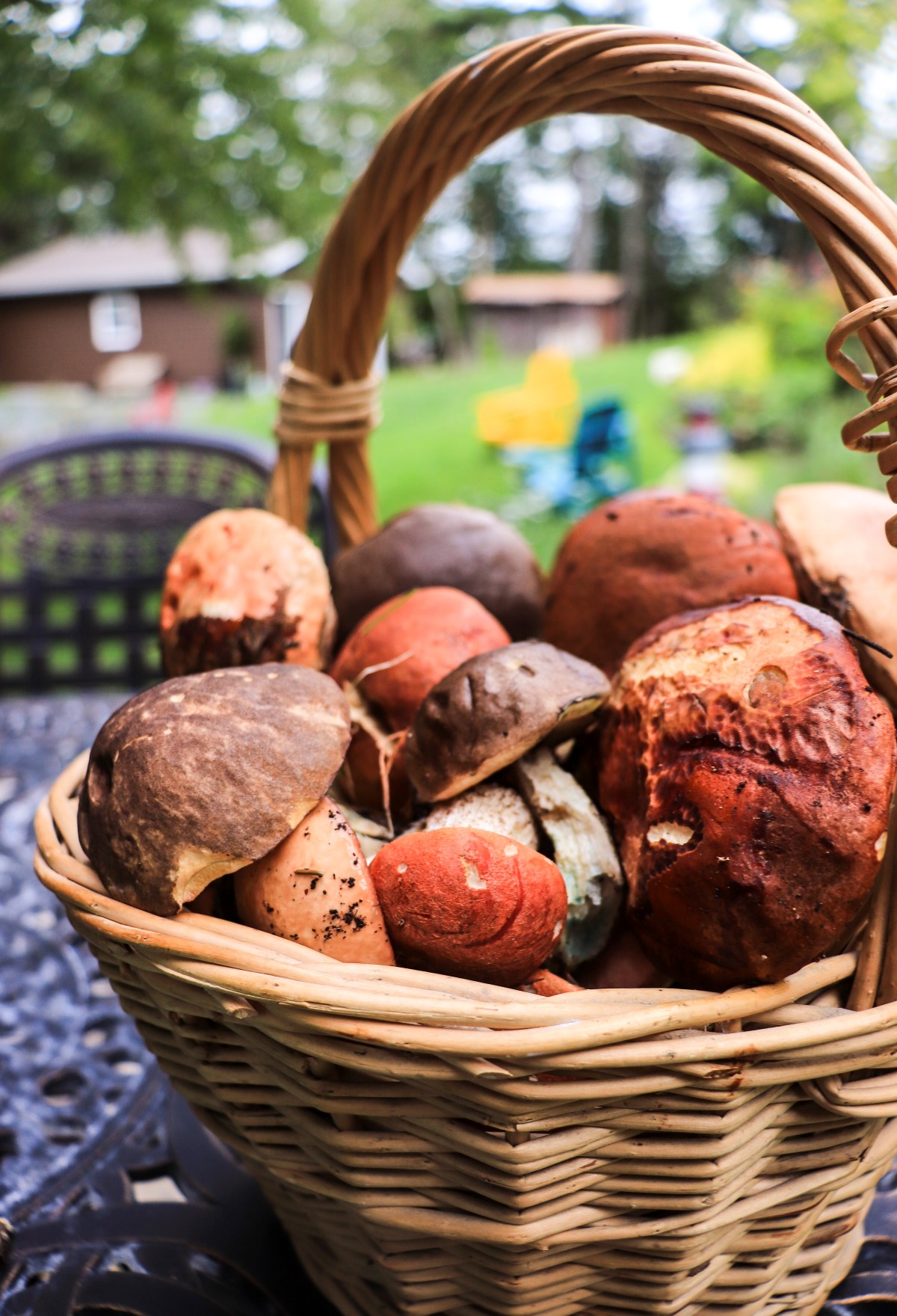
For this recipe, we only collect and use boletus mushrooms. Depending on what is available, our basket may contain several varieties, including porcini, red-cap or aspen boletes, birch boletes, and similar edible boletes. Once fried with potatoes and lots of onions, they make the ultimate rustic autumn comfort food. So, let’s dive into this hearty fried potato and wild mushroom recipe!
Wild Mushrooms for These Fried Potatoes
Boletus mushrooms are particularly good for this preparation because they have a substantial, earthy flavour. At the same time, different varieties and mushrooms of different maturity can have noticeably different textures.
You certainly do not need a perfectly uniform basket. In fact, a mixture of younger, firmer mushrooms and softer, mature ones works particularly well for fried potatoes with wild mushrooms.
A Brief Note About Foraging Wild Mushrooms
This is a cooking post, not a guide to mushroom identification, so I will keep the foraging advice simple. Common sense and confidence in what you collect are essential.
- Know your mushrooms. Only collect wild mushrooms that you can positively identify as edible.
- Do not guess. If you have any doubt about a mushroom, simply leave it behind.
- Learn locally. If you are new to foraging, guidance from experienced local foragers or a mycological group is far more appropriate than relying on a photograph or identification app.
- Identify before cooking. Cooking or boiling an unidentified mushroom does not make it safe. The mushrooms should already be positively identified before they reach your kitchen.
The rest of this recipe assumes you are starting with correctly identified edible boletus mushrooms.
Sorting and Cleaning Boletus Mushrooms
Cleaning can actually take longer than gathering a good basket of wild mushrooms. Field debris finds its way everywhere, while older mushrooms need a little extra attention before they go into the pan.
As you clean your harvest:
- Remove debris. Brush away soil, needles, leaves, and other forest debris.
- Trim the stems. Cut away particularly dirty or damaged stem ends.
- Inspect as you cut. Slice through the stems and caps so you can see their condition inside.
- Trim selectively. Minor damaged areas can be cut away if the rest of the mushroom is sound.
- Discard poor mushrooms. Anything badly deteriorated, mouldy, or otherwise questionable should not make it into dinner.
- Check mature caps. The porous, sponge-like layer beneath an older bolete cap can become extremely soft. This is particularly noticeable after boiling.
Research into traditional mushroom use in Eastern European communities also documents just how important cleaning, sorting, boiling, drying, and other preparation methods have been in household use of wild mushrooms.
Why Do Boletus Mushrooms Get Dark?
Do not be alarmed when your beautiful basket of boletus mushrooms looks considerably less colourful after preparation. Some boletes change colour when bruised or cut, and colour changes can also occur with heat, although the exact reaction varies considerably by species.
In my experience, the mixture used for fried potatoes with wild mushrooms often becomes quite dark after boiling and subsequent frying. Brown, greyish, or nearly black mushroom pieces may not be as photogenic as freshly picked mushrooms, but that darker appearance is completely familiar in our cooked harvest.
There are two important things to remember:
- Colour is variable. Different boletus varieties will not necessarily react in exactly the same way.
- Colour is not a safety test. Never use darkening, staining, or lack of staining to determine whether an unidentified mushroom is edible.
Fortunately, this rustic potato dish is a great destination for mushrooms that lose their beautiful fresh appearance after cooking. Here, flavour and texture matter much more than colour.
Why Boil Mushrooms for Fried Potatoes with Wild Mushrooms?
For our foraged boletus mushrooms, I boil them before using them in this recipe. Pre-cooking wild mushrooms before further preparation also has a long history in parts of Eastern Europe. Ethnomycological research among communities along the Ukrainian-Romanian border, for example, documented boiling and rinsing mushrooms before subsequent cooking as a common household practice.
Boiling provides another cleaning step. Even carefully cleaned wild mushrooms can hide tiny bits of soil, forest debris, or an occasional small insect in their caps, pores, and crevices. Boiling, followed by draining and rinsing if appropriate for your usual preparation, provides an additional opportunity to remove some of these unwanted remnants.
For fried potatoes with wild mushrooms and onions, boiling also has practical benefits. The mushrooms cook down dramatically, release plenty of moisture, and become much easier to handle before they reach the frying pan.
A few points are particularly useful:
- Boil after cleaning. Sort, clean, inspect, and cut the mushrooms first.
- Drain thoroughly. They retain plenty of water even after draining.
- Expect shrinkage. A huge pile of fresh mushrooms becomes surprisingly modest after boiling.
- Measure afterwards. The 550–600 g of mushrooms I used refers to their approximate weight after boiling and draining.
- Treat other mushrooms appropriately. If adapting the recipe with commercially cultivated mushrooms, preliminary boiling may not be necessary. Follow the preparation suitable for the mushroom you are using.
And again, boiling is part of the preparation here. It should never be treated as a way to make an unidentified or potentially unsafe mushroom edible.
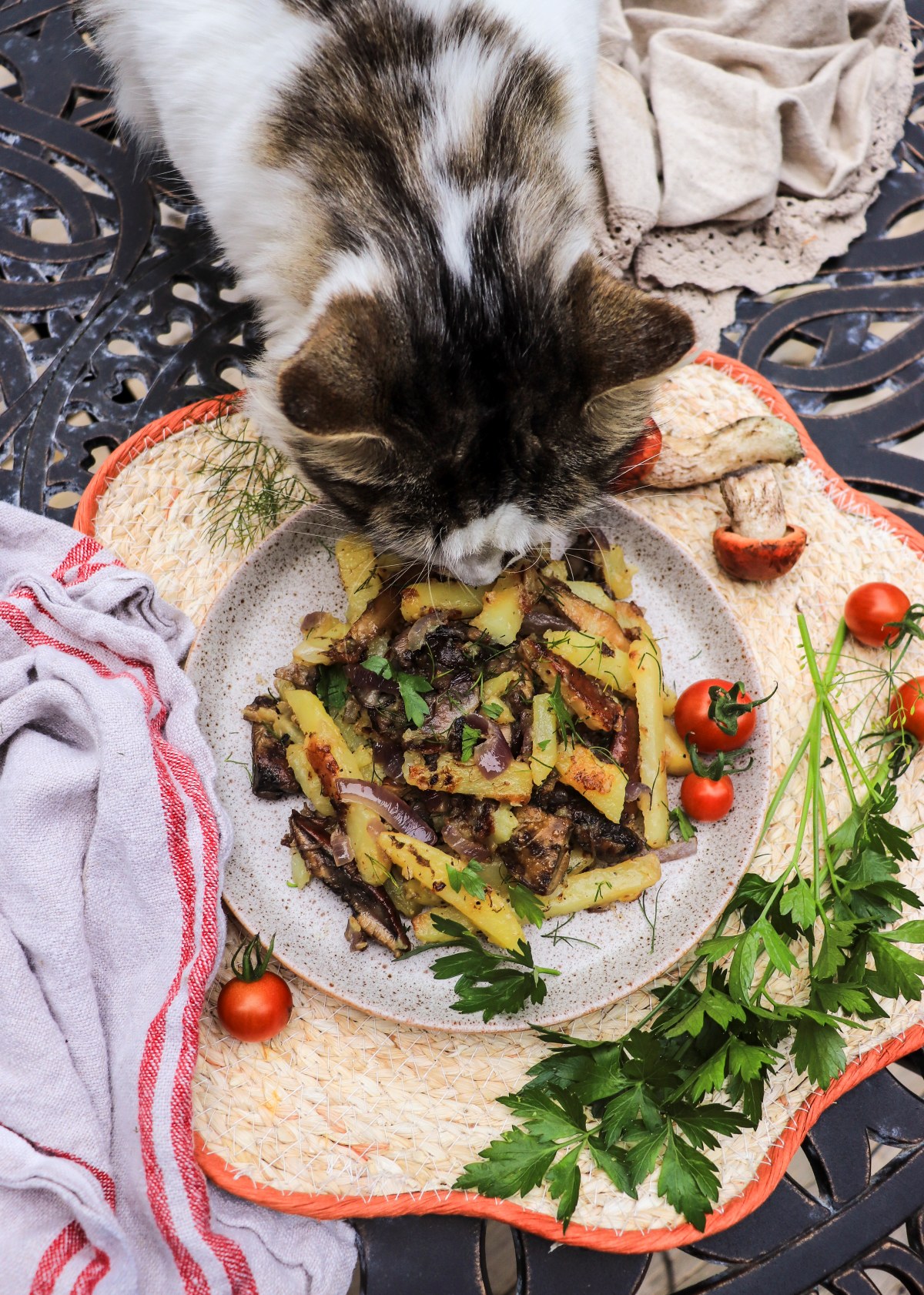
Fried Potatoes with Wild Mushrooms and Onions: An Eastern European-Inspired Combination
The combination of forest mushrooms, potatoes, onions, and cooking fat is familiar across Eastern European home cooking. Preparations naturally vary between countries, regions, and households, but frying wild mushrooms with onions and serving them with potatoes is well documented in the region.
That simplicity is exactly what I want to preserve here. Potatoes with wild mushrooms do not need a long ingredient list when the mushrooms themselves have so much character.
Sunflower or another vegetable oil would be a natural choice for Eastern European fried potatoes. However, I did not have sunflower oil when I made this batch, so I used olive oil with butter instead. It worked beautifully.
Why You’ll Love These Fried Potatoes with Wild Mushrooms
There is a lot going on texturally in this dish despite its short ingredient list. Some potatoes remain intact while others break down; some mushrooms stay meaty while others nearly melt into the pan. Add plenty of onions, butter, and oil, and the result is much more interesting than uniformly crisp potatoes and mushrooms.
There Are Plenty of Wild Mushrooms
This is not a potato dish flavoured with a small handful of mushrooms. My batch used roughly 550–600 g of boiled and drained boletus mushrooms, making them a substantial part of the finished skillet.
Because that measurement is taken after boiling, you will need a much larger quantity when starting with fresh mushrooms. Their earthy flavour remains prominent rather than disappearing behind the potatoes.
Lots of Onions Make Everything Better
I used two red onions, so there is plenty of onion throughout these fried potatoes with wild mushrooms. Onions are particularly good here because they complement both of the main ingredients.
As they cook, the onions soften, sweeten, and mingle with the softer mushrooms. I happened to have red onions, but regular yellow onions may be an even more classic choice and will work beautifully.
Rustic Potatoes Are a Feature, Not a Problem
My potatoes were quite starchy, and getting immaculate, crisp-edged pieces simply was not going to happen. As I fried them, some started to break down – and that is exactly how I love fried potatoes.
Those rough, crumbly surfaces absorb the oil, butter, onions, and mushroom juices. As a result, the potatoes with mushrooms and onions become wonderfully cohesive rather than feeling like three separate ingredients tossed together at the end.
Soft Mushrooms Belong Here Too
Not every mushroom from a real forest harvest will have the same firmness. Older boletus mushrooms can be quite soft even before cooking, while the porous layer beneath mature caps tends to soften significantly.
After boiling and frying, some pieces can become extremely soft, almost jelly-like. Eventually, they can partially integrate with the onions, fat, and potato starch to create a thick mushroomy coating around everything else.
For these fried potatoes with wild mushrooms, that texture is not something I try to prevent. Firmer mushrooms provide substantial pieces while the softer ones become part of the rich, savoury base of the dish.
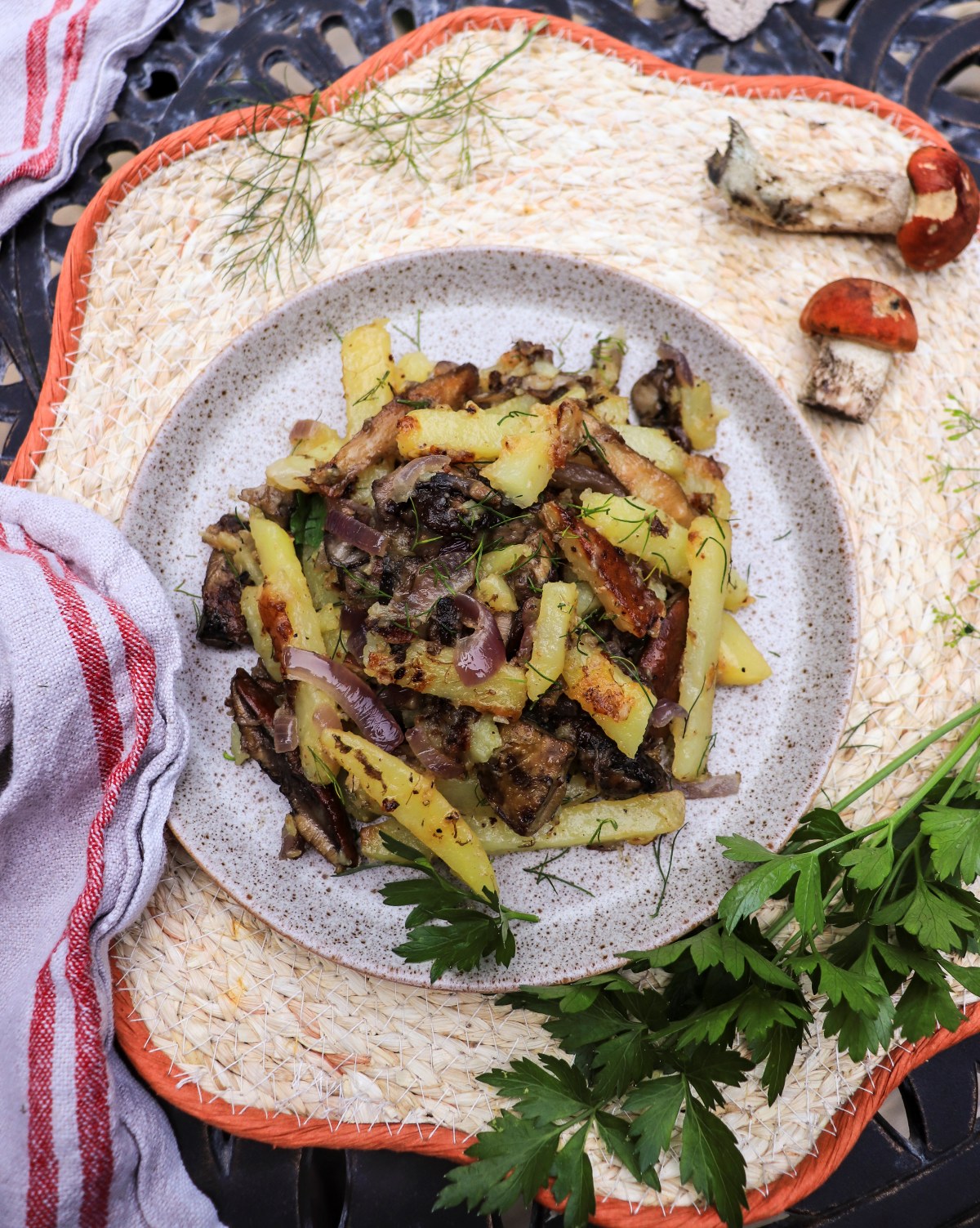
Ingredients You’ll Need for Fried Potatoes with Wild Mushrooms
You need only a handful of ingredients here, so allow the flavour of the boletus mushrooms to remain the focus.
- Boletus mushrooms. I used a mixture of foraged edible boletes that had already been cleaned, boiled, and thoroughly drained.
- Potatoes. Starchy potatoes create the rustic, partially broken texture I particularly enjoy.
- Onions. I used two red onions. Yellow onions are an excellent alternative and perhaps a more typical choice.
- Olive oil. This is what I used for the tested recipe. Sunflower or another suitable frying oil will also work.
- Butter. It adds richness and pairs beautifully with both potatoes and wild mushrooms.
- Salt and black pepper. There is little reason to complicate the seasoning when using flavourful forest mushrooms.
Both potatoes and boletus mushrooms can absorb a surprising amount of fat. Therefore, treat the amount of oil and butter in the eventual recipe card as a useful starting point rather than an absolute maximum.
What Kind of Potatoes Work Best?
That depends on what you want your fried potatoes with mushrooms to look and feel like.
- Starchy potatoes soften readily and may partially crumble during frying. Their rough surfaces soak up plenty of mushroom and onion flavour. This is what I used and what I prefer.
- Waxy or lower-starch potatoes retain cleaner edges and are a better choice if you prefer more distinct slices or pieces.
Either works. There is no need to consider partially broken potatoes a failure in such a rustic dish.
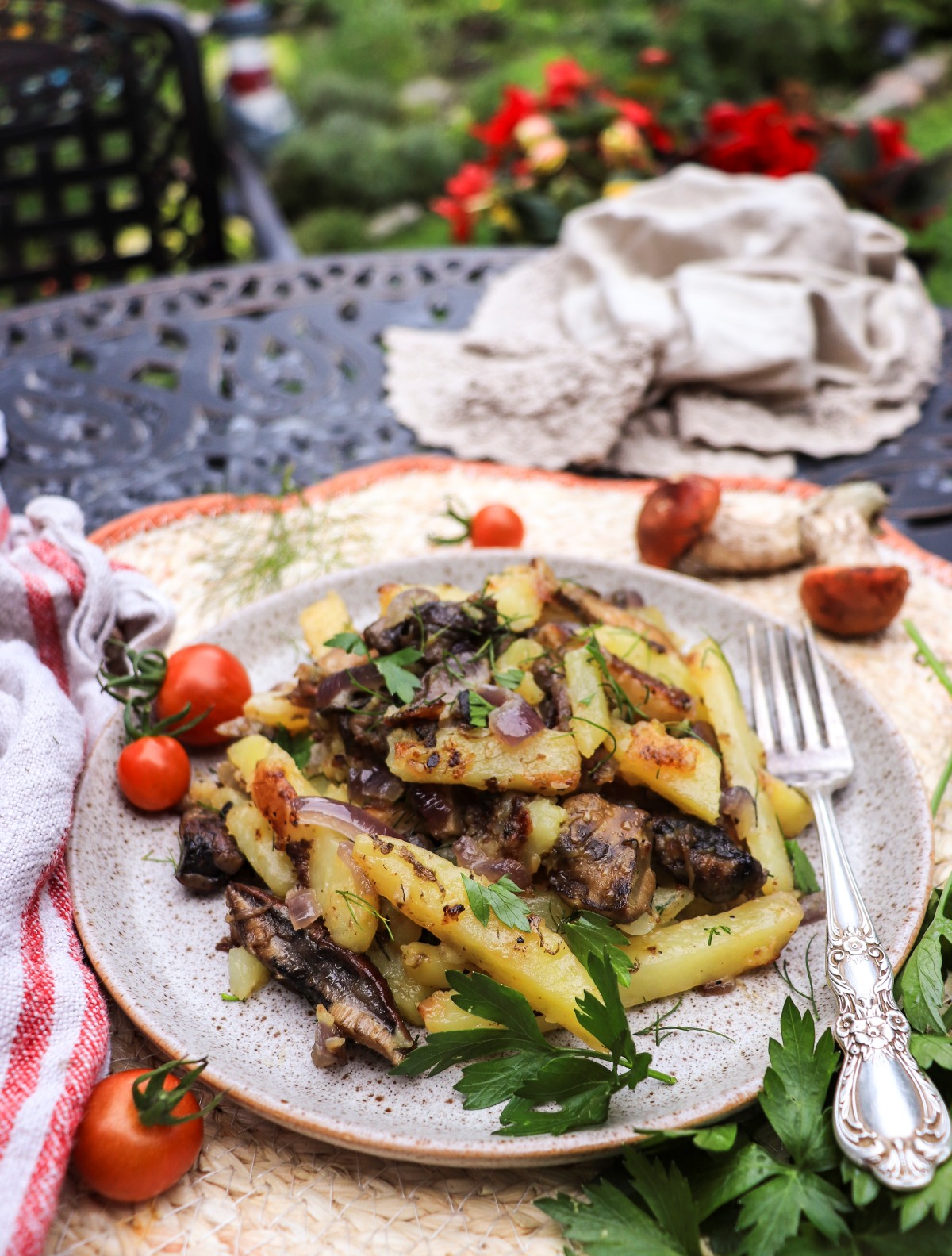
How to Make Fried Potatoes with Wild Mushrooms
This is not technically difficult, but the stages matter. In particular, giving the boiled mushrooms time to lose excess moisture before adding the fat makes frying much more effective.
Step 1 – Boil and Drain the Mushrooms
First, sort, clean, inspect, and cut your positively identified boletus mushrooms. Boil them according to the preparation you normally use for your particular edible boletes, then drain them very thoroughly.
Remember that the mushrooms will shrink considerably. For my fried potatoes with wild mushrooms, I ended up with approximately 550–600 g after boiling and draining.
Step 2 – Cook Off Excess Mushroom Moisture
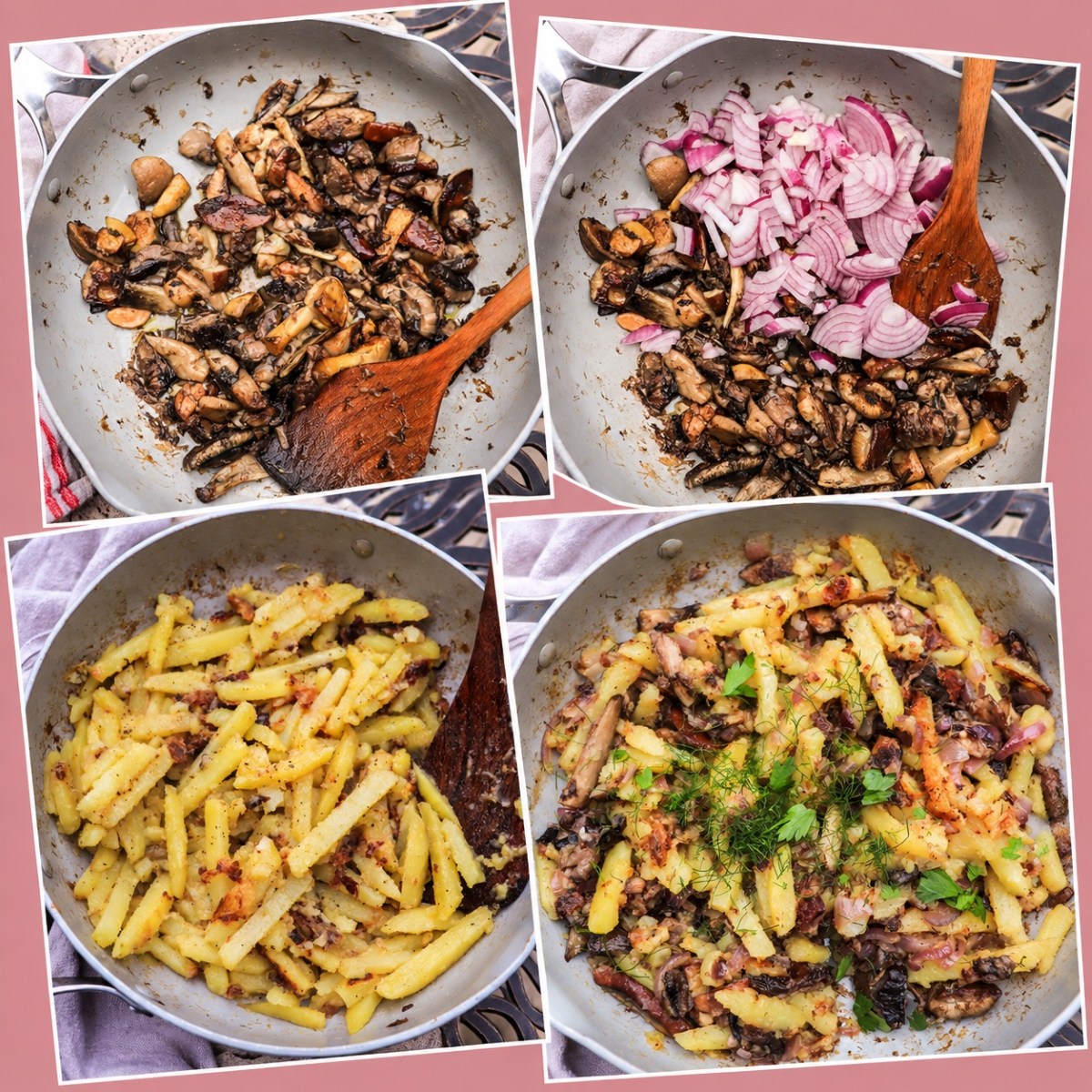
Transfer the boiled mushrooms to a large dry skillet. Do not add the oil or butter immediately.
Cook them for about 5 minutes first. Even well-drained boiled mushrooms retain considerable water, so this initial dry cooking allows some of that excess moisture to escape before you start frying them.
Look for the pan to become noticeably less watery. You do not need to dry the mushrooms completely.
Step 3 – Fry the Mushrooms and Onions
Now add some olive oil and butter, followed by the onions. Continue cooking until the onions soften and the mushrooms begin to fry rather than simply release water.
Do not be surprised if you need more fat than expected. Mushrooms absorb oil and butter readily, particularly once their excess water has cooked away. Add more as needed if the skillet becomes too dry.
Also, do not expect every boletus piece to stay firm. The porous portions of mature caps and any mushrooms that were already quite soft can become very soft and almost jelly-like. Some may nearly dissolve into the cooking juices, onions, and fat, producing a thick mushroom-rich sauce or coating. That is completely normal for the mixed, mature wild mushrooms used in this dish.
Step 4 – Fry the Potatoes
Once the mushrooms and onions are ready, remove them from the skillet and set them aside. Add more oil and butter as needed, then fry the potatoes.
Try not to stir constantly. Giving the potatoes uninterrupted contact with the skillet encourages whatever browning your particular variety can achieve.
However, adjust your expectations to the potatoes you have. Mine were very starchy and began breaking apart before developing uniformly crisp surfaces. I simply let them do their thing.
If you use a lower-starch variety, the potatoes should retain their shape more readily. You can also turn them more gently if clean-cut pieces are important to you.
Step 5 – Finish the Fried Potatoes with Wild Mushrooms
When the potatoes are cooked, return the mushroom and onion mixture to the skillet. Season with salt and black pepper, then gently combine everything.
Add a little more butter or oil if the mixture seems dry. Fried potatoes with wild mushrooms should not be swimming in fat, but there needs to be enough for the potatoes, mushrooms, and onions to remain rich and succulent.
Cook everything together briefly so the softer mushrooms and onions mingle with the potatoes. At this stage, those partially broken starchy potatoes help thicken the mushroomy coating even further.
Helpful Tips for Cooking Wild Mushrooms and Potatoes
A few practical details will make the process smoother, particularly when you are working with a mixed basket of mushrooms of different sizes and maturity.
- Expect moisture. Even boiled and well-drained mushrooms release more water once they hit a hot skillet.
- Use a dry pan first. Those initial five minutes help remove water before you introduce the frying fat.
- Expect shrinkage. Wild mushrooms lose considerable volume during boiling and cooking.
- Do not fear dark mushrooms. The cooked colour can be far less attractive than the fresh basket, but that does not diminish the flavour.
- Embrace soft pieces. Mature porous mushroom sections may become almost sauce-like.
- Use enough fat. Both mushrooms and potatoes absorb oil and butter as they cook.
- Keep seasoning restrained. Salt and pepper are enough when the boletus mushrooms are the main attraction.
- Choose potatoes by texture. Use starchy ones for a softer rustic skillet or lower-starch potatoes for more distinct pieces.
Most importantly, cook according to what is happening in your skillet rather than chasing an idealized picture of perfectly crisp potatoes.
Serving Suggestions
These fried potatoes with wild mushrooms are substantial enough to serve without much else. Still, a few simple additions work particularly well.
- Sour cream adds a cool, tangy contrast to the rich potatoes and mushrooms. It’s a very traditional Eastern-European way to enjoy these fried wild mushrooms and potatoes.
- Pickles bring acidity and crunch alongside the earthy flavours.
- Fresh herbs such as dill can be added if you enjoy them, although I prefer not to overwhelm the mushrooms.
- Dark or rye-style bread turns the skillet into an especially hearty meal.
- A simple vegetable salad is another good option if you want something fresh alongside.
Serve the potatoes hot, preferably straight from the skillet.
Storage and Reheating
Like most fried potato dishes, fried potatoes with wild mushrooms are at their best freshly made. However, leftovers are still worth keeping.
- Refrigerate leftovers promptly in a covered container and use within a few days.
- Reheat in a skillet rather than expecting the microwave to recreate the freshly fried texture.
- Add a little fat if needed. A small amount of butter or oil helps loosen potatoes that have absorbed the cooking fat during storage.
- Expect softer potatoes. Particularly with starchy varieties, reheated potatoes will remain rustic rather than becoming crisp again.
I would not make the entire dish ahead specifically for entertaining. The contrast between freshly fried potatoes, onions, and mushrooms is one of its best qualities.
More Cozy Mushroom and Potato Recipes to Explore
If you enjoy the earthy, comforting flavours of fried potatoes with wild mushrooms, here are a few more savoury ideas from Havoc in the Kitchen to explore:
- Wild Mushroom Caviar – Eastern European Mushroom Spread
- Porcini Mushroom Potato Soup with Sage and Smoked Paprika
- Porcini Mushroom Chicken Skillet with Creamy Sauce
I’d love for you to try this Eastern-European fried potatoes with wild mushrooms and onions. If you give it a go, please share your results in the comments, message me on Instagram, or post your photos with the hashtag #havocinthekitchen. I look forward to seeing your creations and hearing your thoughts.
Cheers!
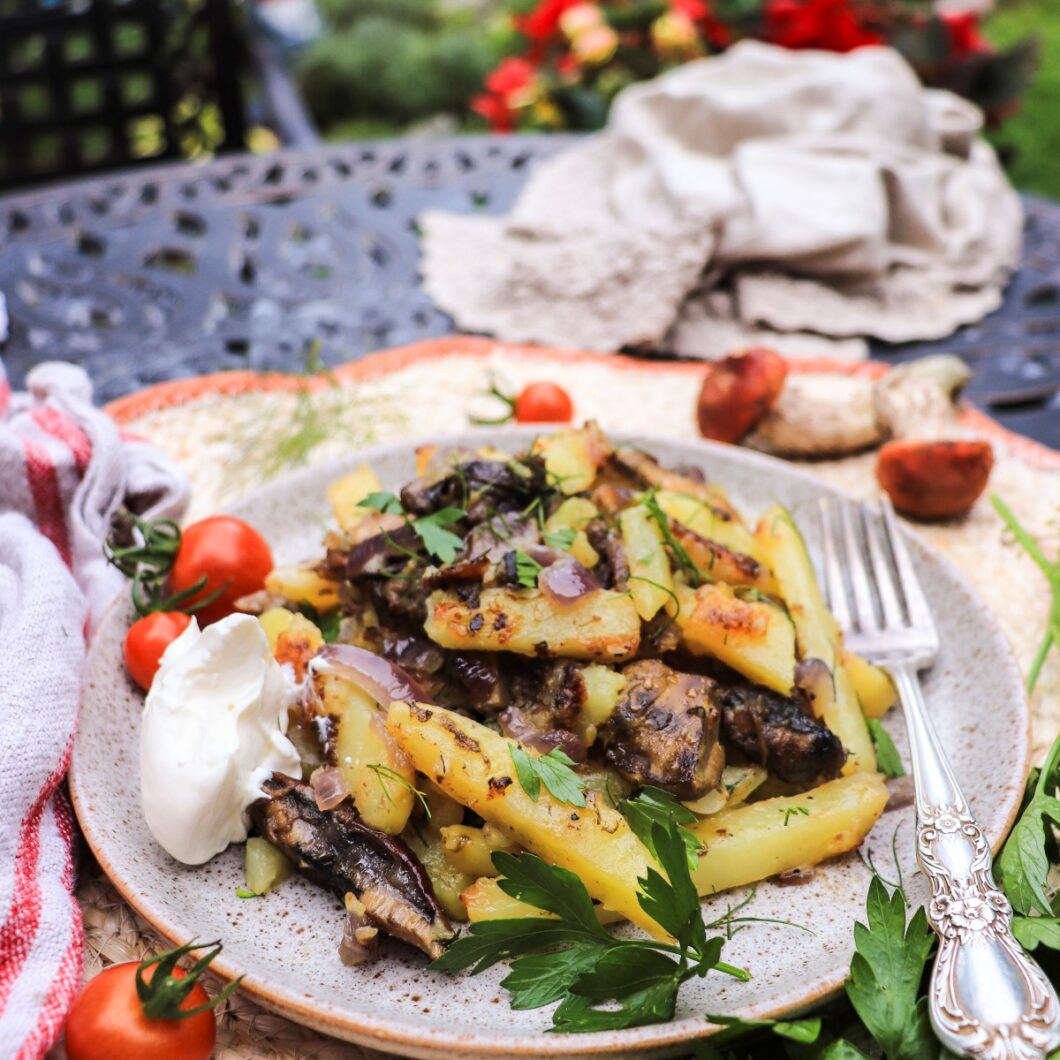
Fried Potatoes with Wild Mushrooms and Onions
Rustic fried potatoes with wild mushrooms, plenty of onions, olive oil, and butter. A generous amount of boiled boletus mushrooms creates an earthy, savoury skillet where softer mushrooms mingle with the potatoes and onions.