


This soft-set gooseberry jam is wonderfully tart and fruity, with less sugar than traditional preserves. This easy gooseberry jam recipe makes a small batch with a glossy, spoonable consistency and requires only a little optional pectin.

Hey folks! I hope you are doing well. Today I am sharing another easy homemade jam recipe, this time featuring beautiful ripe gooseberries.
If you have ever tried gooseberries, you know they can be quite tart – even when fully ripe. So, I used more sugar here than I normally do for my homemade jams. Still, compared with many traditional preserves, this is a relatively low sugar gooseberry jam, with roughly twice as much fruit as sugar.
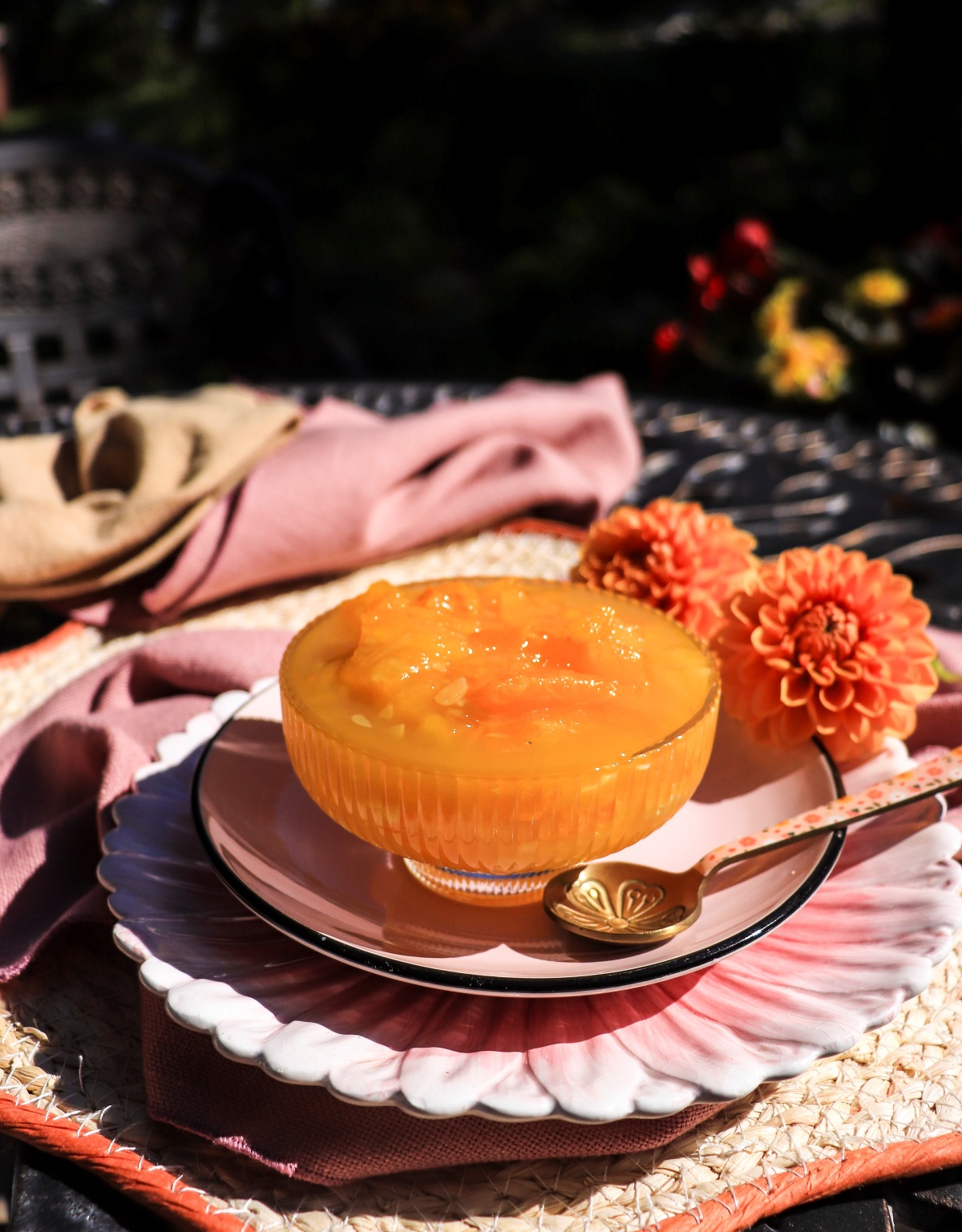
The result is exactly the kind of jam I love: intensely fruity, pleasantly tart, and not overly sweet. It also has an intentionally soft, spoonable set rather than a stiff, jelly-like consistency. And just look at that gorgeous ruby colour!
What Are Gooseberries?
Gooseberries are small berries from the same genus as currants. Depending on the variety and stage of ripeness, they can range from pale green and yellow to pink, red, and deep burgundy. Their flavour also varies from quite sharp and tangy to sweeter and more aromatic as they ripen.
They are particularly well suited to preserves because gooseberries are naturally high in pectin. Slightly underripe berries generally contain more pectin than fully ripe fruit, which is useful to know when making gooseberry jam.
Why You’ll Love This Gooseberry Jam
There is plenty to love about this simple gooseberry jam recipe, particularly if you prefer homemade preserves that taste predominantly of fruit rather than sugar.
Bright, Tart Gooseberry Flavour
Gooseberries have a distinctive flavour that works beautifully in jam.
- Tart and fruity. Even ripe gooseberries retain enough acidity to keep the flavour lively.
- Not overly sweet. The reduced amount of sugar allows their characteristic tanginess to remain prominent.
- Beautiful colour. Red gooseberries create a gorgeous ruby-red preserve, while green or yellow varieties will naturally produce a different colour.
Less Sugar Than Traditional Gooseberry Jam
While I often reduce sugar quite significantly in homemade preserves, gooseberries need a little more sweetness to balance their natural tartness.
For this batch, I used a little over one cup of sugar for about 450–500 grams of berries. So, the fruit-to-sugar ratio is approximately 2:1.
- Fruit-forward. There is enough sugar to balance the berries without masking their flavour.
- Pleasantly tart. This is still very much a tangy gooseberry jam rather than an intensely sweet preserve.
- Lower in sugar. The recipe uses considerably less sugar than many traditional jam formulas.
Soft, Spoonable Texture
This soft-set gooseberry jam is intentionally looser than a conventional firmly set preserve. That is not a flaw – it is exactly the texture I wanted.
- Glossy. The finished jam looks luscious rather than stiff or gelatinous.
- Soft-set. It is thick enough to spread but remains beautifully spoonable.
- Textured. Some pieces of cooked gooseberries remain throughout the jam.
- Versatile. The softer consistency makes it particularly good for spooning over yogurt, oatmeal, pancakes, and desserts.
Keep in mind that the gooseberry jam will continue to thicken as it cools.
Easy Small-Batch Recipe
Another advantage is how uncomplicated this recipe is. You only need gooseberries, sugar, a little water, and optionally a tiny amount of pectin.
Everything cooks in one saucepan, and my batch took about 25 minutes from start to finish. There is no complicated technique involved, making this a particularly easy gooseberry jam recipe for a small amount of fresh fruit.

Ingredients You’ll Need for Gooseberry Jam
You need only four ingredients for this homemade low sugar gooseberry jam, and one of them is optional.
- Gooseberries. I used ripe red gooseberries, hence the beautiful deep ruby colour. Other varieties will work, although their sweetness, tartness, and final colour will vary.
- Sugar. I used more than I typically add to homemade jam because gooseberries are naturally quite tart. However, the amount is still modest enough to keep the finished preserve fruit-forward.
- Water. You only need a splash to help the gooseberries start cooking and releasing their juices without catching on the bottom of the pan.
- Pectin. Technically optional. I used just a tiny amount because I wanted a soft set without extending the cooking time too much.
Why This Is a Low Sugar Gooseberry Jam
Sugar does more than simply sweeten homemade jam. Along with the fruit’s natural acid and pectin, it also helps create the characteristic set. Therefore, reducing the sugar can affect the final consistency.
For this low sugar gooseberry jam, I used roughly twice as much fruit as sugar. This ratio worked particularly well for my taste because gooseberries are considerably tarter than many other summer berries.
- More fruit flavour. Gooseberries remain the dominant flavour rather than being overwhelmed by sweetness.
- Balanced tartness. There is enough sugar to soften their sharp edge while keeping their distinctive tang.
- Softer consistency. With less sugar, I was not aiming for the firm set of a traditional preserve.
- Easy to adjust. Particularly ripe, sweet gooseberries may need slightly less sugar, while very tart berries may benefit from a little more.
Although this recipe uses more sugar than some of my other homemade jams, it still tastes pleasantly tart rather than sugary.
Do You Need Pectin for This Low Sugar Gooseberry Jam?
Technically, no. Gooseberries are naturally high in pectin, so it is certainly possible to make gooseberry jam without adding commercial pectin.
However, there are a few variables to consider, particularly when making a low sugar gooseberry jam.
Gooseberries Are Naturally High in Pectin
The amount of natural pectin varies according to the ripeness of the fruit. Slightly underripe gooseberries generally contain more pectin, while very ripe fruit tends to produce a softer set.
That means a batch made with less-ripe berries may thicken more readily than one made with fully ripe, juicy gooseberries.
Why I Still Added a Little Pectin
My gooseberries were ripe, and this recipe contains significantly less sugar than many traditional jam recipes. After about 25 minutes of cooking, I liked the flavour and consistency but felt the jam could use just a little help setting.
So, I added about half a teaspoon of pectin – really not much at all.
This gave me the soft, glossy consistency I wanted without needing to cook the fruit substantially longer. It also helped preserve the fresh, tart gooseberry flavour.
Can You Make It Without Pectin?
Absolutely. The pectin is optional rather than essential in this gooseberry jam recipe.
- Cook it longer. Continue simmering until enough liquid has evaporated and the jam reaches your preferred consistency.
- Use slightly underripe fruit. If available, including some less-ripe gooseberries can provide additional natural pectin.
- Expect a soft set. Particularly with reduced sugar, don’t necessarily expect the texture of a conventional firm jam.
- Remember cooling matters. The hot mixture will look considerably looser than the finished jam once completely cooled.

How to Make Gooseberry Jam
Add the cleaned and trimmed gooseberries to a saucepan along with the water. Bring to a simmer and cook gently until the berries soften, release their juices, and begin to break down.
Add the sugar and stir until it dissolves. Continue simmering, stirring occasionally, until the mixture becomes glossy and noticeably thicker. My gooseberry jam took about 25 minutes in total, including the initial cooking time.
If the jam still seems a little too loose towards the end, stir in about half a teaspoon of pectin and cook briefly longer. Alternatively, omit the pectin and continue simmering until you reach your preferred soft-set consistency.
How to Tell When Gooseberry Jam Is Ready
Because this is deliberately a soft-set gooseberry jam, don’t judge it by the standards of a very firm traditional preserve. It should remain loose enough to spoon easily once cooled.
- Watch the texture. The mixture should become noticeably thicker and glossier as it cooks.
- Check the spoon. The jam should coat a spoon rather than immediately running off like thin syrup.
- Try a chilled plate. Place a little jam on a cold plate, let it cool briefly, and check how it moves when you tilt the plate or run a finger through it.
- Don’t overcook it. Stop while the jam is still slightly softer than you ultimately want, as it will continue to thicken while cooling.
How to Serve Gooseberry Jam
Naturally, this gooseberry jam is delicious with fresh bread, toast, croissants, or scones. However, its soft consistency makes it useful for much more than spreading.
- Breakfast. Spoon it over yogurt, oatmeal, pancakes, waffles, or French toast.
- Desserts. Pair it with vanilla ice cream, panna cotta, cheesecake, or other creamy desserts.
- Cheese. Its tart flavour works particularly well against rich, creamy or salty cheeses.
- Baking. Use it as a filling or topping where a softer, fruit-forward preserve works well.
More Homemade Jam Recipes
If you enjoy making seasonal fruit preserves, be sure to check out some of my other homemade jam recipes. Fruit-forward jams with less sugar are particularly lovely when summer produce is at its best.
- Strawberry Lavender Jam (Soft, Low Sugar)
- Strawberry Jam with Amaretto (Soft, Low Sugar)
- Cherry Amaretto Jam – A Lower Sugar Homemade Jam
- Maple Fig Jam (With Lemon and Vanilla)
I’d love for you to try this low sugar gooseberry jam recipe. If you give the recipe a go, please share your results in the comments, message me on Instagram, or post your photos with the hashtag #havocinthekitchen. I look forward to seeing your creations and hearing your thoughts!
Cheers!


Gooseberry Jam (Low-Sugar Recipe)
This easy gooseberry jam is tart, fruity, and pleasantly soft-set, with considerably less sugar than many traditional preserves. A tiny amount of pectin helps achieve the desired consistency without prolonged cooking, but it can be omitted.




)
I have only cooked with green gooseberries — I would do anything to get fresh gooseberries here in Tucson — frozen would be great, too. Somehow, wherever I have lived, we have had strict bans on growing gooseberries because of the white pine trees (they carry the White Pine Blister) My favorite cake in Germany was a Stachelbeerkuchen — (green) gooseberry cake with marzipan and a almond crumble. I went back to the bakery several years ago to get another slice but the bakery had been taken over by a Starbucks. Ugh. Of all things, a lowly Starbucks.
This gooseberry jam looks gorgeous that deep ruby colour and the soft, spoonable texture make it feel so much more special than a standard jar
We don’t get gooseberries here like that. I’m intrigued by how they taste.
The gooseberry season is long over here..this looks really great!
I have not made jam in a really long time. This looks delicious. Thanks for the recipe.