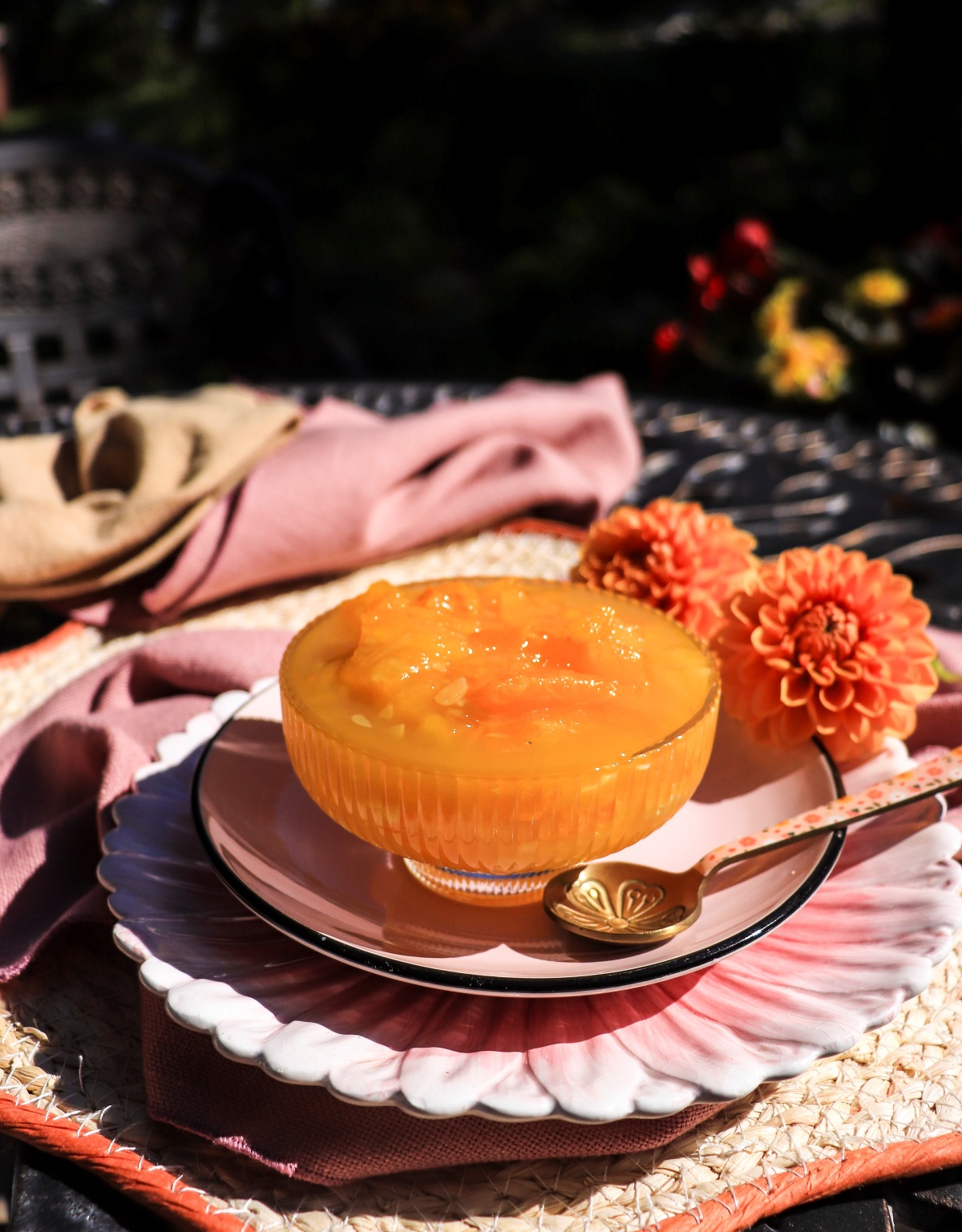
This lemon curd with crème de violette is rich, silky, and wonderfully tangy, with a delicate floral note from violet liqueur. It is a lovely twist on classic lemon curd and an unexpected use of famous floral liqueur for anyone looking beyond cocktails.

Hey folks – I hope you all are doing well!
I have been experimenting quite a lot with crème de violette lately. And while this beautiful floral liqueur is best known for cocktails, it can be surprisingly versatile in sweet recipes, too.
This time, I added it to homemade lemon curd. Lemon and violet make a lovely pairing because the bright citrus keeps the floral notes fresh and restrained. The result is still unmistakably lemon curd, while the liqueur adds an elegant and slightly unusual twist.
There is one small catch, though. The beautiful purple-blue colour of crème de violette does not necessarily translate into an equally beautiful curd. But don’t worry – I will talk about that, too. So, let’s dive into this lemon curd with violet liqueur.
What Is Crème de Violette?
Crème de violette is a sweet floral liqueur flavoured with violets. Depending on the brand, its character can range from delicately floral to more pronounced and perfumed, often with a beautiful purple or blue-violet appearance.
You may know it primarily as a cocktail ingredient. In particular, it is famously associated with the Aviation cocktail. However, there are plenty of other ways to use it.
If you have a bottle sitting in your cabinet, consider experimenting with it in desserts and other sweet recipes. For instance:
- Creamy desserts help soften and round out its floral character.
- Citrus flavours provide acidity that balances its sweetness and perfume.
- Berries work well with the fruity-floral profile of the liqueur.
- Chocolate can create a richer and more decadent contrast.
- Butter-based recipes carry floral aromas particularly well.
That versatility is exactly why I have been exploring more than just cocktails. This crème de violette recipe pairs the liqueur with lemon, which provides enough acidity and brightness to keep its floral character delicate.
What Makes This Lemon Curd with Crème de Violette Special?
This lemon curd with crème de violette stays quite close to classic lemon curd. In fact, the violet liqueur is an accent rather than the dominant flavour.
Classic Lemon Curd with a Floral Twist
The foundation is everything you would expect from lemon curd. It is buttery, tart, sweet, and intensely citrusy.
However, adding crème de violette gives it another layer. This lemon curd with violet liqueur has a subtle floral finish that becomes noticeable after the initial burst of lemon.
A few things make the combination particularly nice:
- Lemon remains dominant. This is first and foremost a lemon curd.
- Violet adds complexity. The floral flavour sits behind the citrus rather than competing with it.
- Acidity provides balance. Tart lemon prevents the violet liqueur from making the curd taste overly sweet or perfumed.
- Butter rounds everything out. Its richness softens both the citrus acidity and floral notes.
As with most floral ingredients, restraint matters. You want enough liqueur to recognize the violet character without turning your lemon curd with crème de violette into something that tastes like perfume.
Made with Egg Yolks for a Rich, Silky Texture
This version uses egg yolks rather than whole eggs. As a result, the curd has a particularly rich and smooth consistency.
Egg yolks also contribute to its naturally yellow colour. That becomes important once we add the purple-blue liqueur, as I will explain below.
I also like keeping the finely grated lemon zest in my curd. Therefore, I don’t automatically strain it after cooking. However, you certainly can strain yours if you prefer an exceptionally smooth texture.
Subtle Violet Flavour
Do not expect an intensely floral lemon curd. The crème de violette adds nuance rather than transforming the lemon flavour completely.
This is what you can expect:
- Tangy from plenty of fresh lemon.
- Rich thanks to egg yolks and butter.
- Silky once cooked and cooled.
- Lightly floral from the violet liqueur.
- Aromatic from the finely grated lemon zest.
So if you are hesitant about floral desserts, this lemon curd with violet liqueur is actually a gentle way to experiment with them. Lemon remains familiar and prominent, while violet provides the twist.

Ingredients You’ll Need for This Lemon Curd with Crème de Violette
You will need only a handful of familiar ingredients for this lemon curd with crème de violette. The violet liqueur is the only ingredient you may not already have in your kitchen.
- Egg yolks. They create a rich, silky curd and help thicken it without using whole eggs.
- Granulated sugar. It balances the acidity of the fresh lemon juice.
- Fresh lemon juice. Freshly squeezed juice gives the curd its bright, tart flavour.
- Lemon zest. It intensifies the citrus aroma and adds a little texture.
- Butter. Butter adds richness and gives the cooled curd its smooth, luxurious consistency.
- Crème de violette. It adds the distinctive floral character. I use about two tablespoons, which keeps the violet flavour subtle.
- Dried violet petals. These are optional and are more useful for adjusting the colour than adding flavour.
- Water. You only need a small amount if making the optional violet infusion.
For this crème de violette recipe, I would not dramatically increase the amount of liqueur. Besides making the floral flavour stronger, additional alcohol can also affect the texture and balance of the curd.
What Colour Will Crème de Violette Make Lemon Curd?
The colour of lemon curd with crème de violette can be somewhat surprising. The naturally yellow curd and purple-blue liqueur do not always combine into the most attractive shade.
Instead, adding crème de violette can mute the familiar sunny-yellow colour of lemon curd, sometimes giving it a slightly greyish or blue-grey cast. The exact result will depend on the colour of your egg yolks and the particular crème de violette you use.
Fortunately, you can adjust this somewhat. A small amount of violet-petal infusion can help bring back a warmer, more classic lemon-curd appearance, while potentially leaving just a subtle violet undertone.
How Can You Improve the Colour?
The natural colour of lemon curd with crème de violette may look a little muted or greyish once the liqueur is added. If that happens, you can adjust the colour slightly. I experimented with dried violet petals for this purpose.
Steep a small pinch of dried violet petals in about a tablespoon of hot water. Then add a little of the coloured infusion to the curd. Interestingly, rather than making the curd distinctly purple, it can help counteract the dull greyish tone and bring the colour closer to the warm, familiar appearance of classic lemon curd, while leaving a very subtle violet hue.
A few things to keep in mind:
- Watch the flavour. The petals can have a slightly grassy or herbal character, so avoid using a strong infusion.
- Add it gradually. A small amount may be enough to improve the colour.
- Use it primarily for appearance. Dried violet petals don’t contribute much desirable violet flavour.
- Don’t expect purple curd. The goal is a warmer, more attractive colour rather than an obviously violet result.

How to Make Lemon Curd with Crème de Violette
Making lemon curd with crème de violette is quite straightforward. However, gentle heat is important because you want the yolks to thicken gradually without scrambling.
Start by combining the egg yolks, sugar, lemon juice, and zest. Cook the mixture gently, stirring frequently or continuously as needed, until it thickens enough to coat the back of a spoon.
Then incorporate the butter until the curd becomes smooth and glossy. Add the crème de violette according to the recipe directions, mixing until evenly incorporated. If you are using the optional violet infusion, add only enough to adjust the colour to your liking.
Finally, transfer the curd to a clean container and let it cool. It will continue to thicken as it chills.
You have two options for the finished texture:
- Keep the zest. This is my preference because I enjoy the extra lemon flavour and slight texture.
- Strain the curd. Pass it through a fine-mesh sieve if you prefer a completely smooth consistency.
Either way, this lemon curd with violet liqueur becomes thicker and silkier once thoroughly chilled.
Possible Additions and Variations
This lemon violet curd does not need many additions. Still, you can make a few small adjustments depending on the flavour and appearance you prefer.
- Adjust the crème de violette. A little more will increase the floral character, but don’t go overboard. Too much can overwhelm the lemon and affect the texture.
- Add a violet infusion. Use a small amount of liquid from steeped dried violets if you want to modify the colour naturally.
- Make it completely smooth. Strain the finished curd to remove the zest and any tiny pieces of cooked egg.
- Try some orange. Replace a small portion of the lemon juice or zest with orange for a softer citrus profile.
I would keep other flavourings restrained. The combination of lemon and violet already gives this curd plenty of personality.
How to Use Lemon Curd with Crème de Violette
There are many ways to use lemon curd with crème de violette. Basically, you can serve it anywhere you would normally enjoy classic lemon curd.
Here are a few ideas:
- Toast, brioche, and croissants for an easy breakfast or brunch treat.
- Scones and biscuits where the tart curd provides a lovely contrast to buttery pastry.
- Crêpes and pancakes either spread inside or spooned over the top.
- Cakes and cupcakes as a filling or accompaniment.
- Tart shells for easy individual lemon-violet tarts.
- Pavlova and meringues where the acidity balances the sweetness.
- Yogurt for a simple creamy dessert or breakfast.
- Ice cream for an extra-tangy citrus and floral contrast.
You can also simply serve a little in dessert glasses with berries and whipped cream. Because the floral flavour is subtle, this lemon curd with crème de violette works anywhere a bright citrus element would normally make sense.
Storage
This lemon curd with crème de violette should be stored in a tightly covered container in the refrigerator. Let it cool before refrigerating, then keep it chilled until needed.
For the best flavour and texture, I would use it within about one week. Always use a clean spoon when removing curd from the container.
More Crème de Violette Recipes
If you have invested in a bottle of violet liqueur, don’t reserve it exclusively for cocktails. There are many delicious ways to incorporate it into sweet recipes, just like this lemon violet curd.
- Violet Ice Cream with Crème de Violette – Easy No-Churn Recipe
- Violet Honey Butter – Sweet Butter with Crème de Violette
- Violet Affogato with Crème de Violette
- Crêpes Suzette with Crème de Violette and Lemon
- Violet Truffles with Lemon, Cashews and Vanilla Wafers
- Violet Tiramisu with Crème de Violette and Lemon
I’d love for you to try this lemon curd with violet liqueur. If you give it a go, please share your results in the comments, message me on Instagram, or post your photos with the hashtag #havocinthekitchen. I look forward to seeing your creations and hearing your thoughts.
Cheers!


Lemon Curd with Crème de Violette
This lemon curd with crème de violette is tangy, buttery, and silky, with a subtle floral note from violet liqueur. Made with egg yolks, it has a rich texture and can be lightly tinted with an optional violet infusion.