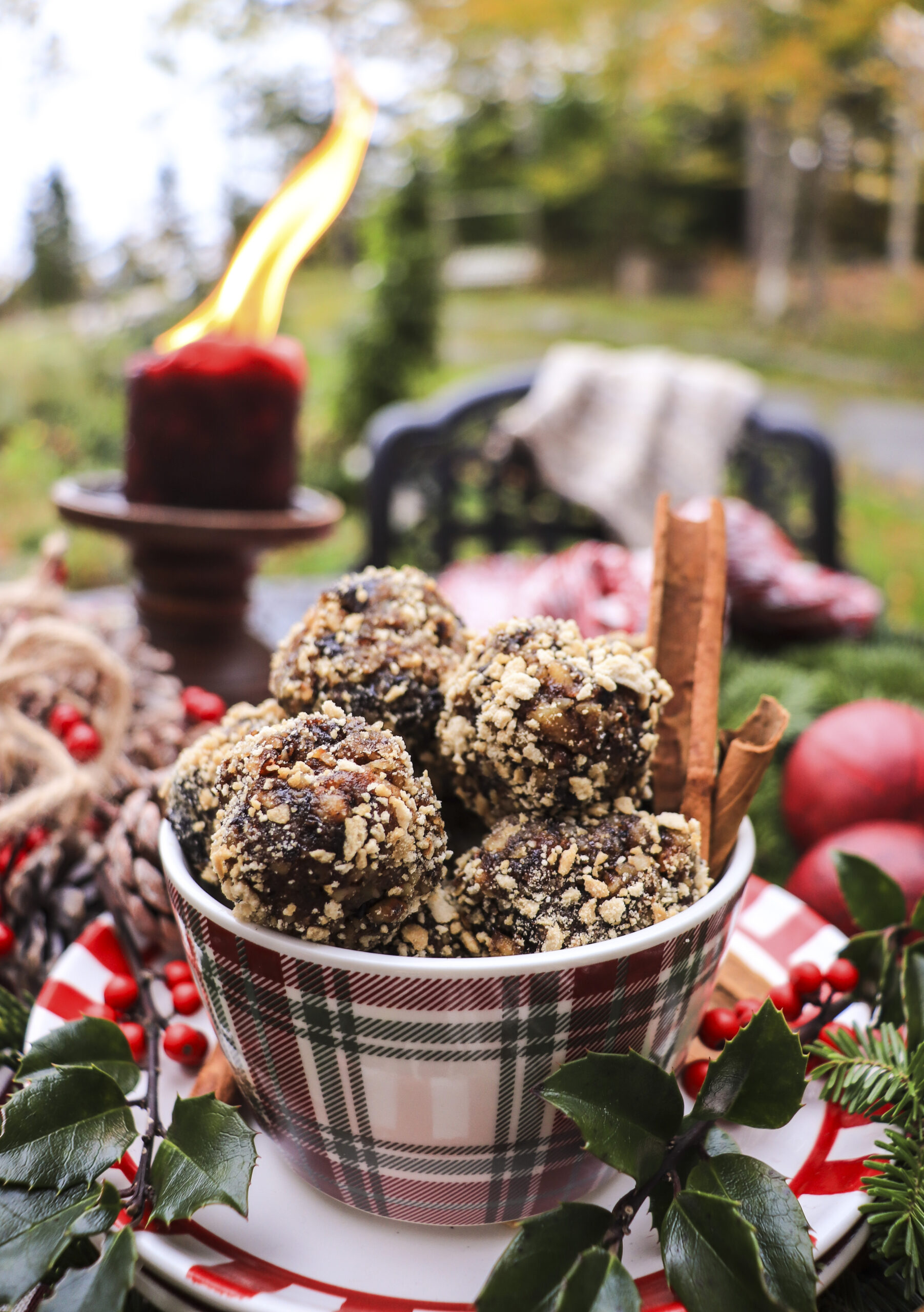
Risalamande with prune compote is a festive take on the much-loved Danish Christmas dessert. This creamy rice pudding, enriched with whipped cream, vanilla and chopped almonds, is served with a chunky compote made with prunes, Port wine, orange and cinnamon.

Hey folks – I hope you all are doing well!
I love desserts that bring something familiar to the Christmas table while still offering a little surprise. Risalamande has a lovely contrast of textures: soft, creamy rice, little pieces of crunchy almond and a light, airy finish from the whipped cream. Here, the customary cherry sauce gives way to a rich prune compote with the rounded flavour of Port and a gentle hint of orange and cinnamon.
This is an inspired, modern interpretation rather than a traditional Danish preparation. The pudding follows the familiar character of risalamande, while the fruit topping takes a different direction – one that feels particularly at home during the festive season. So, let’s dive into risalamande with prune and port wine sauce!
Danish Risalamande and the Christmas Rice Pudding Tradition
To understand this dessert, it helps to distinguish risalamande from the simpler rice pudding that comes before it. The two are closely connected, but they are not quite the same dish.
From Danish Rice Pudding to Risalamande
Risalamande developed from risengrød, a Danish rice porridge cooked in milk. Its name comes from the French expression riz à l’amande, meaning rice with almonds. Despite the French-sounding name, the dessert became a distinctly Danish Christmas tradition.
Rather than serving the rice porridge warm, risalamande is made by cooling it and enriching it with whipped cream, chopped almonds, sugar and vanilla. The result is a chilled dessert that is lighter and airier than ordinary rice pudding, with a pleasant contrast between the soft rice and pieces of almond.
Risalamande became popular around the turn of the twentieth century and is now closely associated with Danish Christmas celebrations. It is often prepared using rice porridge made ahead of time, which also makes it practical for a busy holiday meal.
What Makes Risalamande Different from Other Rice Puddings?
The defining feature is the addition of whipped cream. It transforms a dense, milk-cooked rice pudding into something softer and more delicate.
A few ingredients and techniques give the dessert its characteristic texture and flavour:
- Short-grain rice. Its starch helps create a creamy pudding while allowing the cooked grains to remain identifiable.
- Vanilla and sugar. They provide gentle sweetness and a familiar, fragrant flavour.
- Chopped almonds. These add crunch and a subtle nutty taste.
- Whipped cream. Folded into the completely cooled pudding, it creates the light consistency that distinguishes risalamande from ordinary Danish rice pudding.
Cherry Sauce, the Hidden Almond and Christmas Traditions
Traditionally, risalamande is served with cherry sauce, often warmed and spooned over the cold pudding. The fruity sauce provides a sweet-tart contrast to the rich cream and almonds.
Another well-known custom is the hidden whole almond. One blanched almond is placed in the finished dessert, and whoever finds it receives a small gift, traditionally a marzipan pig. It is a playful part of the Christmas meal, particularly for families who enjoy keeping the almond hidden until everyone has finished eating.
This version keeps the optional whole-almond tradition but replaces the customary cherry sauce with a prune and Port compote. It is a departure from the classic accompaniment, not a traditional Danish variation.

Creamy Risalamande with Prune and Port Wine Compote: A Festive Twist on Denmark’s Beloved Christmas Dessert
The appeal of this dessert lies in the contrast between its two components. The pudding is mild, creamy and gently sweet, while the compote is darker, fruitier and more pronounced. Neither needs to overpower the other.
Vanilla, Cream and a Little Crunch
The heart of this risalamande with prune and port wine compote is its delicate, creamy texture. Vanilla adds warmth and a gentle sweetness, while chopped blanched almonds bring little bites of nuttiness and crunch. Folded with whipped cream, the rice pudding becomes light and airy rather than dense, making it quite different from an ordinary Danish rice pudding.
Deep, Fruity and Gently Spiced Risalamande with Prune Compote
The prune compote brings a deeper, fruitier character to this festive dessert. Naturally sweet prunes pair beautifully with the rounded, wine-like flavour of Port, while orange and cinnamon add a fragrant Christmas touch. The chunky, jam-like consistency is a lovely contrast to the soft pudding, and the combination makes this risalamande with port and prune compote feel especially suited to a festive holiday table.
Risalamande with Prune Compote: A Twist on the Cherry Classic
Traditional Danish risalamande is usually served with cherry sauce, whose bright, fruity flavour balances the creamy pudding. This version takes a warmer, richer direction. Port, prunes and orange create a more rounded flavour, offering a lovely alternative to the customary topping while keeping the essential character of this much-loved Danish Christmas dessert.
Christmas Dessert, Made Ahead
This is a lovely choice for Christmas entertaining because the pudding and compote can be prepared separately in advance. Keeping them apart until serving preserves their individual textures and makes the final presentation simple. Serve the pudding chilled, with the compote at room temperature or slightly warm, for a lovely contrast in both temperature and texture.
Ingredients You’ll Need for Risalamande with Prune Compote
The ingredient list is straightforward, but each component has a particular role. The pudding relies on short-grain rice, milk and cream for its texture, while the fruit topping gets its character from prunes, Port and warming aromatics.
For the risalamande:
- Short-grain rice. Pudding rice is the preferred choice. Arborio is a suitable alternative if you cannot find it.
- Whole milk. Use whole milk for a creamy base.
- Vanilla. A vanilla bean or vanilla extract gives the pudding a lovely natural aroma.
- Sugar. Adjust the sweetness to taste.
- Salt. A small pinch balances the sweetness.
- Blanched almonds. Chop them into small pieces, keeping enough texture to notice them in the finished pudding.
- Whipping cream. Whip it to soft peaks before folding it into the cooled pudding.
- One whole blanched almond. This is optional, but include it if you would like to follow the traditional Christmas custom.
For the Port and prune compote:
- Pitted prunes. Soft prunes work particularly well because they need relatively little cooking.
- Port. It gives the fruit a rich, rounded flavour.
- Water. This provides additional liquid as the fruit cooks.
- Orange peel. Use broad strips that are easy to remove.
- Cinnamon. A small stick adds warmth without making the compote taste overly spiced.
Choosing the Right Rice for Danish Risalamande
Rice makes a noticeable difference to the final texture. Short-grain varieties release enough starch to create a creamy pudding, while still allowing the cooked grains to remain identifiable.
Pudding rice is the most suitable option. If it is unavailable, Arborio rice is a practical substitute. It releases plenty of starch and produces a creamy, somewhat thicker result.
Avoid long-grain rice such as basmati or jasmine. These varieties are not suited to the soft, creamy consistency expected in this dessert. Glutinous or sticky rice is not an ideal substitute either, as it can become excessively sticky and chewy.

How to Make Risalamande with Prune & Port Wine Compote
The preparation is best approached in stages. Cook the rice until tender, prepare the compote separately, and allow both to cool before finishing the pudding with whipped cream.
Cooking the Rice Pudding Until Tender and Creamy
Combine the rice and milk in a saucepan. Add the vanilla and a pinch of salt, then bring the mixture gently to a simmer, stirring regularly. Continue cooking over low heat until the rice is fully tender and the pudding is creamy. Stir more frequently towards the end to prevent the milk and rice from catching on the bottom of the pan.
Stir in the sugar, adjusting the sweetness to taste. Transfer the pudding to a bowl and let it cool completely. Refrigerate once it has stopped steaming.
The pudding will thicken as it chills. This is expected, so do not worry if it seems firmer later. Before adding the whipped cream, stir in a small splash of milk if needed to loosen it.
Preparing the Chunky Port and Prune Compote
Place the prunes, Port, water, orange peel and cinnamon stick in a saucepan. Bring to a gentle simmer and cook, stirring occasionally, until the fruit is softened and the mixture becomes thick, glossy and spoonable.
Break up some of the prunes with a spoon as they cook, while leaving plenty of pieces intact. Since soft prunes do not need much cooking, pay attention to the texture rather than relying on a fixed cooking time. Once the compote has reached the desired consistency, remove the orange peel and cinnamon stick and let it cool.
The fruit and liquid cook together, thickening into one chunky mixture. There is no need to remove the prunes and reduce a separate liquid. The finished compote should hold its shape on a spoon rather than run like a thin sauce.
Cooling the Pudding and Folding in Whipped Cream
Once the rice pudding is completely cold, stir in the chopped blanched almonds. Whip the cream to soft peaks. It should hold some shape but remain supple, not stiff.
Gently fold the whipped cream into the rice pudding until evenly incorporated. Work carefully rather than stirring vigorously, as the aim is to preserve the air in the cream and keep the finished pudding light. If following the traditional almond custom, add one whole blanched almond and make sure it is well distributed.
Assembling and Serving Risalamande
Spoon the chilled pudding into individual serving bowls or arrange it in a larger serving dish. Add the Port and prune compote alongside or over each portion, depending on how you prefer to serve it.
I like keeping the two components visually distinct so everyone can choose how much compote to add. Serve the pudding cold, with the compote at room temperature or slightly warm. The contrast brings the two flavours together without losing the delicate character of the vanilla and almond pudding.
Tips for the Best Risalamande
A few details make the difference between a pudding that is merely creamy and one that has the light, delicate texture expected of risalamande.
- Cool the rice completely. Warm pudding will not hold the whipped cream properly. Give it enough time in the refrigerator before finishing.
- Do not overcook the compote. Soft prunes break down readily. Stop when the mixture is thick and glossy but still has some fruit pieces.
- Keep the cream at soft peaks. Stiffly whipped cream is harder to fold in gently and can make the dessert feel heavy.
- Adjust the consistency before adding cream. Chilled rice pudding naturally firms up. Loosen it with a splash of milk if it has become too thick.
- Keep the components separate until serving. This makes it easier to prepare ahead and preserves the texture of the pudding.
Storage and Make-Ahead
Both components can be prepared in advance, which is particularly useful when planning a Christmas meal.
- Rice pudding. Cook the rice pudding, cool it completely and refrigerate it. Fold in the whipped cream closer to serving time for the best texture.
- Prune compote. Prepare the compote separately and refrigerate it once cooled. Warm it gently or bring it to room temperature before serving.
- Finished dessert. Once the whipped cream has been folded in, keep the dessert refrigerated and serve it chilled. Avoid leaving it at room temperature for extended periods.
More Festive Desserts
If you enjoy festive desserts with warm spices, fruit and creamy textures, you might also like these recipes from Havoc in the Kitchen:
- Port Wine Prune Jam – Festive Spiced Preserve Recipe
- Festive Cranberry Trifle – An Easy Holiday Dessert
- Gingerbread Cranberry Panettone Trifle – Easy Christmas Dessert
- Christmas Gingerbread Tiramisu – Festive Holiday Dessert
- Festive Pistachio Panettone Trifle – Easy No-Bake Dessert
- Festive Chocolate Cranberry Orange Trifle – The Ultimate Christmas Dessert
- Cranberry Greek Yogurt Trifle with Shortbread and Pistachios
- Festive Gingerbread Greek Yogurt Trifle
I’d love for you to try this risalamande with prune compote. If you give it a go, please share your results in the comments, message me on Instagram, or post your photos with the hashtag #havocinthekitchen. I look forward to seeing your creations and hearing your thoughts.
Cheers!


Danish Risalamande with Port and Prune Compote
This Danish-inspired Christmas dessert combines creamy vanilla rice pudding with whipped cream and chopped almonds, served with a chunky, gently spiced Port and prune compote. A festive twist on traditional risalamande and its customary cherry sauce.